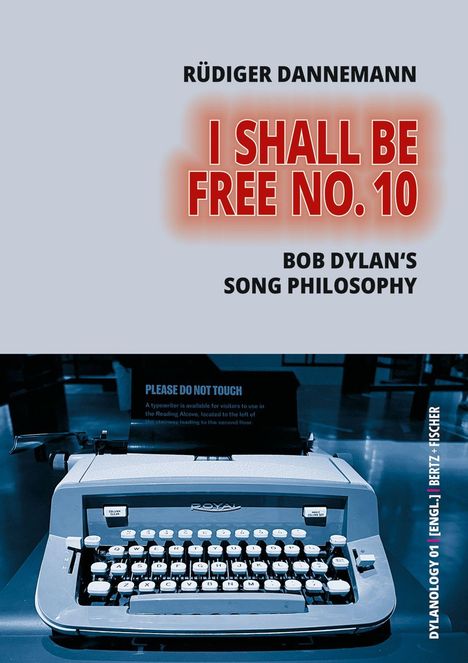
Rüdiger Dannemann: I Shall Be Free No. 10, Kartoniert / Broschiert
I Shall Be Free No. 10
- Bob Dylan's Song Philosophy (English Edition)
Sie können den Titel schon jetzt bestellen. Versand an Sie erfolgt gleich nach Verfügbarkeit.
- Verlag:
- Bertz + Fischer, 02/2027
- Einband:
- Kartoniert / Broschiert
- Sprache:
- Englisch
- ISBN-13:
- 9783865053527
- Artikelnummer:
- 12951384
- Umfang:
- 136 Seiten
- Gewicht:
- 120 g
- Maße:
- 170 x 120 mm
- Stärke:
- 12 mm
- Erscheinungstermin:
- 15.2.2027
- Hinweis
-
Achtung: Artikel ist nicht in deutscher Sprache!
Weitere Ausgaben von I Shall Be Free No. 10 |
Preis |
|---|---|
| Buch, Kartoniert / Broschiert | EUR 14,00* |
Klappentext
Probably no songwriter of the twentieth or twenty-first century has drawn as much attention from intellectuals and philosophers as Bob Dylan. Although in the narrow sense he is neither an intellectual nor a philosopher, it is entirely legitimate to speak of Dylan's song philosophy. Beyond the strict conventions and limitations of modern philosophical discourse, the artist claims the same liberties that the philosophers of antiquity had: unconditional subjectivity instead of systematic constraint, celebration of the moment, and the release of a multiplicity of views of the world and of the self. Dylan's lifework proves that a song can treat anything that exists and make it accessible to experience. The milestones of his avant-garde folk and rock music-classics received around the world today-are therefore nothing less than "historical signs."
The book divides Dylan's song philosophy into six stages and in this way seeks to grasp the different dimensions of his explorations of the world: the early sociopolitical period; the opening up of popular music to the advanced art of modernism; the opening of his work to the multiplicity of traditions it could connect with; the turn to religion and transcendence; and then, upon waking, the plunge into disorientation and crisis. The great body of late work, in which the end-times pilgrim takes stock, can be conceived as the last stage of his odyssey in search of meaning, truth, and redemption. In the epilogue of this concentrated volume, Dylan's philosophy of modern song is understood as a particular mode of a different, "wild" kind of thinking that remains relevant in the twenty-first century. As an indispensable corrective.
At the same time, all the stages of Dylan's songwriting are united by the attempt at liberation. For freedom-to take up one of Hegel's patterns of thought-is to him first of all, and always also, negative freedom: never a condition but a perpetual struggle.