
Leo N. Tolstoi: The Kingdom of God Is Within You, Gebunden
The Kingdom of God Is Within You
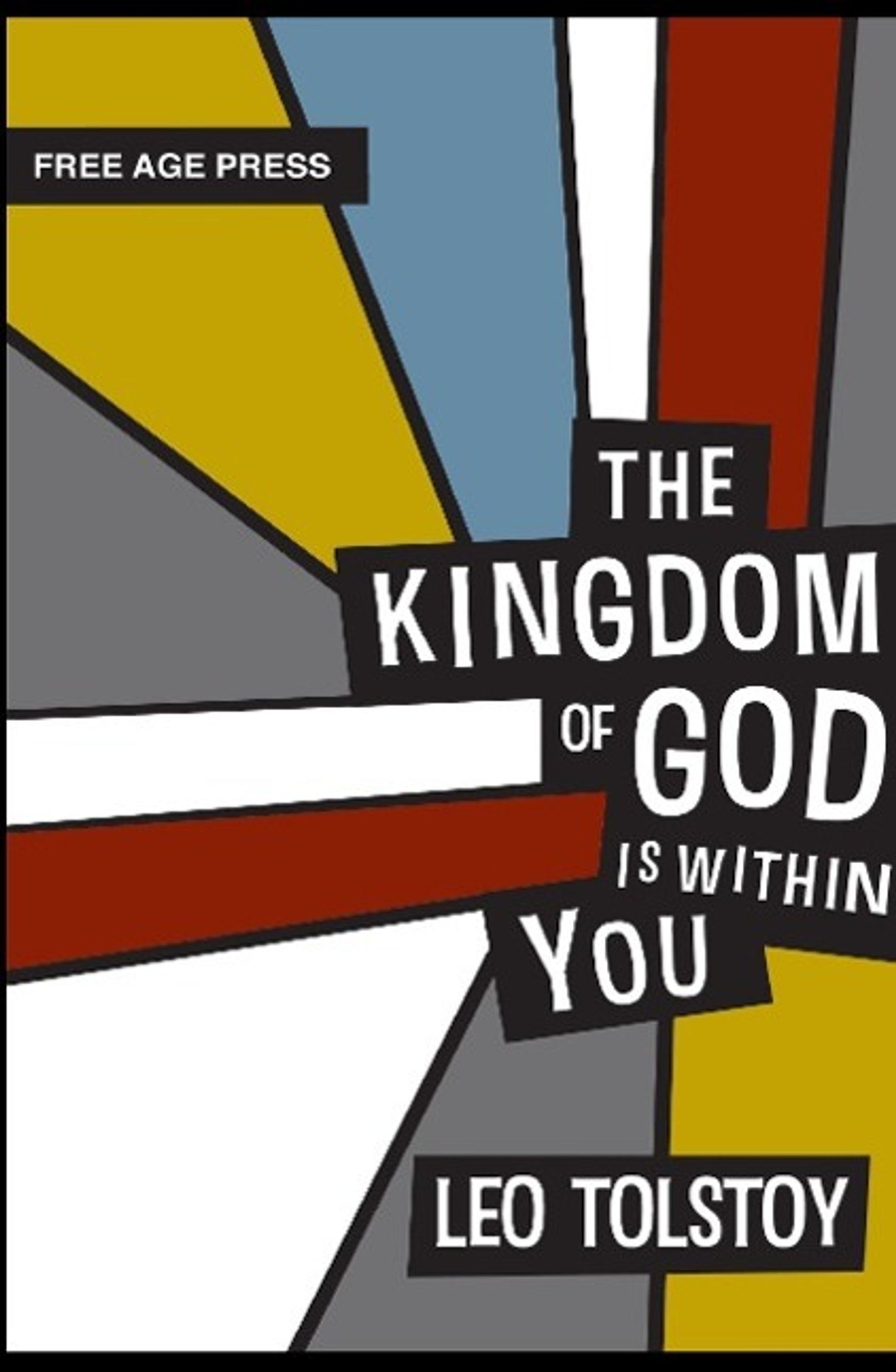
(soweit verfügbar beim Lieferanten)
- Verlag:
- White Crow Books, 03/2010
- Einband:
- Gebunden, HC gerader Rücken mit Schutzumschlag
- Sprache:
- Englisch
- ISBN-13:
- 9781907661204
- Artikelnummer:
- 7510975
- Umfang:
- 324 Seiten
- Gewicht:
- 585 g
- Maße:
- 223 x 144 mm
- Stärke:
- 27 mm
- Erscheinungstermin:
- 1.3.2010
- Hinweis
-
Achtung: Artikel ist nicht in deutscher Sprache!
Weitere Ausgaben von The Kingdom of God Is Within You |
Preis |
|---|---|
| Buch, Kartoniert / Broschiert, Englisch | EUR 37,14* |
| Buch, Gebunden, Englisch | EUR 55,03* |
| Buch, Kartoniert / Broschiert, Englisch | EUR 29,56* |
Klappentext
Published in 1884, 'The kingdom of God is within you' is perhaps Tolstoy's most significant work of non-fiction. Due to the Russian censors, it was first published in Germany, but its dominant idea of non-violence echoed across the international stage throughout the 20th century. In essence, the book is a defence by Tolstoy of the position on non-violence he adopted in 'My Religion'; and therefore also an assault on the Orthodox Church. 'Nowhere,' says Tolstoy, 'is there evidence that God or Christ founded anything like what churchmen understand by the Church.' And in what it now proclaimed, Tolstoy believed the church was wasting its time: 'The activity of the church consists in forcing, by every means in its power, upon millions Russian people, those antiquated, time-worn beliefs which have lost all significance.' Freshly informed by Quaker ideals of non-violence; and full of both story telling and rhetoric, here is Tolstoy calling for a change in consciousness in society. He does not accept that 'this social order, with its pauperism, famines, prisons, gallows, armies and wars, is necessary to society.' That which is, is not that which must be. Rooted in the Sermon on the Mount, Tolstoy's Christianity is not primarily concerned with worship or salvation, but with a new way of behaving in society - behaviour informed by the pointlessness and sin of violence. Tolstoy tellingly reflects on the army at work - whether in internal repression or in national wars - and asks: 'How can you kill people when it is written in God's commandment 'Thou shall not murder?' Gandhi was 'overwhelmed' by the book, said 'it left an abiding impression', and in time, a correspondence started between the two men. The book convinced Gandhi that Hinduism and Christianity were one and the same at their core, and informed his passive resistance first in South Africa and then India; and later, of course, that of Martin Luther King in the USA
Biografie
Tolstoi wurde am 9. September 1828 in Jasnaja Poljana bei Tula geboren und starb am 20. November 1910 in Astapowo, heute zur Oblast Lipezk an einer Lungenentzündung. Tolstoj entstammte einem russischen Adelsgeschlecht. Als er mit neun Jahren Vollwaise wurde, übernahm die Schwester seines Vaters die Vormundschaft. An der Universität Kasan begann er 1844 das Studium orientalischer Sprachen. Nach einem Wechsel zur juristischen Fakultät brach er das Studium 1847 ab, um zu versuchen, die Lage der 350 geerbten Leibeigenen im Stammgut der Familie in Jasnaja Poljana mit Landreformen zu verbessern. Er erlebte von 1851 an in der zaristischen Armee die Kämpfe im Kaukasus und nach Ausbruch des Krimkriegs 1854 den Stellungskrieg in der belagerten Festung Sewastopol. Die Berichte aus diesem Krieg (1855: Sewastopoler Erzählungen) machten ihn als Schriftsteller früh bekannt. Er bereiste aus pädagogischem Interesse 1857 und 1860/61 westeuropäische Länder und traf dort auf Künstler und Pädagogen. Nach der Rückkehr verstärkte er die reformpädagogischen Bestrebungen und richtete Dorfschulen nach dem Vorbild Rousseaus ein. Seit 1855 lebte er abwechselnd auf dem Gut Jasnaja Poljana, in Moskau, und in Sankt Petersburg. Im Jahre 1862 heiratete er die 18-jährige deutschstämmige Sofja Andrejewna Behrs, mit der er insgesamt 13 Kinder hatte. In den folgenden Jahren seiner Ehe schrieb er die monumentalen Romane Krieg und Frieden sowie Anna Karenina , die Tolstojs literarischen Weltruhm begründeten.§Tolstois lebenslange Suche nach der geeigneten Lebensform kulminierte 1910 darin, daß er seine Frau verließ, da diese nicht bereit war, sich von den gemeinsamen Besitztümern zu trennen. Er starb kurze Zeit darauf an einer Lungenentzündung.