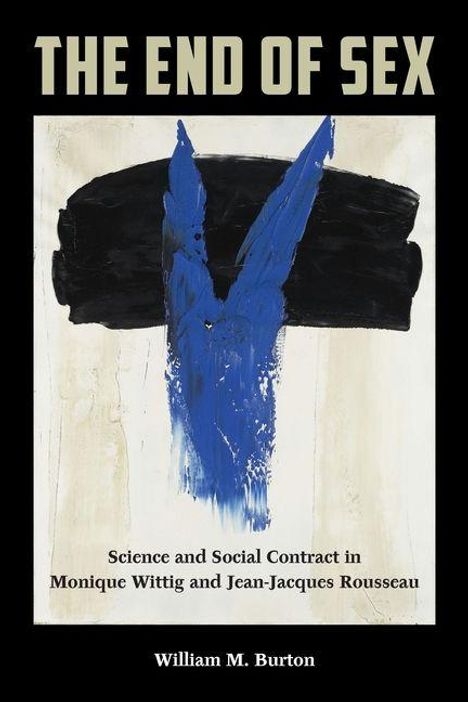
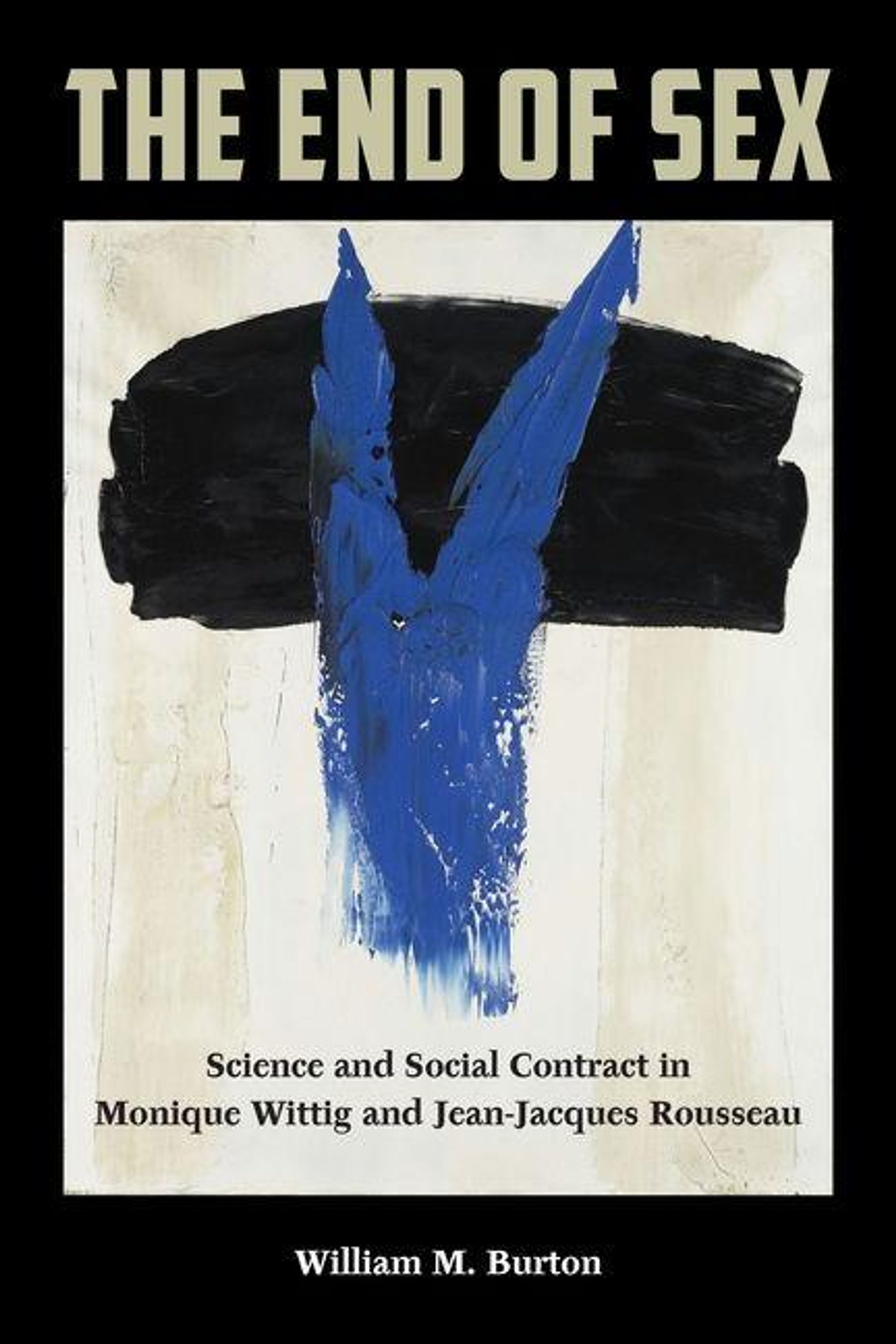
William M Burton: The End of Sex, Gebunden
The End of Sex
- Science and Social Contract in Monique Wittig and Jean-Jacques Rousseau
Lassen Sie sich über unseren eCourier benachrichtigen, sobald das Produkt bestellt werden kann.
- Verlag:
- Fordham University Press, 06/2027
- Einband:
- Gebunden
- Sprache:
- Englisch
- ISBN-13:
- 9781531516628
- Umfang:
- 288 Seiten
- Erscheinungstermin:
- 1.6.2027
- Hinweis
-
Achtung: Artikel ist nicht in deutscher Sprache!
Weitere Ausgaben von The End of Sex |
Preis |
|---|---|
| Buch, Kartoniert / Broschiert, Englisch | EUR 44,84* |
Ähnliche Artikel


Klappentext
Could human beings live in a world without sexual categories? The End of Sex is a study of thinkers who thought so. The lesbian-feminist writer Monique Wittig developed this idea out of an interpretation of the work of Jean-Jacques Rousseau, despite the latter's antifeminism.
Rousseau's social contract theory called for a society designed to be favorable to freedom and equality for men, with women confined to the home. This separation was not based in nature, however. Participating in scientific debates, Rousseau had come to believe that sexual categories were social in origin. They needed constant reinforcement through custom, education, and law, without which they would disappear.
Where Rousseau feared a world without sex, Wittig critiqued the way the human sciences' reliance on sexual categories bolstered an unequal social contract. Rather than patriarchy, she argued that categorization writ large was its root problem. She envisioned a new social contract, after the end of sex, in which individuals would be free and self-determining.
The End of Sex considers what this history implies for gender and trans studies and queer theory. In showing how both pro- and anti-sexual liberation forces retreat from the nihilism implied by the end of sex, Burton points to how we might abandon the sex / gender distinction in favor of a unified, holistic model of sex.