Umberto Eco (1932-2016): How to Spot a Fascist, Kartoniert / Broschiert
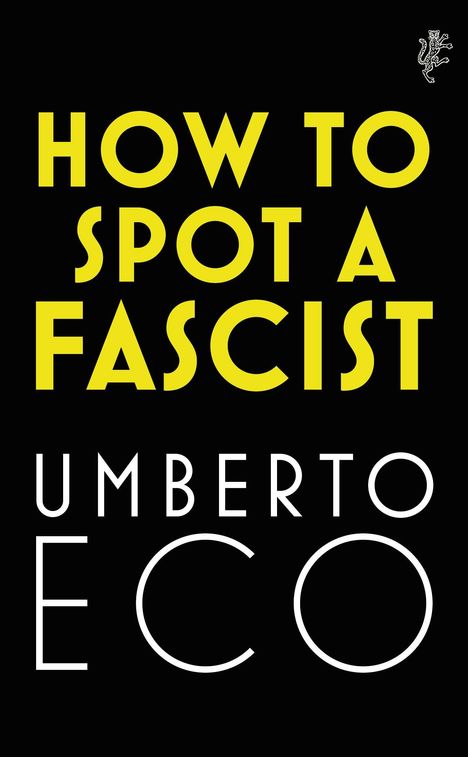
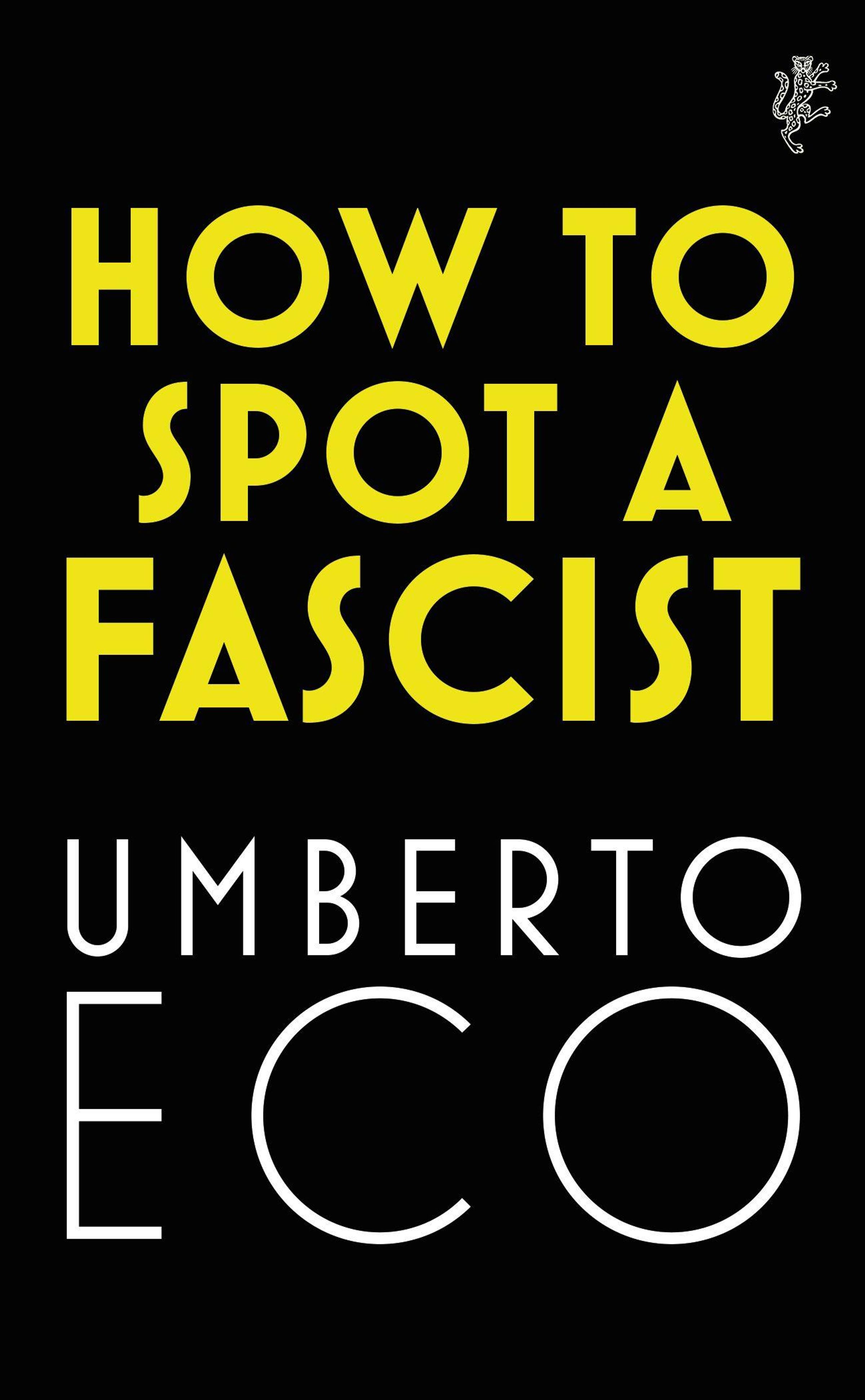
How to Spot a Fascist
- Übersetzung:
- Alastair McEwen, Richard Dixon
- Verlag:
- Random House UK Ltd, 08/2020
- Einband:
- Kartoniert / Broschiert, A-format paperback
- Sprache:
- Englisch
- ISBN-13:
- 9781787302662
- Artikelnummer:
- 10248744
- Umfang:
- 64 Seiten
- Gewicht:
- 46 g
- Maße:
- 172 x 106 mm
- Stärke:
- 9 mm
- Erscheinungstermin:
- 13.8.2020
- Hinweis
-
Achtung: Artikel ist nicht in deutscher Sprache!
Klappentext
We are here to remember what happened and to declare solemnly that 'they' must never do it again. But who are 'they'?
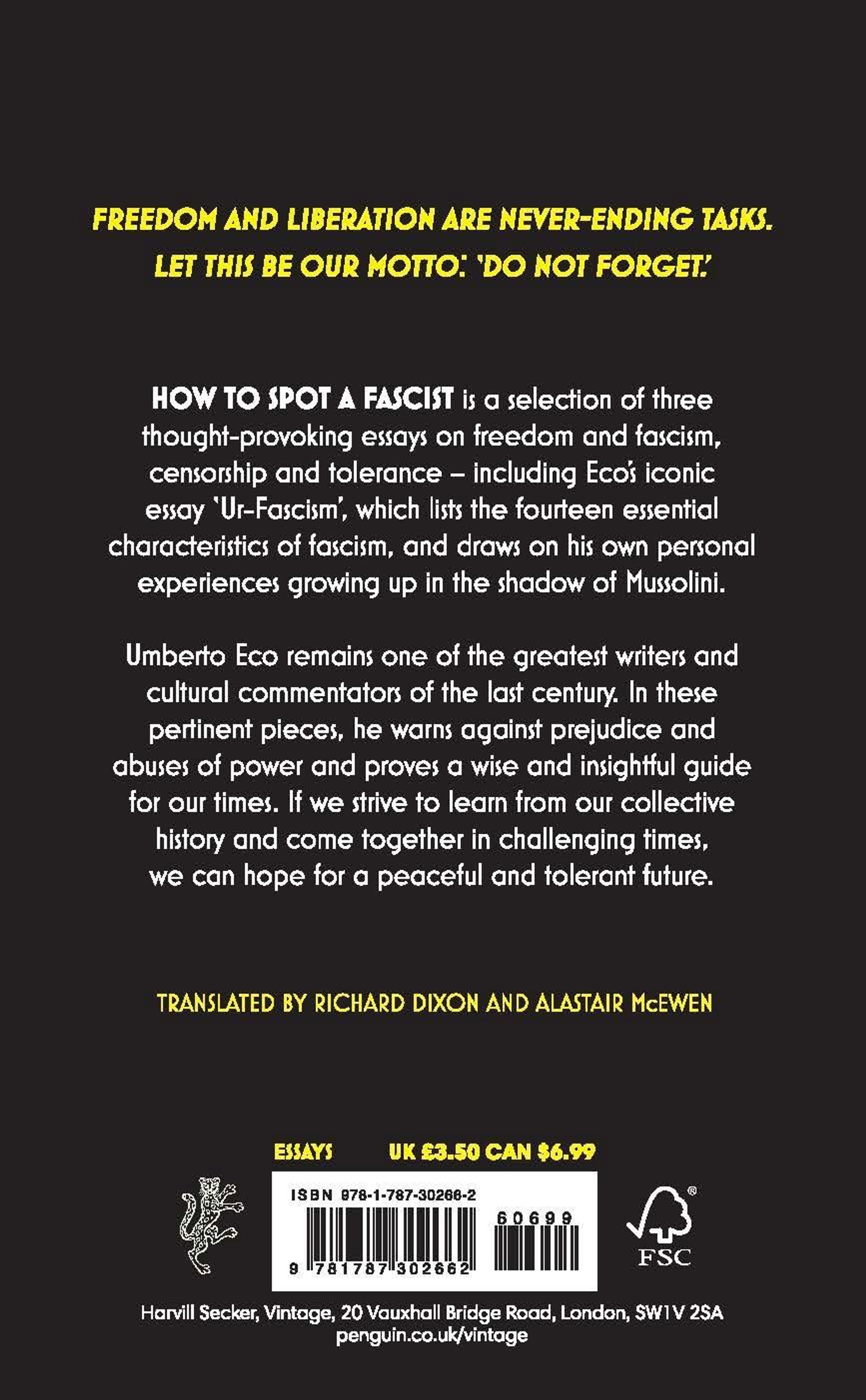
HOW TO SPOT A FASCIST is a selection of three thought-provoking essays on freedom and fascism, censorship and tolerance - including Eco's iconic essay 'Ur-Fascism', which lists the fourteen essential characteristics of fascism, and draws on his own personal experiences growing up in the shadow of Mussolini.
Umberto Eco remains one of the greatest writers and cultural commentators of the last century. In these pertinent pieces, he warns against prejudice and abuses of power and proves a wise and insightful guide for our times.
If we strive to learn from our collective history and come together in challenging times, we can hope for a peaceful and tolerant future.
Freedom and liberation are never-ending tasks. Let this be our motto: 'Do not forget.'
'He brilliantly exposes all that is absurd and paradoxical in contemporary behaviour. Eco's irony is disarming, his cleverness dazzling' Guardian
Biografie (Umberto Eco (1932-2016))
Umberto Eco, geboren 1932 in Alessandria, lebt heute in Mailand. Er studierte Pädagogik und Philosophie und promovierte 1954 an der Universität Turin. Anschließend arbeitete er beim Italienischen Fernsehen und war als freier Dozent für Ästhetik und visuelle Kommunikation in Turin, Mailand und Florenz tätig. Seit 1971 unterrichtet er Semiotik in Bologna. Eco erhielt neben zahlreichen Auszeichnungen den "Premio Strega" (1981) und wurde 1988 zum Ehrendoktor der Pariser Sorbonne ernannt.§Er verfasste zahlreiche Schriften zur Theorie und Praxis der Zeichen, der Literatur, der Kunst und nicht zuletzt der Ästhetik des Mittelalters. Seine Romane "Der Name der Rose" und "Das Foucaultsche Pendel" sind Welterfolge geworden.§2011 wurde Umberto Eco mit dem "Premio Pavese" ausgezeichnet und 2014 erhielt er den "Gutenberg-Preis" der Landeshauptstadt Mainz und der Internationalen Gutenberg-Gesellschaft. Umberto Eco starb am späten Abend des 19. Februar 2016 im Alter von 84 Jahren in seiner Mailänder Wohnung an den Folgen einer Krebserkrankung.