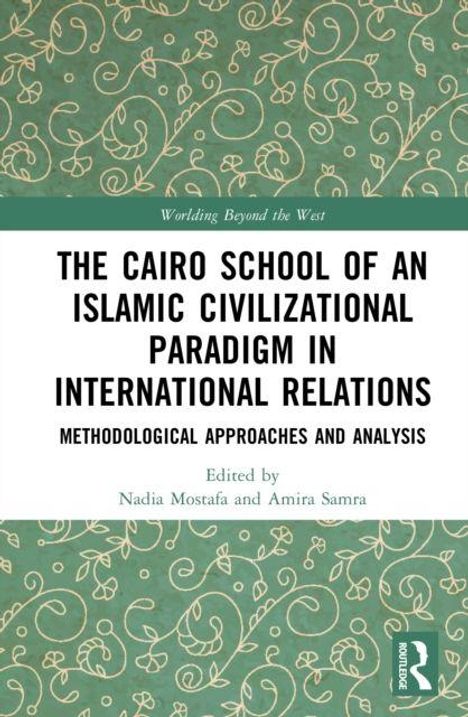
The Cairo School of an Islamic Civilizational Paradigm in International Relations, Gebunden
The Cairo School of an Islamic Civilizational Paradigm in International Relations
- Methodological Approaches and Analysis
(soweit verfügbar beim Lieferanten)
- Herausgeber:
- Nadia Mahmoud Mostafa, Amira Abou Samra
- Verlag:
- Taylor & Francis Ltd (Sales), 07/2026
- Einband:
- Gebunden
- Sprache:
- Englisch
- ISBN-13:
- 9781041261438
- Artikelnummer:
- 12819678
- Umfang:
- 204 Seiten
- Gewicht:
- 504 g
- Maße:
- 234 x 156 mm
- Stärke:
- 14 mm
- Erscheinungstermin:
- 27.7.2026
- Hinweis
-
Achtung: Artikel ist nicht in deutscher Sprache!
Weitere Ausgaben von The Cairo School of an Islamic Civilizational Paradigm in International Relations |
Preis |
|---|---|
| Buch, Gebunden, Englisch | EUR 284,80* |
Klappentext
This volume ofThe Cairo School of an Islamic Civilizational Paradigm in International Relations advances the paradigm from intellectual formation to methodological application. It turns to the analytical tools, research approaches, and units of analysis of the Islamic Civilizational Paradigm-demonstrating how a tawd episteme informs the actual study of global politics.
Structured in three parts, the volume elaborates core methodological approaches, including maqid and sunnan, and illustrates how they generate explanatory, evaluative, and policy-relevant insights. It further develops distinctive analytical contributions of the paradigm, such as its understanding of hegemony and its incorporation of the Ummah as a level of analysis that transcends methodological nationalism. Through sustained comparison with positivist and critical traditions, the volume clarifies both points of convergence and enduring epistemological differences. The volume concludes with reflections by leading international relations scholars who assess the paradigm's strengths, challenges, and future prospects within an evolving global discipline.
Essential reading for scholars and students of International Relations, this volume presents the Islamic Civilizational Paradigm not as a closed doctrine, but as a cumulative and dialogical project contributing to a more genuinely plural and globally inclusive field of International Relations.