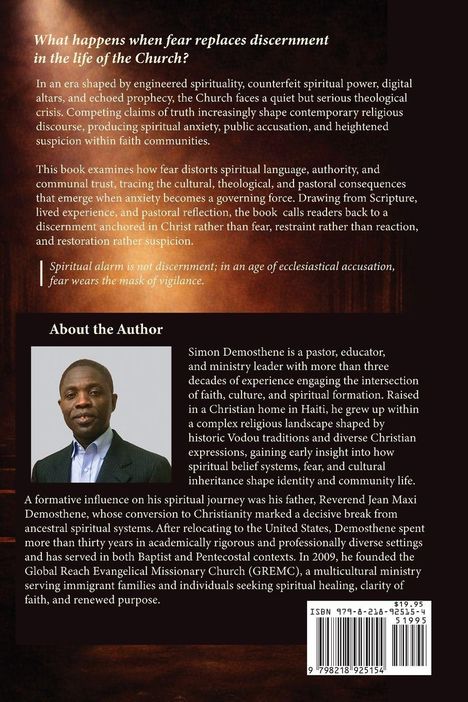
Simon Demosthene: The Age of Ecclesiastical Accusation, Kartoniert / Broschiert
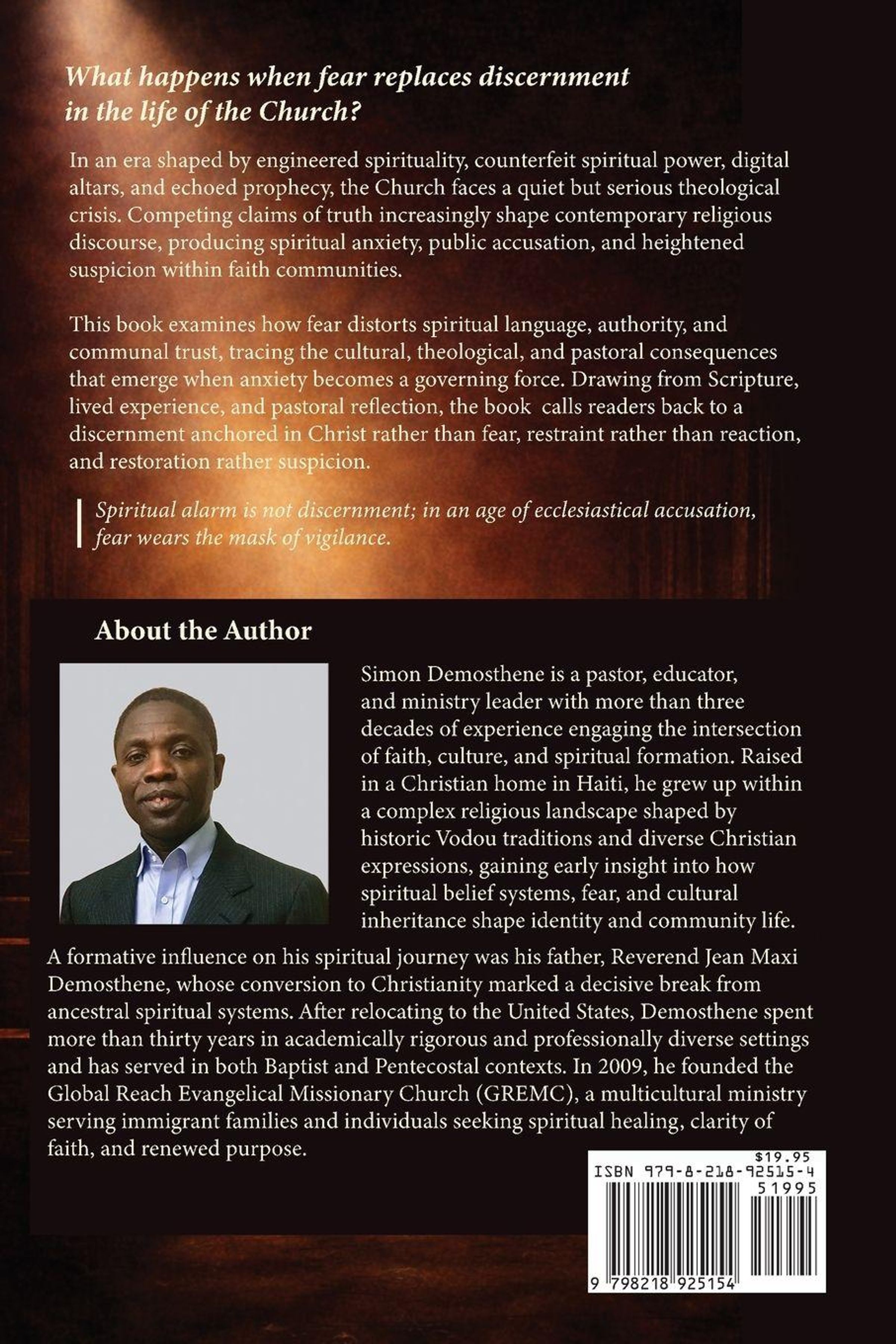
The Age of Ecclesiastical Accusation
(soweit verfügbar beim Lieferanten)
- Verlag:
- Simon Demosthene, 03/2026
- Einband:
- Kartoniert / Broschiert
- Sprache:
- Englisch
- ISBN-13:
- 9798218925154
- Artikelnummer:
- 12647798
- Umfang:
- 330 Seiten
- Gewicht:
- 435 g
- Maße:
- 229 x 152 mm
- Stärke:
- 19 mm
- Erscheinungstermin:
- 26.3.2026
- Hinweis
-
Achtung: Artikel ist nicht in deutscher Sprache!
Klappentext
The Age of Ecclesiastical Accusation is a theological, pastoral, and cultural examination of how fear has quietly reshaped spiritual authority within the modern Church. Rather than arriving through open heresy or external persecution, this shift has emerged internally-through suspicion masquerading as discernment, exposure replacing restoration, and authority exercised through accusation rather than love.
Drawing from Scripture, pastoral ministry, cultural history, psychology, and lived testimony, the book traces how ancient patterns of fear and deception adapt to contemporary forms: digital platforms, spiritual performance, political polarization, and the rise of modern mysticism. It explores how spiritual language can be weaponized, how deliverance can become spectacle, and how leaders-often with sincere intentions-can be trained by fear to interpret vulnerability as threat. Central to the book is a careful distinction between discernment and suspicion, authority and control, and true freedom in Christ versus false liberation systems that promise empowerment while reinforcing dependence and anxiety. The work engages Afro-Caribbean spiritual inheritance, colonial distortion, and modern wellness spirituality with nuance, refusing both cultural accusation and spiritual denial.
Rather than sensationalizing darkness, The Age of Ecclesiastical Accusation restores proportion. Theology precedes testimony. Scripture governs authority. Stories serve as witness, not spectacle. The book challenges systems, not individuals, and confronts fear without exploiting it. Written from a pastoral posture, this work calls the Church back to a form of spiritual authority that heals without humiliating, corrects without condemning, and discerns without accusing. It is an invitation to recover clarity, maturity, and restoration in an age where fear has too often been mistaken for spiritual vigilance.