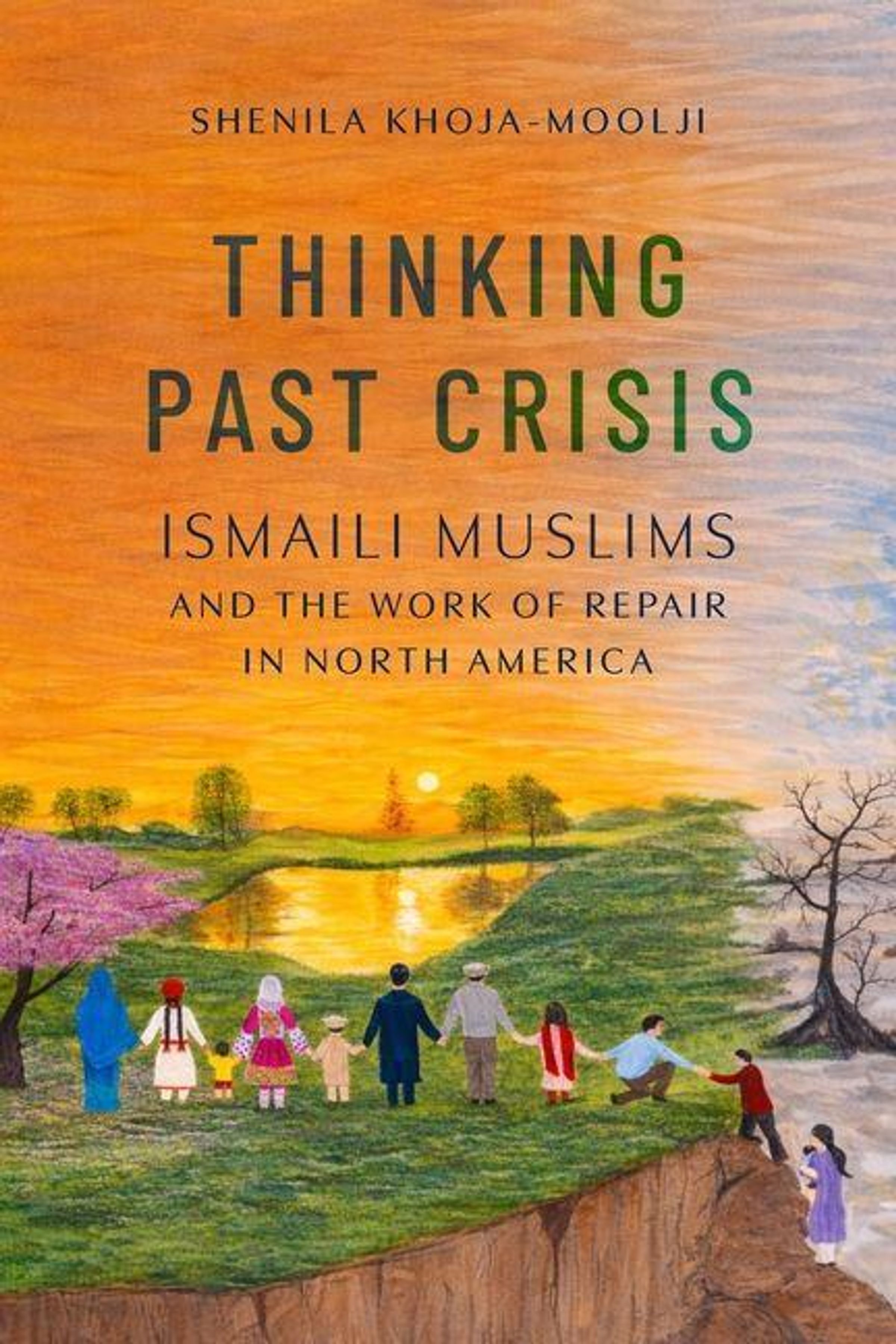
Shenila Khoja-Moolji: Thinking Past Crisis, Kartoniert / Broschiert
Thinking Past Crisis
- Ismaili Muslims and the Work of Repair in North America
Sie können den Titel schon jetzt bestellen. Versand an Sie erfolgt gleich nach Verfügbarkeit.
- Verlag:
- New York University Press, 02/2027
- Einband:
- Kartoniert / Broschiert
- Sprache:
- Englisch
- ISBN-13:
- 9781479839506
- Artikelnummer:
- 12773373
- Umfang:
- 336 Seiten
- Erscheinungstermin:
- 23.2.2027
- Hinweis
-
Achtung: Artikel ist nicht in deutscher Sprache!
Klappentext
Offers a new theory of repair as refiguration through Shia Ismaili Muslim life in North America
Wars and forced migration disrupt people's sense of continuity in time and place, leaving them out of sync with dominant histories and imagined futures. Thinking Past Crisisexamines how Shia Ismaili Muslims in North America have navigated such dislocations across the decades following migrations from East Africa, Central and South Asia, and other sites of Ismaili memory.
Drawing on Ismaili cultural and community-making practices from 1970 to 2025, Shenila Khoja-Moolji argues that repair is best understood not as return or restoration but as refiguration: a spiritual and cultural praxis through which communities reshape relationships to memory, time, and place, making collective life possible amid rupture. Through the work of itinerant preachers, singer-songwriters, educators, novelists, and archivists, Ismailis multiply historical timelines, pluralize religious aesthetics, build solidarity with other minoritized communities, revisit the past to confront trauma, and sustain connections across transnational circuits.
These practices are grounded in Ismaili understandings of the nur (light) of Imamat as a source of continuity and in an ethic of tawhid (oneness), justice, and one jamat (community). Through this account, Thinking Past Crisis challenges frameworks that position minoritized communities as perpetual victims or flawlessly assimilated "model minorities," and reveals repair as a shared, ethical obligation that unfolds within crisis itself.
Centering a minority Muslim community often overlooked in scholarship on Islam, the book reframes debates on crisis, migration, memory, and repair in Islamic studies, migration studies, and American religious history.