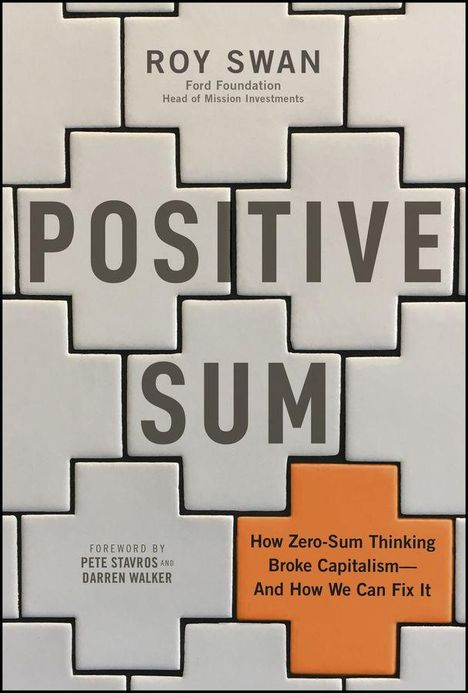
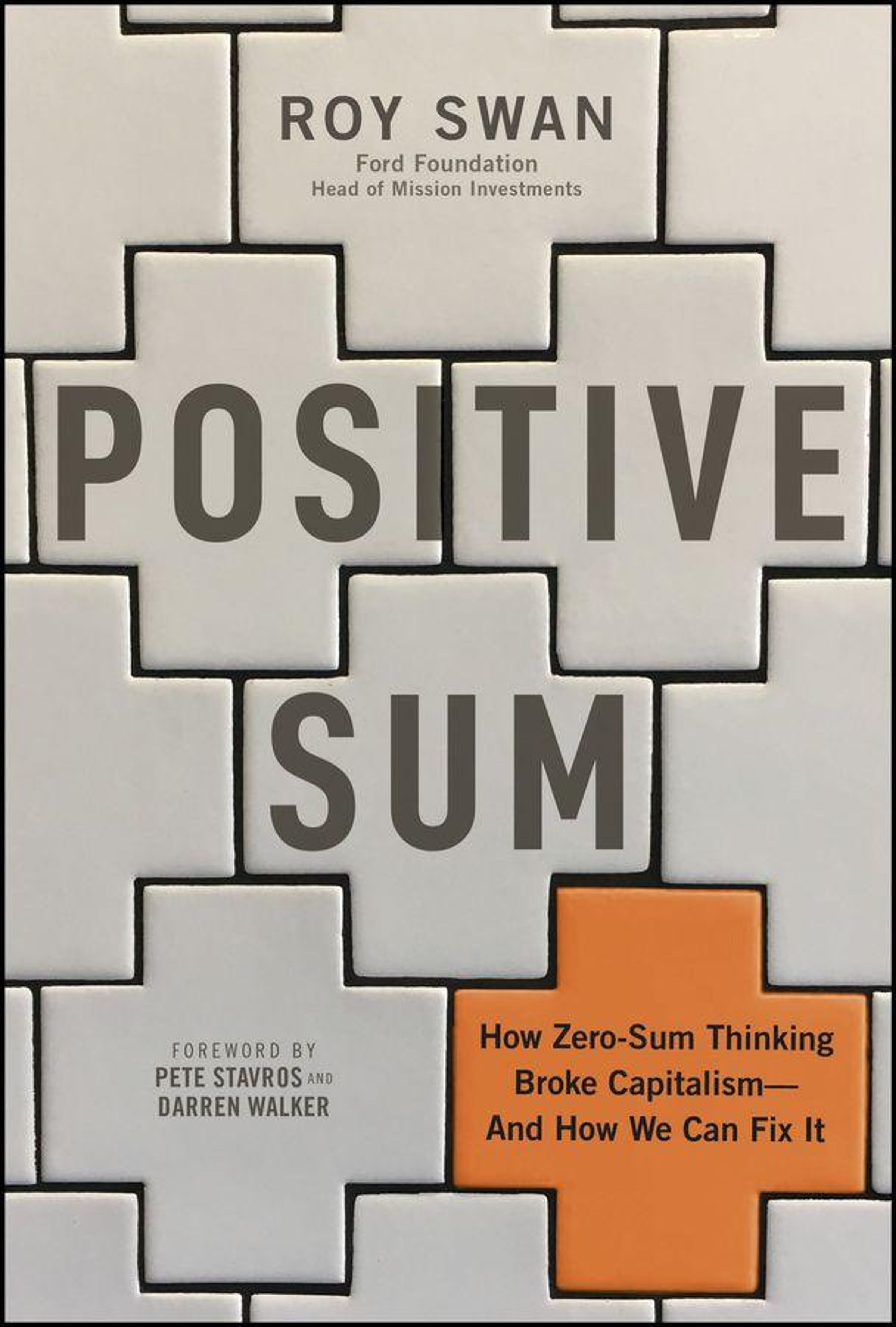
Roy Swan: Positive Sum, Gebunden
Positive Sum
- How Zero-sum Thinking Broke Capitalism - and How We Can Fix It
(soweit verfügbar beim Lieferanten)
- Verlag:
- John Wiley & Sons Inc, 07/2026
- Einband:
- Gebunden
- Sprache:
- Englisch
- ISBN-13:
- 9781394436729
- Artikelnummer:
- 12621776
- Umfang:
- 288 Seiten
- Gewicht:
- 566 g
- Maße:
- 236 x 162 mm
- Stärke:
- 24 mm
- Erscheinungstermin:
- 6.7.2026
- Hinweis
-
Achtung: Artikel ist nicht in deutscher Sprache!
Klappentext
A practical framework for building inclusive prosperity through positive-sum economics
Zero-sum thinking has cost the American economy an estimated $50 trillion over the last 30 years. The forthcoming book, Positive Sum: How Zero-sum Thinking Broke Capitalism - and How We Can Fix It from the Ford Foundation's director of Mission Investments, Roy Swan, reveals why this primitive instinct continues to cost businesses $600 billion annually, and offers a practical roadmap for recognizing the economic power of fairness to create broadly shared prosperity.
Through Positive Sum Swan questions the outdated economic theory that for someone to win, someone else must lose. The book presents concrete investment strategies that have delivered proven 28% returns, while advancing inclusive growth.
Readers will also find:
- Evidence showing how zero-sum assumptions undermine both corporate profits and national prosperity, backed by rigorous economic analysis
- Practical implementation strategies for impact investing that align financial returns with social outcomes across global markets
- Real-world case studies from the Ford Foundation's Mission Investments program demonstrating market-rate returns alongside measurable impact
- A distinctly American framework for stakeholder capitalism that resonates across political divides while remaining globally applicable
- Actionable guidance for business leaders seeking sustainable models that create value for shareholders, employees, and communities simultaneously
Positive Sum offers essential reading for business leaders seeking sustainable economic models, investors looking to connect values with returns, policymakers addressing inequality, and anyone concerned about building an economy where prosperity is broadly shared rather than narrowly concentrated.