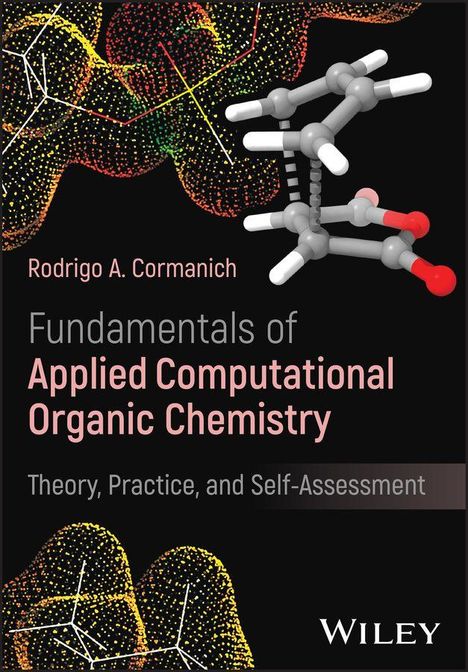
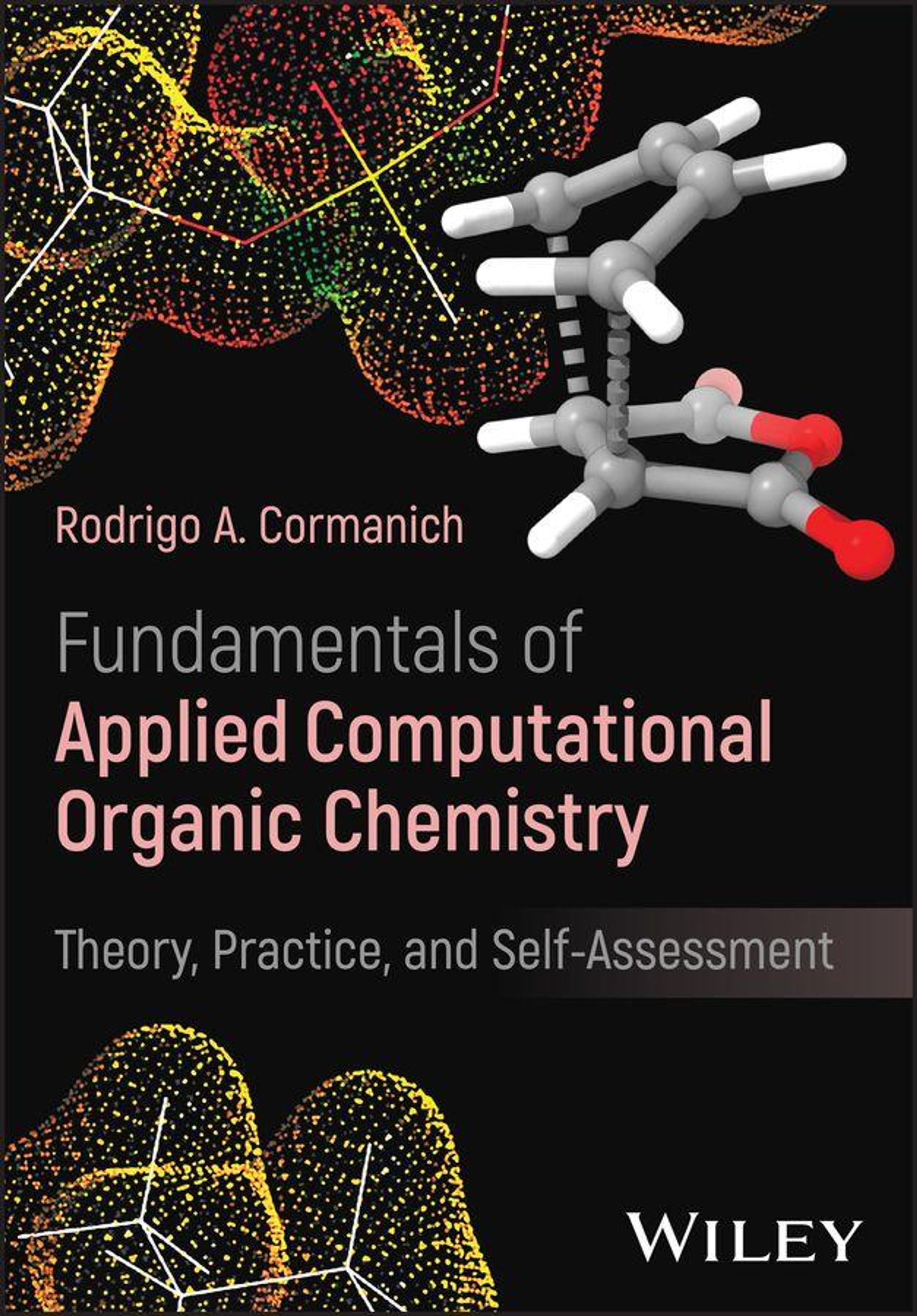
Rodrigo Cormanich: Fundamentals of Applied Computational Organic Chemistry, Kartoniert / Broschiert
Fundamentals of Applied Computational Organic Chemistry
- Theory, Practice, and Self-Assessment
Sie können den Titel schon jetzt bestellen. Versand an Sie erfolgt gleich nach Verfügbarkeit.
- Verlag:
- John Wiley & Sons Inc, 02/2027
- Einband:
- Kartoniert / Broschiert
- Sprache:
- Englisch
- ISBN-13:
- 9781394411566
- Artikelnummer:
- 12797203
- Umfang:
- 400 Seiten
- Erscheinungstermin:
- 18.2.2027
- Hinweis
-
Achtung: Artikel ist nicht in deutscher Sprache!
Klappentext
Learn Organic Chemistry Through Computational Chemistry
Organic chemists increasingly need computational skills, yet few resources unite theoretical foundations with hands-on software training. Fundamentals of Applied Computational Organic Chemistry: Theory, Practice, and Self-Assessment follows the traditional functional group-based organization of introductory organic chemistry while using computational chemistry to explain molecular structure, reactivity, and spectroscopy. Each chapter combines theoretical review with practical quantum chemical calculations to revisit the topics traditionally taught in introductory organic chemistry , building simultaneous proficiency in organic chemical concepts and computational techniques, making computational chemistry accessible to students and experimental organic chemists with no previous computational experience.
Step-by-step tutorials through ORCA 6 and Gaussian 16 packages guide readers through the complete computational workflow, from building molecular models to interpreting computational results in their chemical context for the same functional group-based progression adopted by most organic chemistry textbooks. Beginning with the structure and properties of hydrocarbons, the discussion gradually advances through acids and basis, conformational analysis, stereochemistry, alkyl halides, nucleophilic substitution and elimination reactions, alcohols, carbonyl compounds, aromatic compounds, and many other fundamental topics encountered in a typical undergraduate organic chemistry course, but with the viewpoint of computational chemistry. Structured calculations reinforce structural and spectroscopic properties, reaction mechanisms, among several other concepts from basic organic chemistry. Appendices cover software installation and usage and in-depth theoretical background of computational chemistry methods, enabling independent setup and study without requiring prior computational experience.
Readers will also find:
- Self-assessment exercises embedded throughout chapters to verify understanding of both theoretical organic chemistry concepts and computational procedures
- Molecular visualization techniques that transform abstract orbital and electronic structure concepts into interpretable graphical outputs
- Practical benchmarking strategies for selecting appropriate computational methods, basis sets, guidance on selecting appropriate computational levels for the problem at hand.
- Coverage of organic reaction mechanism modeling, enabling readers to compute transition states, intermediates, and activation energies independently.
- Computational investigations of stereoelectronic effects using Natural Bond Orbitals (NBO) analysis, hydrogen bonding, conformational analysis, and molecular structure using representative organic molecules
Designed for upper-level undergraduate and graduate students in chemistry, experimental chemists, as well as educators integrating computational tools into organic chemistry curricula, this book provides the theoretical background, practical computational skills, and chemical insight needed to perform, analyze, and interpret quantum chemical calculations applied to organic chemistry .