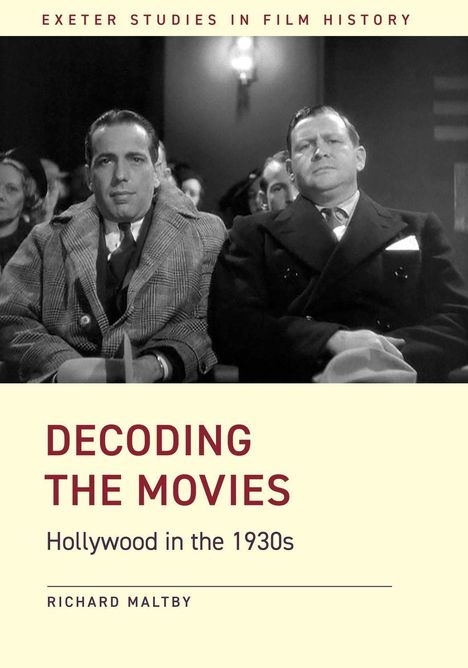
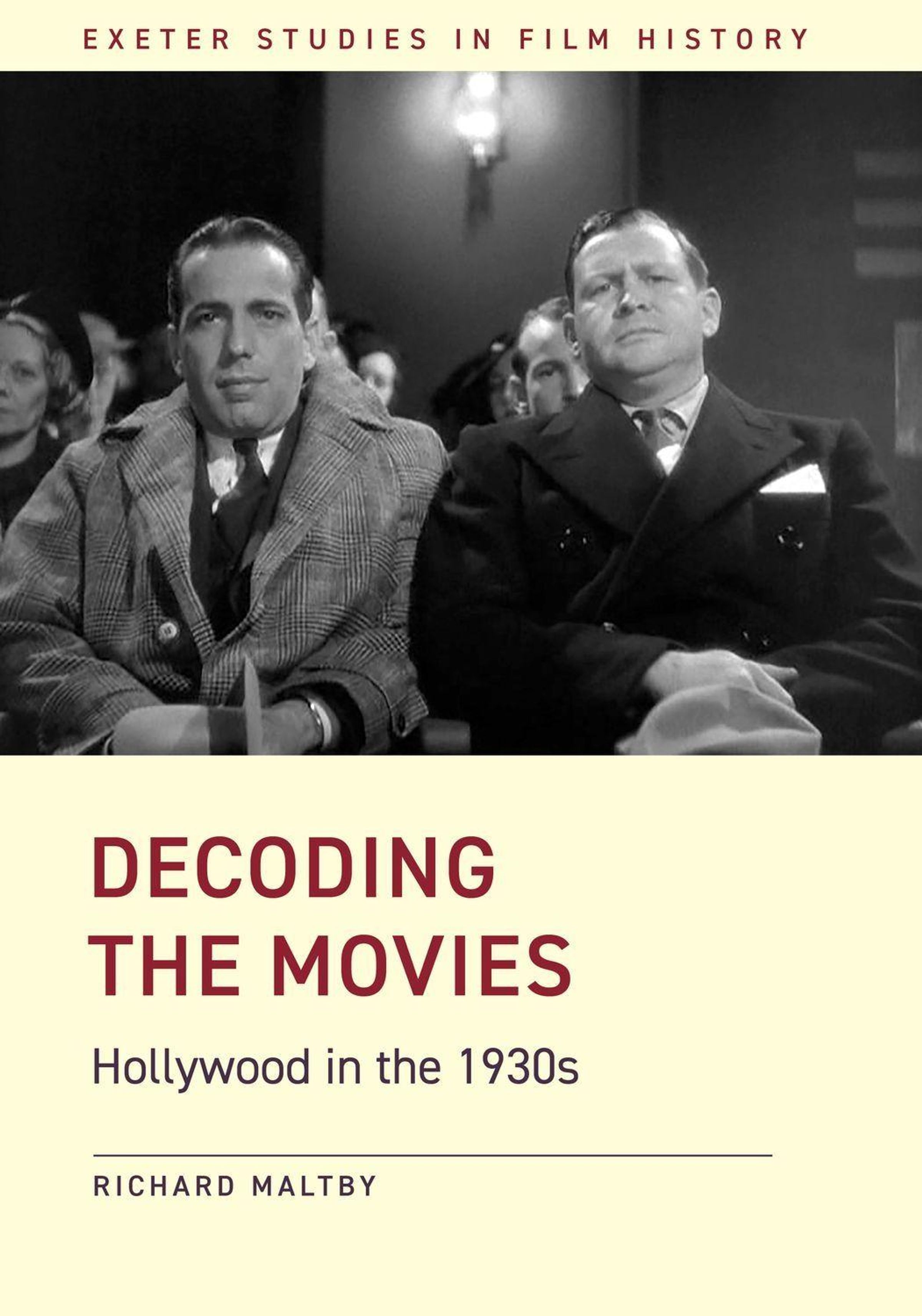
Richard Maltby: Decoding the Movies, Kartoniert / Broschiert
Decoding the Movies
- Hollywood in the 1930s
Sie können den Titel schon jetzt bestellen. Versand an Sie erfolgt gleich nach Verfügbarkeit.
- Verlag:
- University of Exeter Press, 10/2026
- Einband:
- Kartoniert / Broschiert
- Sprache:
- Englisch
- ISBN-13:
- 9781804132616
- Artikelnummer:
- 12776086
- Umfang:
- 466 Seiten
- Gewicht:
- 649 g
- Maße:
- 234 x 156 mm
- Stärke:
- 26 mm
- Erscheinungstermin:
- 15.10.2026
- Hinweis
-
Achtung: Artikel ist nicht in deutscher Sprache!
Weitere Ausgaben von Decoding the Movies |
Preis |
|---|
Klappentext
This book "decodes" 1930s Hollywood movies and explains why they looked and behaved in the way they did. Organized through a series of related case studies, the book exposes Classical Hollywood movies to a detailed analysis of their historical, industrial and cultural contexts. In the process it utilizes industry data, aesthetic analysis and the insights of New Cinema History to explain why and how these movies assumed their familiar forms.
The book represents the summation of Richard Maltby's four decades of scholarship in the field of Hollywood cinema. The essays presented here share an assumption that has increasingly informed the author's critical method over the years: that any historical understanding of the films of this period requires a deep contextualization in the social circumstances surrounding both their production and consumption. In this way, the book introduces an innovative, overarching research methodology that synthesizes branches of research that are typically employed in isolation, including production, distribution, reception, film aesthetics, and cultural and historical context.
Of the book's nine chapters, three are presented here for the first time, and four have been substantially revised and extended from their original publication.
Biografie
Richard Maltby is Professor of Screen Studies and Head of the School of Humanities at Flinders University. At the University of Exeter he established the Bill Douglas Centre for the History of Cinema and Popular Culture.