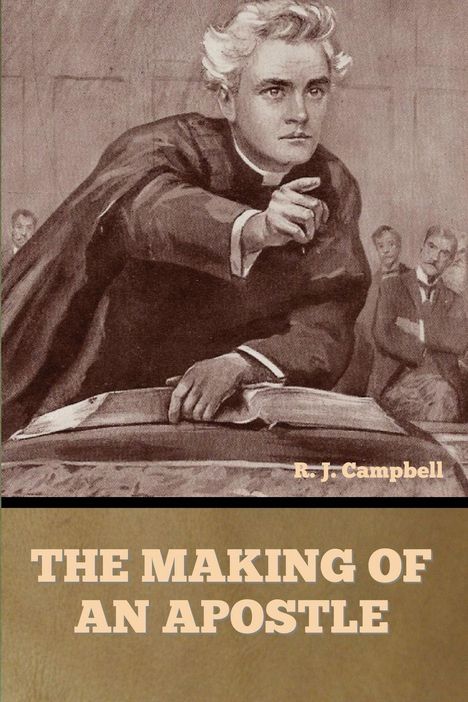
R. J. Campbell: The Making of an Apostle, Kartoniert / Broschiert
The Making of an Apostle
(soweit verfügbar beim Lieferanten)
- Verlag:
- Bibliotech Press, 07/2026
- Einband:
- Kartoniert / Broschiert
- Sprache:
- Englisch
- ISBN-13:
- 9798897733712
- Artikelnummer:
- 12807972
- Umfang:
- 186 Seiten
- Gewicht:
- 311 g
- Maße:
- 229 x 152 mm
- Stärke:
- 11 mm
- Erscheinungstermin:
- 8.7.2026
- Hinweis
-
Achtung: Artikel ist nicht in deutscher Sprache!
Klappentext
R. J. Campbell's The Making of an Apostle is both a personal and theological work that reflects the emergence of the New Theology, a movement that sought to reinterpret Christianity in the light of modern thought, social change, and ethical responsibility. Through this book, Campbell explores how a Christian minister is shaped not merely by doctrine, but by experience, doubt, and engagement with the world.
At the heart of the book is the idea that apostleship is a process of becoming, rather than a fixed spiritual status. Campbell rejects the notion that faith is static or immune to questioning. Instead, he presents doubt and struggle as essential elements in the formation of a mature religious consciousness. For Campbell, a true apostle is one who confronts the intellectual challenges of the age-science, philosophy, and social injustice-while remaining committed to the spirit of Christ.
The book also serves as a clear expression of the New Theology, which emphasized the immanence of God, the moral example of Jesus, and the social mission of Christianity. Campbell challenges traditional doctrines such as substitutionary atonement and rigid views of sin, arguing that Christianity must focus on ethical transformation rather than legalistic salvation. Faith, in his view, should inspire social reform, compassion, and justice, particularly in response to the inequalities of modern industrial society.
Campbell's work reflects the broader tensions of early twentieth-century Christianity, caught between orthodox belief and modern intellectual life. His willingness to revise traditional theology made him a controversial figure, yet it also made his writing deeply relevant to readers struggling to reconcile faith with contemporary realities. The Making of an Apostle thus becomes not only a personal narrative but a manifesto for a more humane, socially engaged Christianity.
In conclusion, The Making of an Apostle and the New Theology presents a vision of faith that is dynamic, ethical, and responsive to the modern world. Campbell argues that true apostleship lies in moral courage, intellectual honesty, and active service to humanity, making the book a significant contribution to modern religious thought.