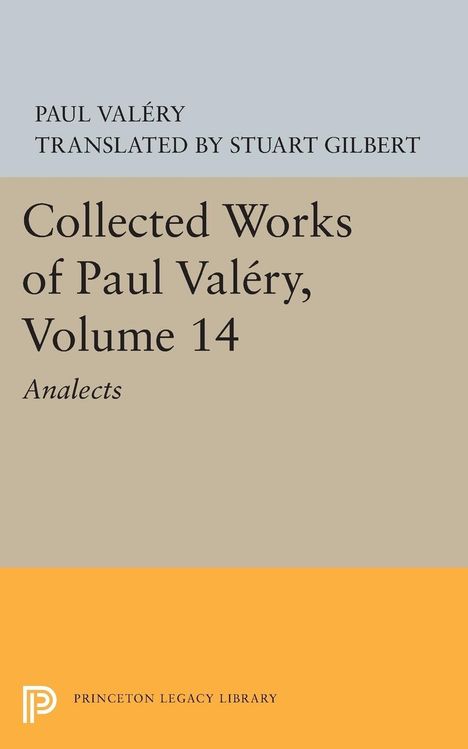
Paul Valéry: Collected Works of Paul Valery, Volume 14, Kartoniert / Broschiert
Collected Works of Paul Valery, Volume 14
- Analects
(soweit verfügbar beim Lieferanten)
- Verlag:
- Princeton University Press, 03/2015
- Einband:
- Kartoniert / Broschiert, Paperback
- Sprache:
- Englisch
- ISBN-13:
- 9780691621029
- Artikelnummer:
- 6919294
- Umfang:
- 642 Seiten
- Gewicht:
- 628 g
- Maße:
- 203 x 127 mm
- Stärke:
- 34 mm
- Erscheinungstermin:
- 8.3.2015
- Hinweis
-
Achtung: Artikel ist nicht in deutscher Sprache!
Weitere Ausgaben von Collected Works of Paul Valery, Volume 14 |
Preis |
|---|
Klappentext
Grouped together in this book are several smaller volumes and plaquettes in which Valéry had published selections of his shorter prose writings: aphorisms, moral reflections, poetic observations, flashes of wit or fancy, even jokes-a variety of remarks and impressions, many of them first recorded in his Notebooks.
Originally published in 1970.
The Princeton Legacy Library uses the latest print-on-demand technology to again make available previously out-of-print books from the distinguished backlist of Princeton University Press. These editions preserve the original texts of these important books while presenting them in durable paperback and hardcover editions. The goal of the Princeton Legacy Library is to vastly increase access to the rich scholarly heritage found in the thousands of books published by Princeton University Press since its founding in 1905.
Biografie
Paul Valéry wird 1871 im südfranzösischen Sète als Sohn von Barthélémy Valéry, einem Beamten bei der französischen Zollverwaltung, und der Italienerin Fanny Grassi geboren. Bereits als Schüler tritt Valéry mit Dichtungen hervor und setzt diese während des Jurastudiums in Montpellier fort. 1894 beginnt Paul Valéry seine Cahiers zu schreiben: längere und kürzere Gedanken zu allen Bereichen des intellektuellen Lebens und der Wissenschaften. Bekannt wird er schon früh durch einen Essay. Ein verändertes Umfeld in Paris führt zur Eheschließung mit Jeannie Gobillard, zu einer bürgerlichen Lebensweise, zum Besuch literarischer und intellektueller Salons. Nach großen dichterischen Erfolgen, folgen große kulturpolitische und dichtungspoetische Essays und zwei Jahrzehnte Vortragsreisen durch ganz Europa. Nach Paul Valérys Tod am 20. Juli 1945 ordnet de Gaulle ein Staatsbegräbnis an.