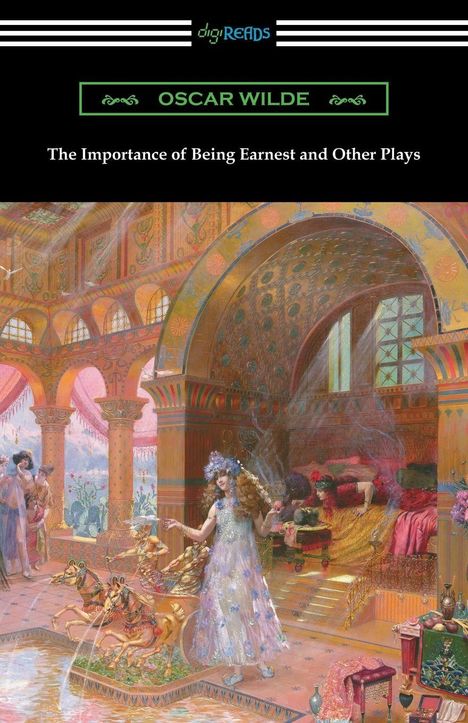
Oscar Wilde: The Importance of Being Earnest and Other Plays, Kartoniert / Broschiert
The Importance of Being Earnest and Other Plays
(soweit verfügbar beim Lieferanten)
- Verlag:
- Digireads.com, 05/2017
- Einband:
- Kartoniert / Broschiert, Paperback
- Sprache:
- Englisch
- ISBN-13:
- 9781420955699
- Artikelnummer:
- 9992477
- Umfang:
- 266 Seiten
- Gewicht:
- 380 g
- Maße:
- 216 x 140 mm
- Stärke:
- 15 mm
- Erscheinungstermin:
- 16.5.2017
- Hinweis
-
Achtung: Artikel ist nicht in deutscher Sprache!
Weitere Ausgaben von The Importance of Being Earnest and Other Plays |
Preis |
|---|
Klappentext
"The Importance of Being Earnest and Other Plays" brings together Oscar Wilde's most popular plays which first appeared between 1891 and 1895. Despite his relatively short theatrical career, Wilde's plays have enjoyed a sustained popularity. A classic satire of Victorian society, "The Importance of Being Earnest" is one of the author's most frequently performed works. The play trivializes its characters, who through a series of deceptions pretend to be people that they are not in order to escape the burdensome demands of social conventions. "Salome", originally written in French, is a retelling of the Biblical story of Salome, who requests the head of John the Baptist, Jokanaan in the play, for dancing the dance of the seven veils. "A Woman of No Importance" concerns Mrs. Arbuthnot, a woman who has been scorned by society for having an illicit affair and conceiving a child out of wedlock. "An Ideal Husband" is the story of an up-and-coming politician with a secret past and the blackmail scheme to keep that secret quiet. "Lady Windermere's Fan" is the tale of Lady Windermere who suspects her husband of infidelity when he takes an interest in Mrs. Erlynne. Largely a collection of high society satires "The Importance of Being Earnest and Other Plays" brilliantly exhibits Wilde's dramatic deft. This edition is printed on premium acid-free paper.
Biografie
Oscar Wilde, geb. 1854 in Dublin, studierte erst am Trinity College in Dublin, dann in Oxford, wo er sich mehr und mehr einem Ästhetizismus zuwandte, den er nicht nur in der Kunst, sondern auch im Leben zum Maß aller Dinge machte. 1884 heiratete er in London; zwei Söhne wurden geboren. In den folgenden Jahren entfremdete er sich zunehmend von seiner Frau und wurde sich wohl seiner homoerotischen Neigungen deutlicher bewusst. Gleichzeitig nahm sein Ruhm stetig zu; in rascher Folge entstanden Essays, sein einziger Roman 'Das Bildnis des Dorian Gray', die Märchen, Erzählungen und mehrere Theaterstücke. 1895 wurde er wegen seiner Liebesbeziehung zum jungen Lord Alfred Douglas in einen Prozess mit dessen Vater verwickelt, der ihm zum Verhängnis wurde: Wilde wurde zu Zwangsarbeit verurteilt und war nun gesellschaftlich, aber auch künstlerisch erledigt. 1897 aus seiner Einzelzelle entlassen, floh er nach Frankreich, unternahm noch einige Reisen und starb 1900 resigniert in Paris.