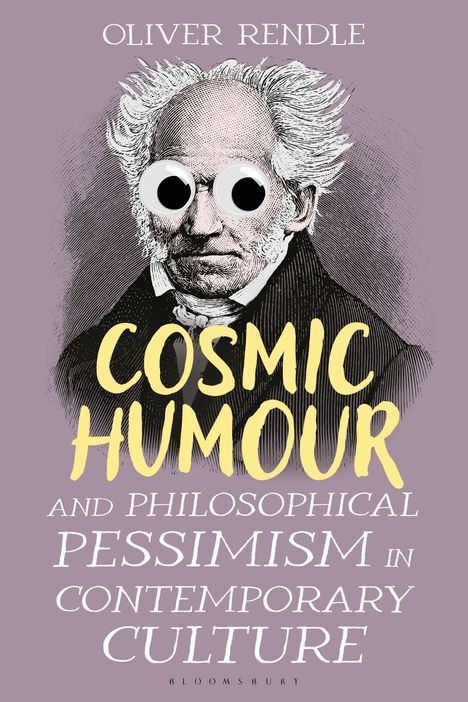
Oliver Rendle: Cosmic Humour and Philosophical Pessimism in Contemporary Culture, Gebunden
Cosmic Humour and Philosophical Pessimism in Contemporary Culture
(soweit verfügbar beim Lieferanten)
- Verlag:
- Bloomsbury Academic, 07/2026
- Einband:
- Gebunden
- Sprache:
- Englisch
- ISBN-13:
- 9781350522862
- Artikelnummer:
- 12527778
- Umfang:
- 238 Seiten
- Gewicht:
- 454 g
- Maße:
- 234 x 156 mm
- Stärke:
- 25 mm
- Erscheinungstermin:
- 9.7.2026
- Hinweis
-
Achtung: Artikel ist nicht in deutscher Sprache!
Klappentext
An in-depth look at the concept of cosmic humour, a politically influential, philosophically pessimistic form of humour, exploring the popularity ofthis comedic form across Anglophone culture since 1969 in literature, film and television. Cosmic Humour uses a cultural materialist approach to demonstrate the existence and significance of an as-yet-overlooked turn in popular culture, connecting intergalactic hitchhikers to discworlds and Black segregationists by explaining how such absurd images spring from the rise of neoliberalism and political despondency.
Oliver Rendle examines the development and political value of cosmic humour through novels by Douglas Adams, Terry Pratchett, Jason Pargin and Paul Beatty as well as the work of Monty Python and the Daniels' Everything Everywhere All at Once. Along the way, he demonstrates how this form of humour is reflective of and reproduces an increasingly pervasive loss of faith in established ideological and political institutions. Charting cosmic humour's evolution from post-war British satire to more diverse and politically proactive developments after the millennium, this book brings to the fore the increasingly widespread and insistent anxieties that link Oxbridge dons to parodic cosmic horror and the satirical potential of Afropessimism. Addressing overlooked intersections between horror, humour and contemporary politics, Cosmic Humour reveals how and why a form of humour that articulates a pessimistic outlook has become increasingly prevalent since 1969.