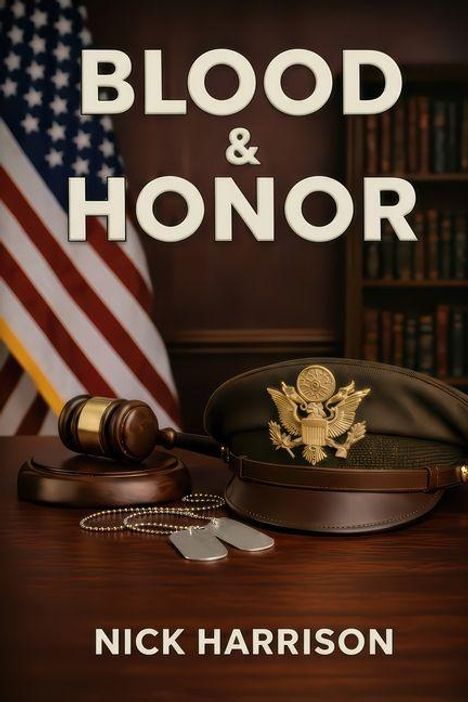
Nick Harrison: Blood & Honor, Kartoniert / Broschiert
Blood & Honor
- Military Service, the Law, and the Cost of Institutional Failure
(soweit verfügbar beim Lieferanten)
- Verlag:
- Columbia Heights Press, 03/2026
- Einband:
- Kartoniert / Broschiert
- Sprache:
- Englisch
- ISBN-13:
- 9798994541616
- Artikelnummer:
- 12606199
- Umfang:
- 420 Seiten
- Gewicht:
- 567 g
- Maße:
- 229 x 152 mm
- Stärke:
- 22 mm
- Erscheinungstermin:
- 1.3.2026
- Hinweis
-
Achtung: Artikel ist nicht in deutscher Sprache!
Klappentext
Winner of the 2026 Independent Publisher Book Awards Gold Medal for LGBTQ+ Non-Fiction.
Nick Harrison enlisted in the Army, deployed to war, earned a law degree between overseas assignments, and sought a commission in the Judge Advocate General's Corps to complete his military career. He believed in the institution he served. He followed its rules. Then, after being diagnosed with HIV, he found himself confronting a military policy that had fallen behind the science.
By the time Harrison asked to continue serving, the medical consensus was clear: HIV is not transmissible when a person is undetectable. Much of that research had come from military medicine itself. The Department of Defense said a policy rewrite was underway. Harrison submitted a narrow request to keep serving in a limited capacity while the policy was reconsidered.
Instead, the request forced him through every level of the chain of command, up to the Office of the Under Secretary of Defense. His privacy disappeared. The policy rewrite was shelved. And Harrison became a named plaintiff in litigation challenging the military's HIV policies.
Blood & Honor is a memoir of service, law, loyalty, and institutional accountability. It asks what honor requires when the institution you serve becomes the obstacle you must confront.