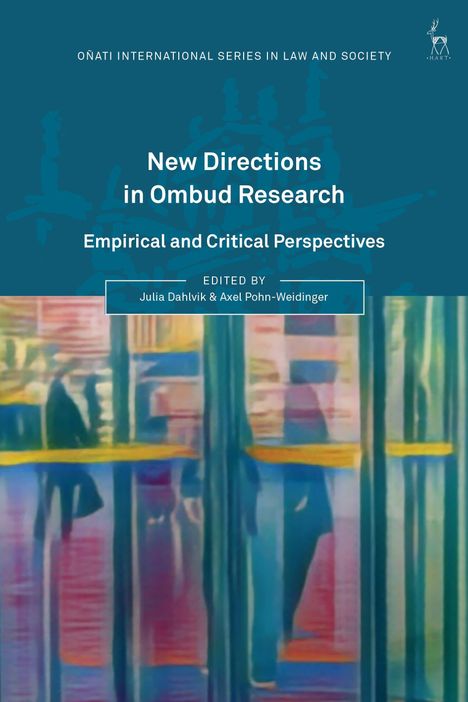
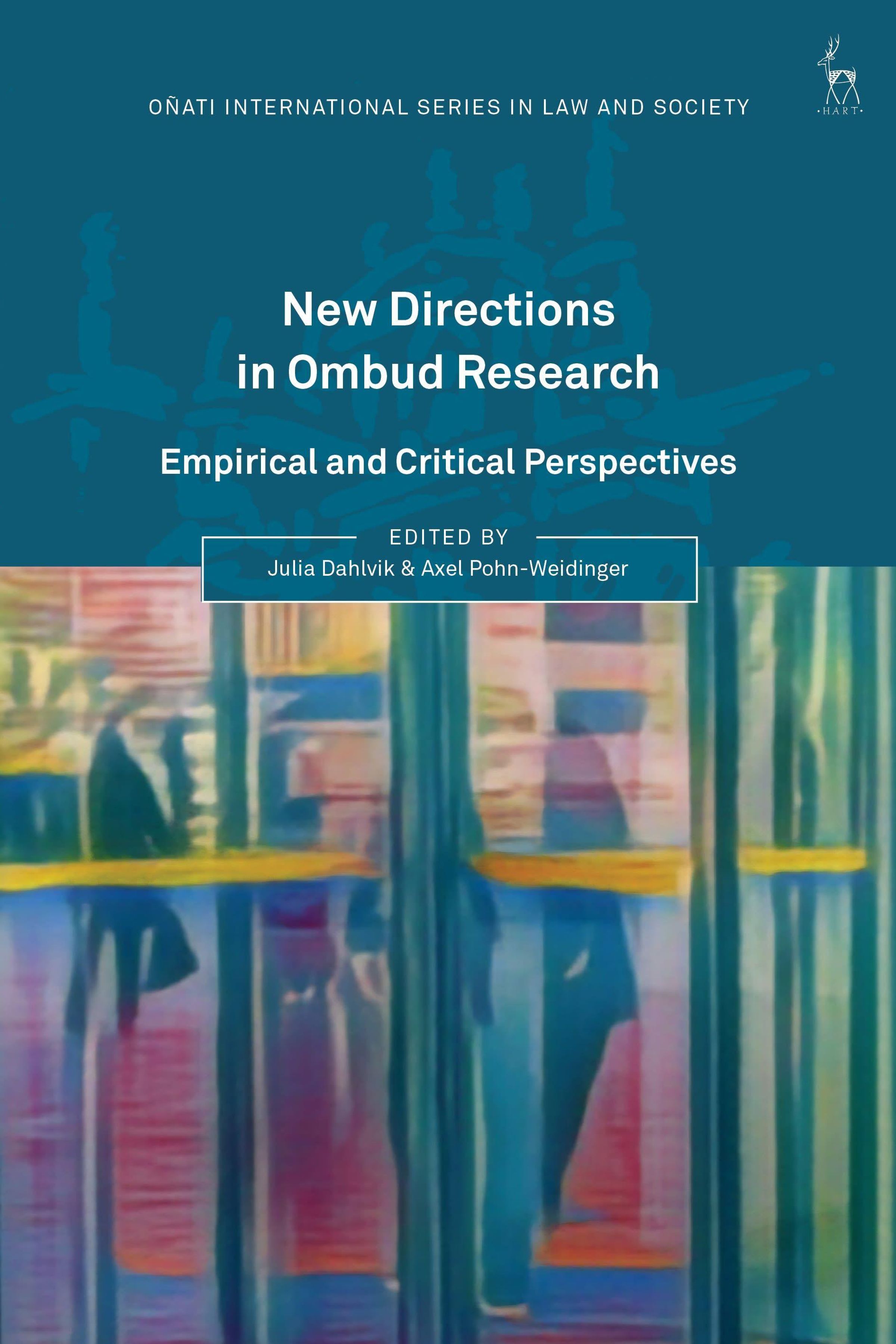
New Directions in Ombud Research, Gebunden
New Directions in Ombud Research
- Empirical and Critical Perspectives
Sie können den Titel schon jetzt bestellen. Versand an Sie erfolgt gleich nach Verfügbarkeit.
- Herausgeber:
- Axel Pohn-Weidinger, Julia Dahlvik
- Verlag:
- Bloomsbury Publishing PLC, 01/2027
- Einband:
- Gebunden
- Sprache:
- Englisch
- ISBN-13:
- 9781509992775
- Artikelnummer:
- 12717600
- Umfang:
- 400 Seiten
- Erscheinungstermin:
- 7.1.2027
- Serie:
- Onati International Series in Law and Society
- Hinweis
-
Achtung: Artikel ist nicht in deutscher Sprache!
Klappentext
This book brings together theoretical and empirical research, as well as interdisciplinary and comparative studies with the aim to direct the contemporary debates within the field of ombud scholarship.
Most countries have public ombud institutions that are supposed to function as mechanisms of dispute resolution outside courts for citizens seeking redress for complaints against public bodies. While research on these oversight bodies has long focused on legal aspects, since the last decade scholars have increasingly become interested in historical, political and social aspects. This book makes a contribution in this multi-disciplinary field by filling two key gaps in the literature: the first part showcases recent empirical research, the second part covers critical analytical approaches.
Taken together, this volume promotes a social science oriented understanding of ombud institutions as embedded in specific social contexts, which are formed by societal forces while also contributing to the shaping of modern societies. Critical examination of how and under which conditions ombuds operate enables us to identify blind spots in both the literature and practice. On the basis of case studies from different world regions, including Austria, Australia, Colombia, France, Germany, Ireland, Netherlands, Spain, Turkey, the UK and the USA, investigated from various disciplinary perspectives, the contributions develop the field of ombud research further. Its contents and accessible style make the book relevant for anyone interested in ombud and oversight institutions: academics, researchers, students, and practitioners alike.