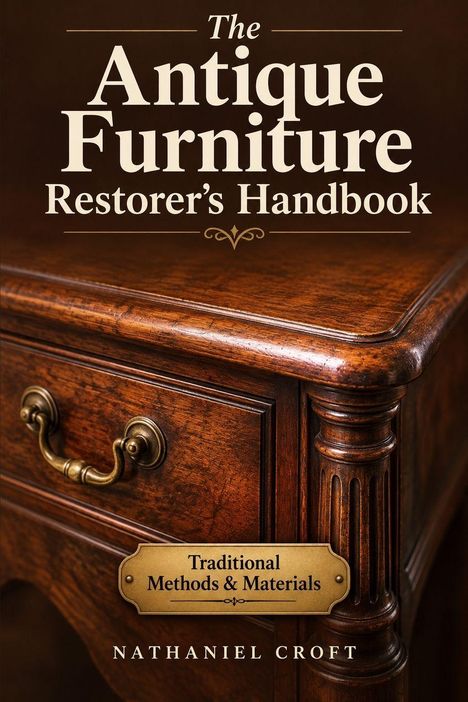
Nathaniel Croft: The Antique Furniture Restorer's Handbook, Kartoniert / Broschiert
The Antique Furniture Restorer's Handbook
(soweit verfügbar beim Lieferanten)
- Verlag:
- Nathaniel Croft, 09/2026
- Einband:
- Kartoniert / Broschiert
- Sprache:
- Englisch
- ISBN-13:
- 9783402958902
- Artikelnummer:
- 12946017
- Umfang:
- 126 Seiten
- Gewicht:
- 195 g
- Maße:
- 229 x 152 mm
- Stärke:
- 7 mm
- Erscheinungstermin:
- 25.9.2026
- Hinweis
-
Achtung: Artikel ist nicht in deutscher Sprache!
Klappentext
Behind every dark, dull, wobbly antique is a piece that was once beautiful - and can be again, the right way.
The Antique Furniture Restorer's Handbook teaches the traditional, time-tested methods that professional restorers and museum conservators actually use: hot hide glue instead of modern adhesives that can never be undone, shellac and hand-rubbed French polish instead of spray-on modern lacquer, and repair techniques that respect the joinery, the wood, and the history of the piece in front of you.
This is not a book about painting over problems or reaching for the nearest tube of wood filler. It's a complete, honest education in period-correct restoration - how to read a piece's age and construction, when to intervene and when to leave well enough alone, and how to execute repairs that a future restorer could undo just as easily as you made them.
What's inside:
- How to date a piece from its joinery, screws, saw marks, and secondary wood
- Setting up a safe, organized traditional workshop, including chemical and solvent handling
- Working with hot hide glue, casein, and fish glue the way period cabinetmakers did
- Cleaning and reviving a sound old finish before ever reaching for a stripper
- Step-by-step traditional stripping, wood repair, and Dutchman patching
- Repairing mortise-and-tenon, dovetail, and doweled joints without destroying originality
- Veneer repair and traditional hammer veneering
- Shellac mixing and full French polishing technique, with troubleshooting
- Oil, wax, and traditional varnish finishes, and how to choose between them
- Hardware cleaning, sourcing, and dating; basic traditional upholstery foundations
- Long-term care, ethics, documentation, and building a restoration practice