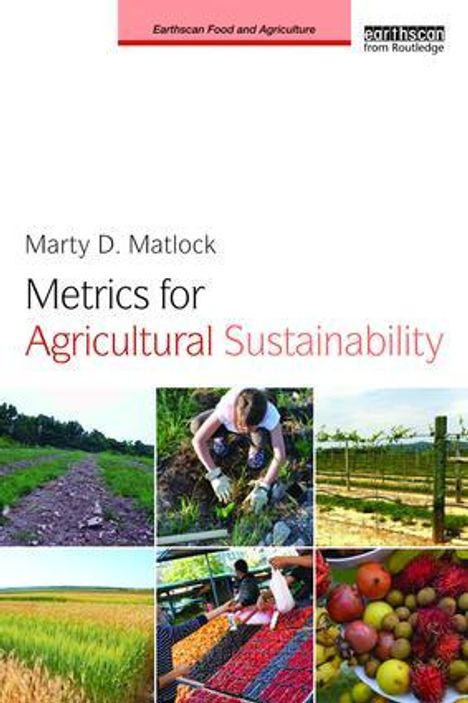
Marty D. Matlock: Metrics for Agricultural Sustainability, Gebunden
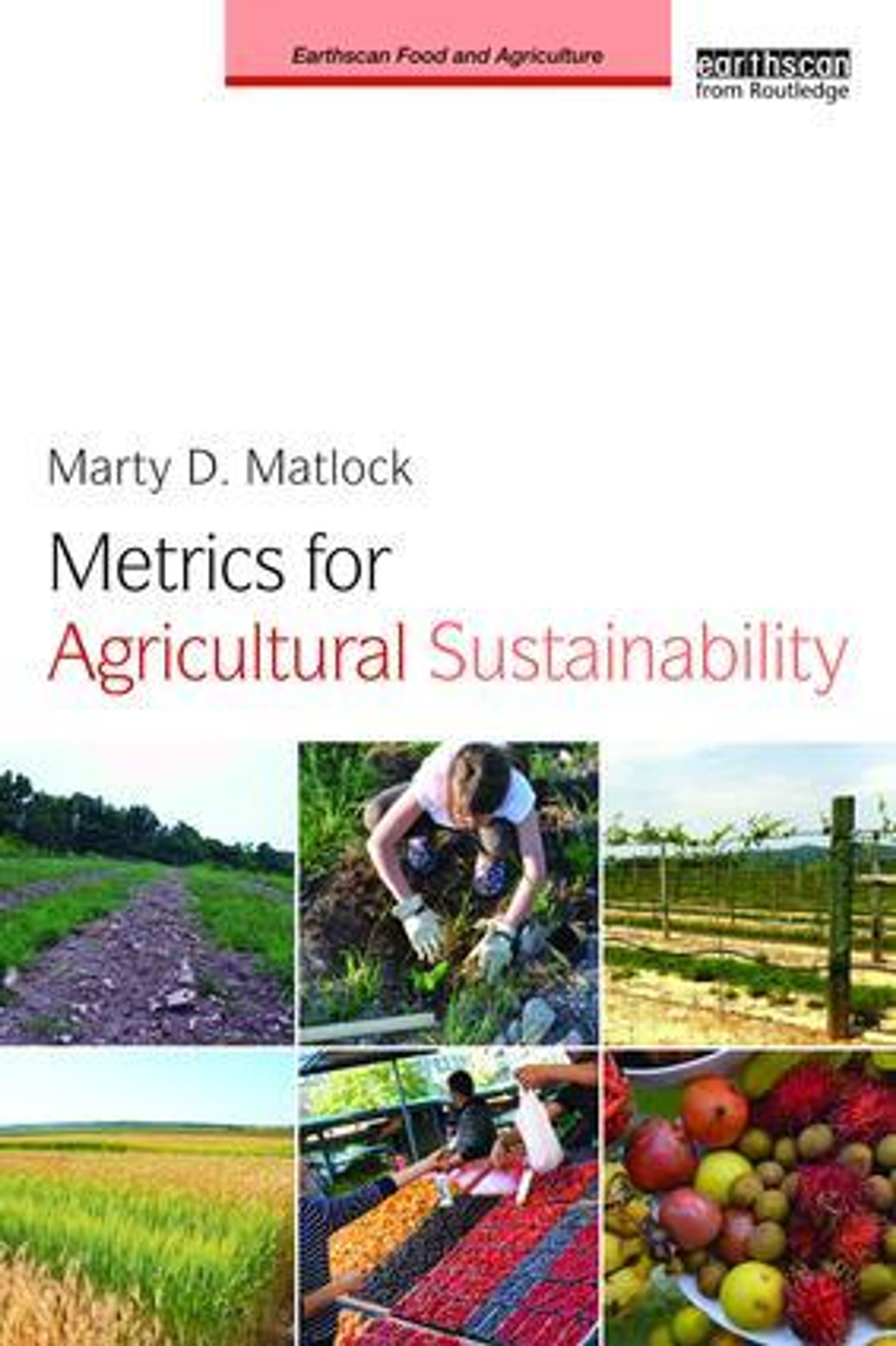
Metrics for Agricultural Sustainability
Sie können den Titel schon jetzt bestellen. Versand an Sie erfolgt gleich nach Verfügbarkeit.
- Verlag:
- Taylor & Francis Ltd, 02/2027
- Einband:
- Gebunden
- Sprache:
- Englisch
- ISBN-13:
- 9780415627122
- Artikelnummer:
- 8259158
- Umfang:
- 288 Seiten
- Erscheinungstermin:
- 15.2.2027
- Serie:
- Earthscan Food and Agriculture
- Hinweis
-
Achtung: Artikel ist nicht in deutscher Sprache!
Weitere Ausgaben von Metrics for Agricultural Sustainability |
Preis |
|---|---|
| Buch, Kartoniert / Broschiert, Englisch | EUR 65,79* |
Klappentext
Measuring Sustainable Agriculture explores how we define, measure, and apply sustainability in agriculture across diverse temporal and spatial scales.
This comprehensive volume delves into the intricate web of metrics that underpin sustainable farming, offering clarity in a field often clouded by complexity. It examines the foundations of sustainable agriculture, exploring key metrics and frameworks that guide decision-making from local farms to global systems. The book delves into environmental considerations, addressing critical factors such as soil health, water quality, atmospheric impacts, and biodiversity. It also highlights the human dimension of sustainability, focusing on metrics that reflect individual and community well-being. By addressing the challenges of scale, it provides insights into how metrics function across different spatial and temporal boundaries, ensuring their relevance from the farm level to international initiatives. Practical applications are a central focus, with examples of how metrics can be integrated into crop systems, including row crops, specialty crops, and animal agriculture. Real-world case studies from the US, Europe, and Asia illustrate how these metrics are applied to assess risks, identify opportunities, and drive innovation. Examples include soil organic carbon as a measure of soil health, groundwater levels as an indicator of over-withdrawal, and farm worker education as a metric of social prosperity. By integrating these diverse metrics into indices, the book offers a holistic perspective on sustainable agriculture, empowering stakeholders to make informed, impactful decisions.
This book will be of great interest to students and scholars of sustainable agriculture, sustainability metrics and the sustainability in the food system more broadly.