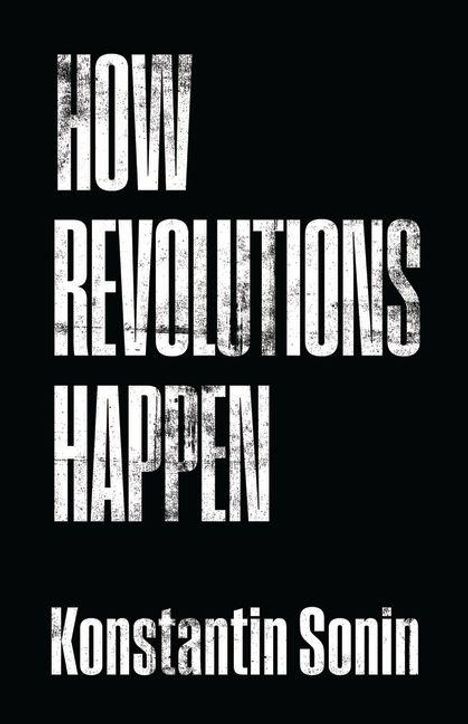
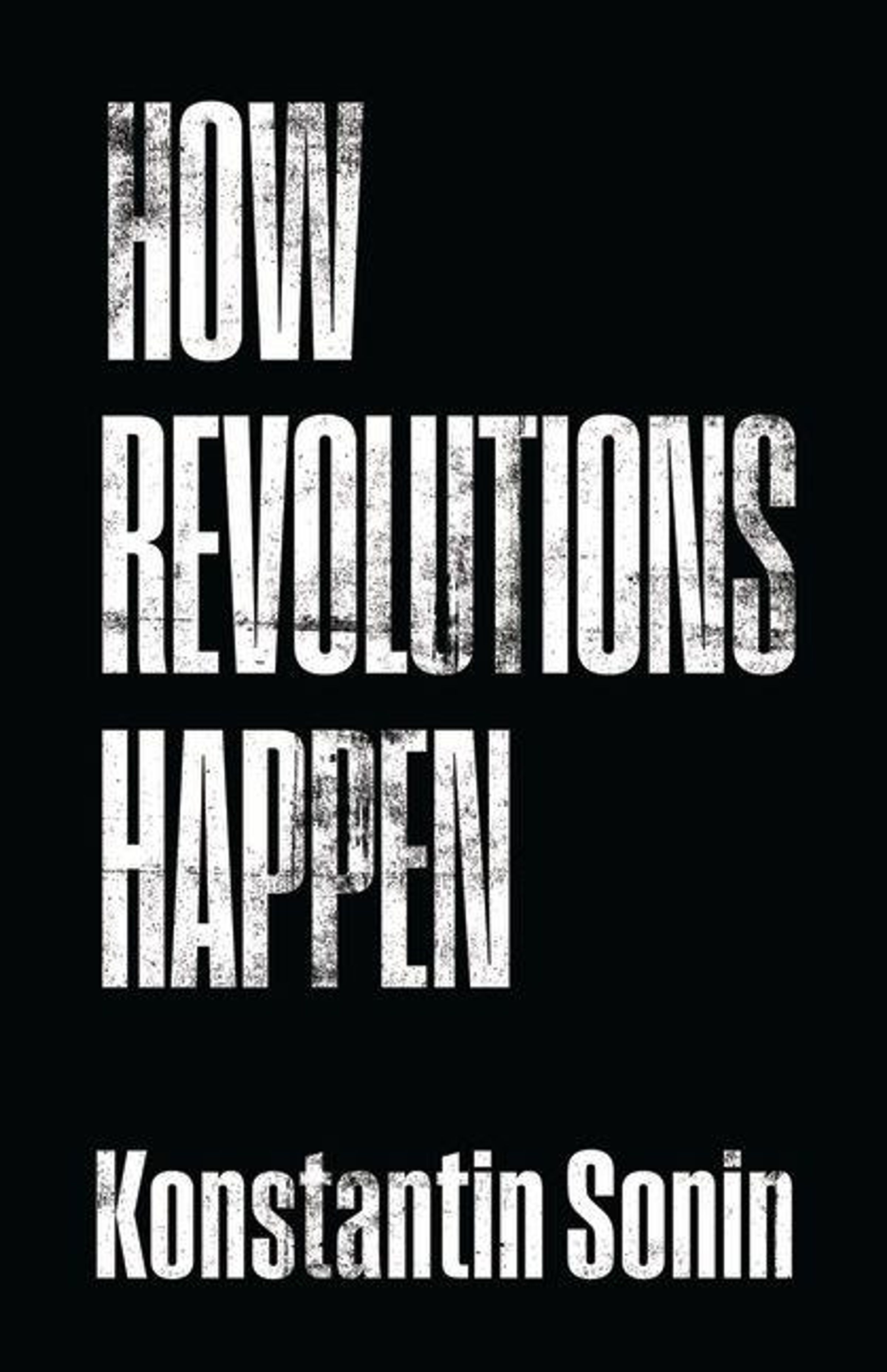
Konstantin Sonin: How Revolutions Happen, Gebunden
How Revolutions Happen
Lassen Sie sich über unseren eCourier benachrichtigen, sobald das Produkt bestellt werden kann.
- Verlag:
- University of Chicago Press, 04/2027
- Einband:
- Gebunden
- Sprache:
- Englisch
- ISBN-13:
- 9780226820705
- Umfang:
- 272 Seiten
- Gewicht:
- 454 g
- Erscheinungstermin:
- 29.4.2027
- Hinweis
-
Achtung: Artikel ist nicht in deutscher Sprache!
Ähnliche Artikel


Klappentext
From the Russian intellectual-in-exile Konstantin Sonin, a grand theory of when and how rapid political change happens--or doesn't.
In 2015, economist Konstantin Sonin solidified his status as an enemy of the Russian state when he published an article predicting that Vladimir Putin's presidency would produce the country's third revolution by the middle of this century. Forced to flee the country, Sonin settled in Chicago. In the decade that followed, the Russian government continued to pursue him--placing him on their state wanted list, tracking his movements, and sentencing him in absentia to eight years in prison. Sonin's research and political advocacy continued unabated. So did his writing.
Now, Sonin has completed his masterpiece: a revelatory and sweeping investigation of a timeless question--what makes a revolution? How Revolutions Happen pinpoints why they arise, why they don't, and where they're likely to occur next. Tracing examples of successful and failed examples from history--in China, France, Haiti, Ukraine--Sonin shows that revolutions don't grow out of mere popular unrest; they happen when states cease to evolve. This argument extends well beyond why nations fail, considering also why nations almostfail and why other nations fail repeatedly. Drawing on both empirical evidence and his firsthand experience, he also argues that although revolutions are an important part of human societies, they are not inherently good or bad--or quick to end.
Wry, sweeping, and erudite, How Revolutions Happenrecasts everything we think about political change. From one of the world's foremost political economists, this book is a momentous cumulation of knowledge that allows us to fully understand what a revolution is, why they occurred in the past--and how to measure where they might be coming.