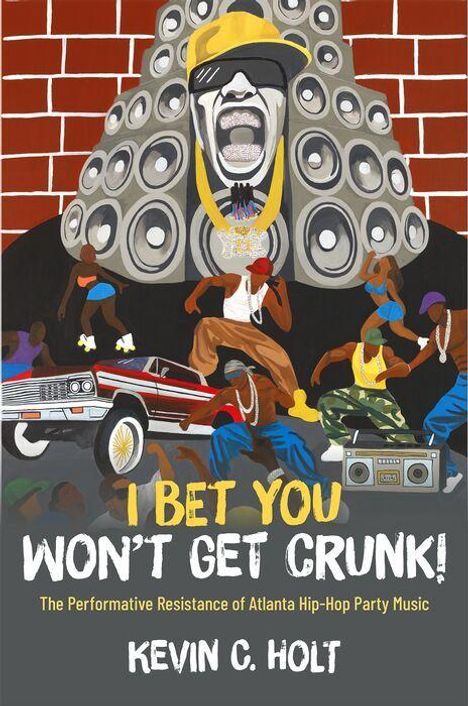
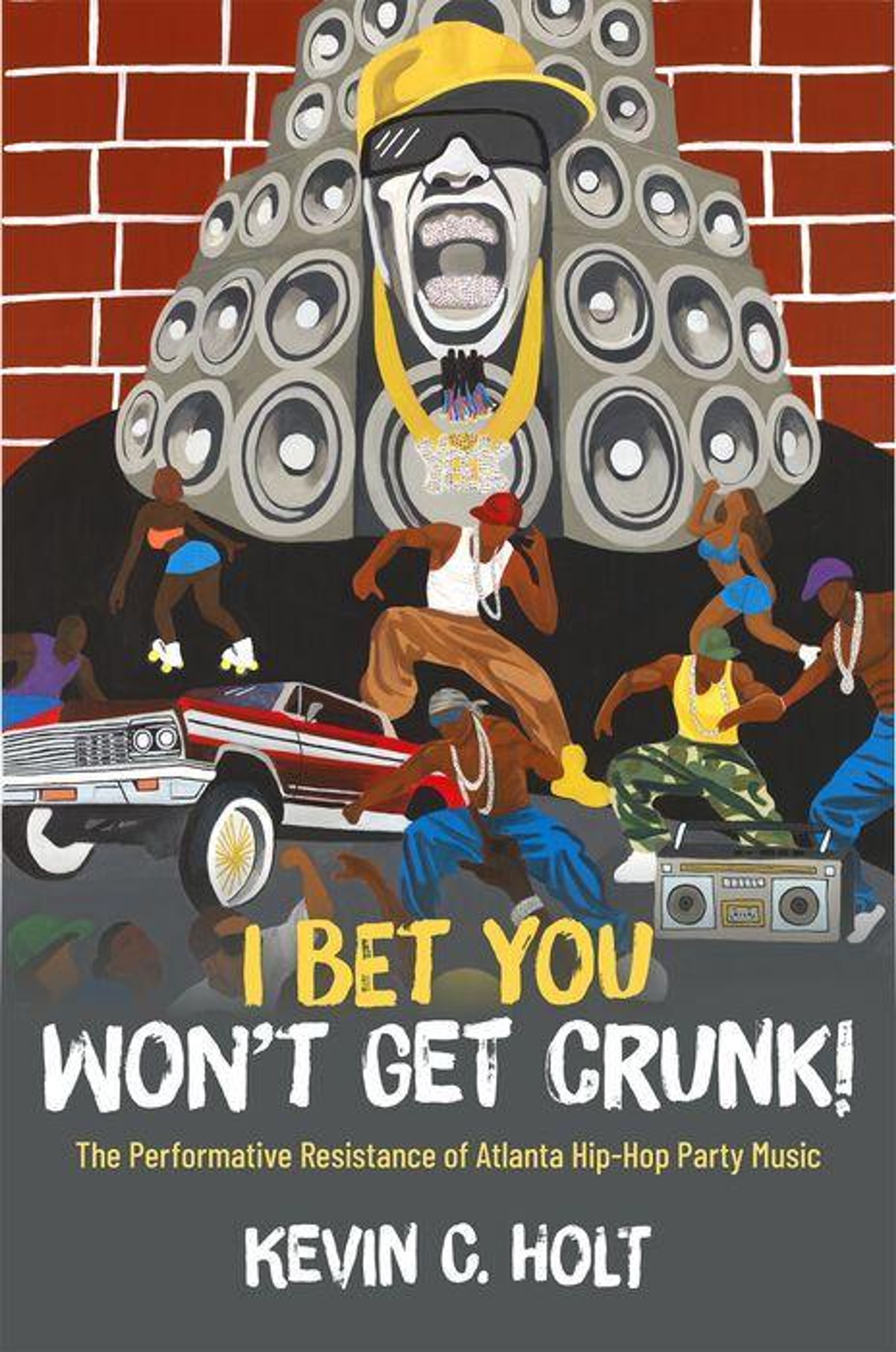
Kevin C Holt: I Bet You Won't Get Crunk!, Kartoniert / Broschiert
I Bet You Won't Get Crunk!
- The Performative Resistance of Atlanta Hip-Hop Party Music
Sie können den Titel schon jetzt bestellen. Versand an Sie erfolgt gleich nach Verfügbarkeit.
- Verlag:
- Oxford University Press, 09/2026
- Einband:
- Kartoniert / Broschiert
- Sprache:
- Englisch
- ISBN-13:
- 9780197792681
- Artikelnummer:
- 12721192
- Umfang:
- 232 Seiten
- Erscheinungstermin:
- 16.9.2026
- Hinweis
-
Achtung: Artikel ist nicht in deutscher Sprache!
Weitere Ausgaben von I Bet You Won't Get Crunk! |
Preis |
|---|---|
| Buch, Gebunden, Englisch | EUR 135,76* |
Klappentext
In the early 2000s, Atlanta was solidified as a node of US hip-hop, spearheading a Southern hip-hop boom that would define hip-hop of the 21st century. Crunk, its signature hip-hop subgenre at the time, came to represent the city's stylistic and performative intervention on the national hip-hop scene.
I Bet You Won't Get Crunk! analyzes Atlanta's hip-hop party culture framed through Atlanta's history of aggressively surveilling and silencing black youth. In response to patterns of targeted policing, Atlanta's black youth created party cultures and music that explicitly focused on being loud and taking up space, yielding a kind of resistance through performance and participation. This resistance manifested in the city's roller rink culture, in a signature hip-hop dance style known as yeeking, in the public impositions of Freaknik, and in collective catharsis of getting crunk. By emphasizing semiotic analyses of gestures, images, dances, and performance choices, Kevin C. Holt makes a case for the political interventions of party culture. In doing so,I Bet You Won't Get Crunk! offers analytical tools that elucidate non-lyrical meaning within hip-hop music broadly and the underlying meaning of crunk music specifically, pushing back against early 21st century moral panics that considered crunk and its connected party culture vacuous and, by extension, a threat to hip-hop's political potency.
This book unpacks Atlanta as a symbol of Southern black aspiration to elucidate the experiences of the city's first hip-hop generation and explore how patterns of policing black youth's recreational behavior impacted the social, political, and aesthetic practices of the then-budding hip-hop scene. *I Bet You Won't Get Crunk!*offers both grounding for subsequent work on Atlanta hip-hop and a model for popular music analyses that contend with local histories.