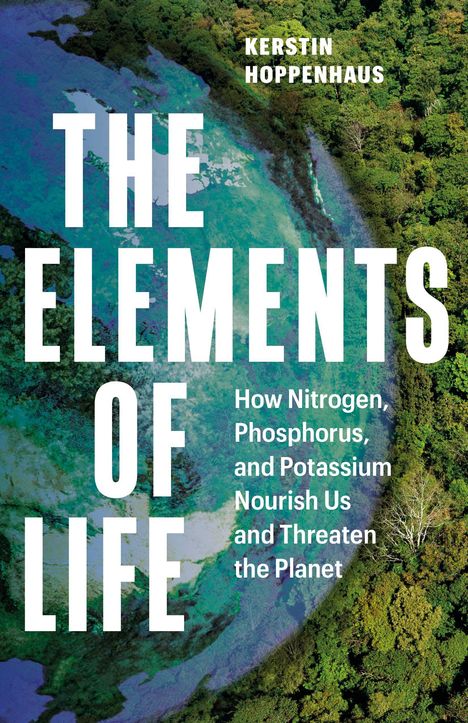
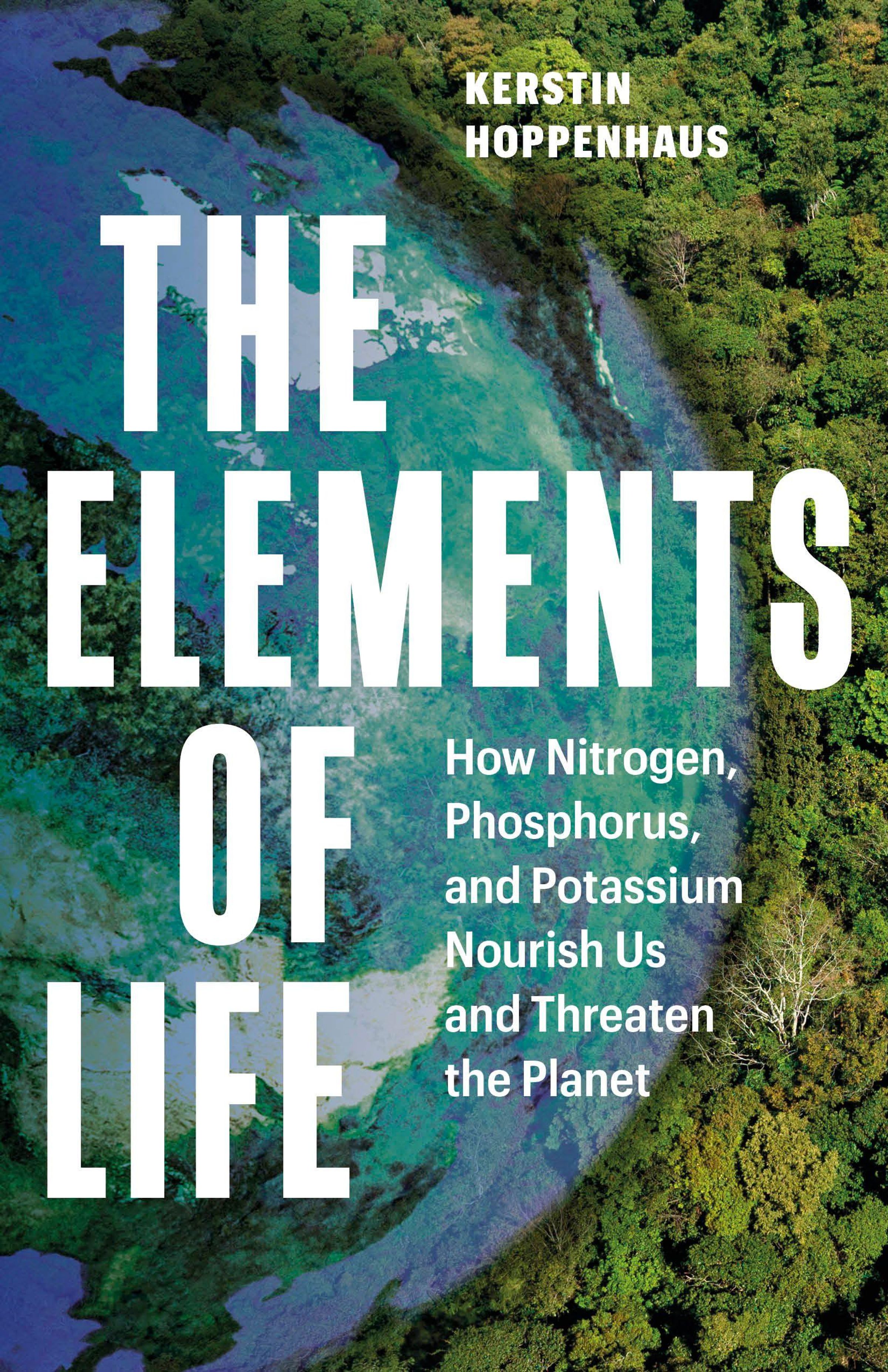
Kerstin Hoppenhaus: The Elements of Life, Gebunden
The Elements of Life
- How Nitrogen, Phosphorus, and Potassium Nourish Us and Threaten the Planet
Sie können den Titel schon jetzt bestellen. Versand an Sie erfolgt gleich nach Verfügbarkeit.
- Übersetzung:
- Sarah Pybus
- Verlag:
- Greystone Books, 11/2026
- Einband:
- Gebunden
- Sprache:
- Englisch
- ISBN-13:
- 9781778403408
- Artikelnummer:
- 12695905
- Umfang:
- 336 Seiten
- Erscheinungstermin:
- 3.11.2026
- Hinweis
-
Achtung: Artikel ist nicht in deutscher Sprache!
Klappentext
Trace the hidden elemental forces shaping life, civilization, and our planet's future---nitrogen, phosphorus, and potassium revealed as never before.
The Pacific island of Banaba, once lush and intricately cultivated, has been reduced to an industrial wasteland by the mining of its phosphate‑rich rock. In just a few decades, colonial powers stripped away its soil to fertilize distant fields and uprooted its people, leaving their homeland largely uninhabitable. Unfortunately, Banaba's fate is far from unique in the history of these three essential elements.
Nitrogen, phosphorus, and potassium sustain every living cell, yet their invisible cycles now teeter on the edge of planetary collapse. Kerstin Hoppenhaus exposes how these three elements---essential to agriculture, ecosystems, and human survival---have become both humanity's greatest resource and most dangerous liability. From the catastrophic Beirut explosion to oxygen-starved ocean dead zones, from colonial phosphate mining on Pacific islands to the revolutionary Haber-Bosch process that feeds billions, this groundbreaking work connects elemental chemistry to ecological crisis, revealing the profound consequences of disrupting Earth's ancient nutrient flows.
Perfect for fans of Elizabeth Kolbert's The Sixth Extinction and readers who enjoyed Richard Powers' The Overstory , The Elements of Life masterfully weaves scientific rigor with compelling narrative, tracing nutrients from cosmic origins through geological time to modern industrial agriculture. She illuminates the Green Revolution's paradox---dramatically increased food production alongside catastrophic environmental degradation---while exploring innovative solutions: mycorrhizal networks, precision agriculture, legal personhood for ecosystems like Spain's Mar Menor lagoon, and the urgent framework of planetary boundaries. Her interdisciplinary approach spans geochemistry, marine ecology, agricultural history, and environmental law, offering readers a comprehensive understanding of biogeochemical cycles that rivals works by Jared Diamond and Bill McKibben.
Readers seeking transformative environmental science books for 2026 will discover actionable insights into sustainable farming, nutrient recycling, and planetary stewardship. Hoppenhaus challenges us to reimagine our relationship with Earth's elemental foundations---before we irreversibly destabilize the systems sustaining civilization itself.
Published in Partnership with the David Suzuki Institute