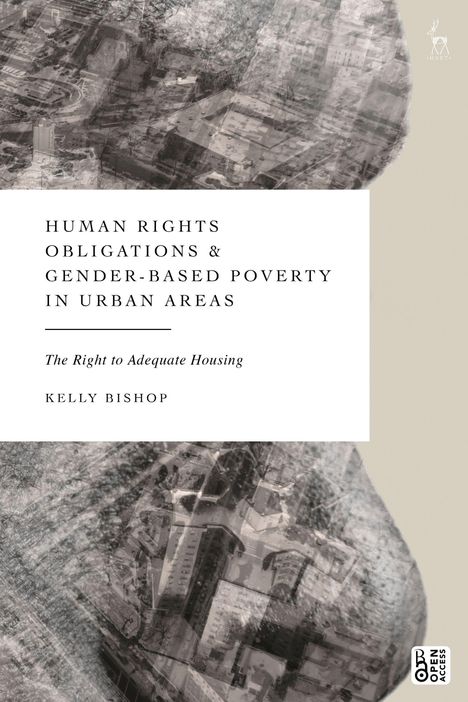
Kelly Bishop: Human Rights Obligations and Gender-Based Poverty in Urban Areas, Gebunden
Human Rights Obligations and Gender-Based Poverty in Urban Areas
- The Right to Adequate Housing
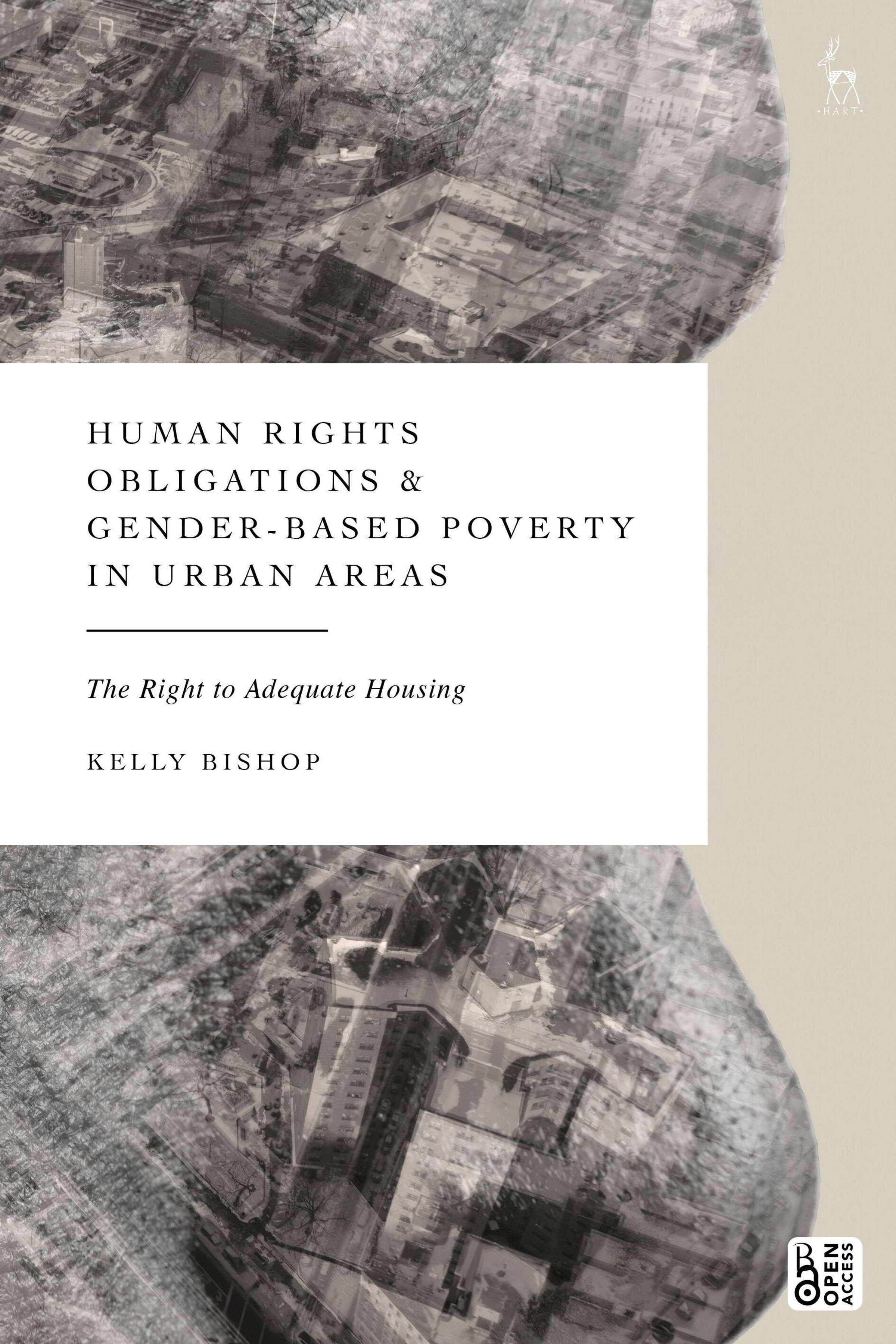
Sie können den Titel schon jetzt bestellen. Versand an Sie erfolgt gleich nach Verfügbarkeit.
- Verlag:
- Bloomsbury Publishing plc, 02/2027
- Einband:
- Gebunden
- Sprache:
- Englisch
- ISBN-13:
- 9781509996964
- Artikelnummer:
- 12839213
- Umfang:
- 288 Seiten
- Gewicht:
- 409 g
- Maße:
- 234 x 156 mm
- Stärke:
- 15 mm
- Erscheinungstermin:
- 4.2.2027
- Serie:
- Hart Publishing
- Hinweis
-
Achtung: Artikel ist nicht in deutscher Sprache!
Klappentext
This open access book reimagines gender-based poverty in urban areas as a human rights issue, offering a transformative legal framework to address one of the most pressing and overlooked challenges of our time.
More than half the world's population now lives in cities, with women comprising a growing share of the urban population / residents / people living in urban areas. Yet gender-based poverty remains a persistent and under-addressed issue in international human rights law. No existing convention explicitly tackles the intersection of gender, poverty, and urbanisation. This book breaks new ground by arguing that gender-based poverty in urban areas can - and should - be recognised as a human rights violation.
Drawing on legal theory, feminist legal studies, and international human rights frameworks, the book critiques current legal approaches that treat poverty as a social or moral issue, rather than a structural and multidimensional injustice. It advances Sandra Fredman's four-dimensional model of substantive equality - disadvantage, recognition, participation, and transformation - as a more effective legal lens.
Focusing on the right to adequate housing, the book explores how states' obligations to respect, protect, and fulfil can be clarified and strengthened through this model. It also examines how principles of equality and non-discrimination interact with progressive realisation and economic, social, and cultural rights.
By bridging theory and practice, and incorporating perspectives from the Global South, the book offers a timely and original contribution to human rights law. It provides legal professionals, scholars, and development practitioners with a powerful framework for embedding gender equality in urban policy and advancing social justice through law.
The ebook editions of this book are available open access under a CC BY-NC-ND 4.0 licence on bloomsburycollections. com. Open access was funded by the Swiss National Science Foundation.