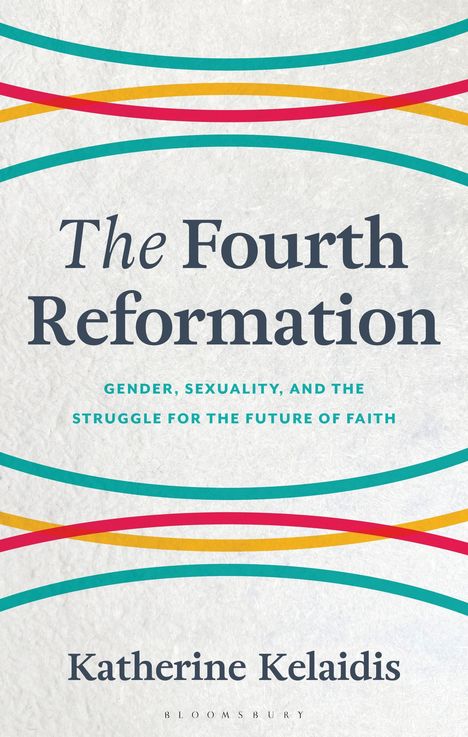
Katherine Kelaidis: The Fourth Reformation, Gebunden
The Fourth Reformation
- Gender, Sexuality, and the Struggle for the Future of Faith
Sie können den Titel schon jetzt bestellen. Versand an Sie erfolgt gleich nach Verfügbarkeit.
- Verlag:
- Bloomsbury Publishing PLC, 11/2026
- Einband:
- Gebunden
- Sprache:
- Englisch
- ISBN-13:
- 9798881800178
- Artikelnummer:
- 12690305
- Umfang:
- 248 Seiten
- Gewicht:
- 503 g
- Maße:
- 229 x 152 mm
- Stärke:
- 28 mm
- Erscheinungstermin:
- 12.11.2026
- Hinweis
-
Achtung: Artikel ist nicht in deutscher Sprache!
Klappentext
Contends that contemporary conflicts over gender and sexuality are not peripheral disputes within religion but the central forces reshaping the future of faith itself.
Framing these struggles as a Fourth Reformation, Katherine Kelaidis shows how debates over women's authority, LGBTQ+ inclusion, family norms, and bodily autonomy have become the primary sites where religious traditions fracture, realign, and redefine their moral authority.
Drawing on global case studies across Christianity, Judaism, Islam, and other traditions, Kelaidis demonstrates how questions of gender and sexuality have replaced doctrine as the decisive boundary markers of religious belonging. She traces how modern religious movements-both progressive and reactionary-mobilize gender norms to assert legitimacy, consolidate power, and forge unexpected political alliances. In doing so, she explains why religious institutions increasingly function as engines of polarization rather than sources of shared moral meaning.
The book situates these developments within a longer historical arc, showing how earlier reformations, secularization, and the rise of liberal democracy displaced theological conflict in favor of ethical and social struggle. It argues that today's gender-focused battles are not signs of religious decline alone, but evidence of religion's adaptive reinvention under modern conditions. At the same time, it accounts for the accelerating rise of the "nones," those without religious commitments, demonstrating how unresolved conflicts over gender and sexuality drive disaffiliation and reshape the religious marketplace.
Accessible yet analytically rigorous, this book offers scholars, students, and general readers a new framework for understanding why religion remains so politically volatile-and why its future will be decided less by belief than by whose bodies, identities, and relationships are deemed sacred.