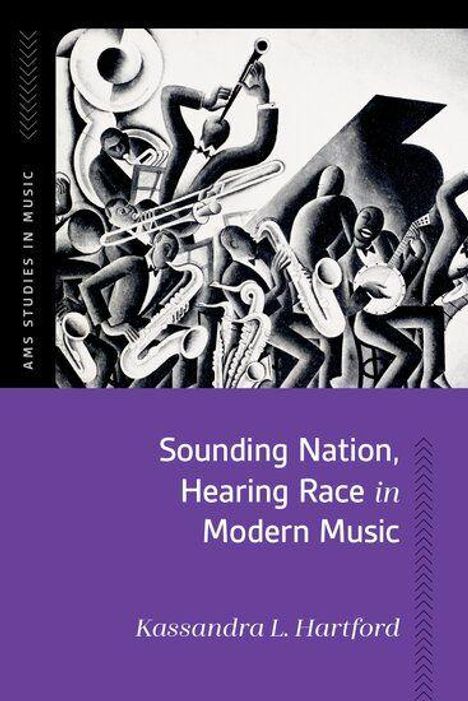
Kassandra L Hartford: Sounding Nation, Hearing Race in Modern Music, Gebunden
Sounding Nation, Hearing Race in Modern Music
Sie können den Titel schon jetzt bestellen. Versand an Sie erfolgt gleich nach Verfügbarkeit.
- Verlag:
- Oxford University Press, 11/2026
- Einband:
- Gebunden
- Sprache:
- Englisch
- ISBN-13:
- 9780197833179
- Artikelnummer:
- 12770957
- Umfang:
- 384 Seiten
- Erscheinungstermin:
- 11.11.2026
- Hinweis
-
Achtung: Artikel ist nicht in deutscher Sprache!
Klappentext
In 1950, UNESCO's Statement on Race declared race a social construction, signaling a shift in public thought and policy around the meaning of race. Modern music was not immune to such shifts, and in fact participated actively in the reimagining of race and its connection to national identity between the beginning of the First World War and the end of the Second. Through close readings of musical works and original archival research, author Kassandra L. Hartford interrogates how works of modern music in the modernist era policed the national body, both internally and externally, through a racialized rhetoric that marked musics audibly.
Between the world wars, stages across Europe, the United States, and Latin America were flooded with ballets, operas, and program music that explicitly thematized race. Critical responses to such works debated not only their aesthetic merits but also the visions of national identity that they represented. Centering the First World War allies Brazil, France, and the U. S. in her analyses, she demonstrates how each nation navigated legacies of enslavement, colonialism, and imperialism and rewrote their immigration policies to (re)shape an idealized national body. Musical works were often understood to project--even sound--racial and national identities, making music criticism an important forum for debate. The extensive travels of composers, broad circulation of scores and recordings, and increased engagement with foreign presses and critics encouraged composers and audiences to view racial-national representation in music as having both domestic and international importance.
Offering a series of case studies focusing on works by Darius Milhaud, Heitor Villa-Lobos, George Gershwin, John Alden Carpenter, William Still, and Francisco Mignone, the book traces how these imaginings of the racial-national body were revised through transnational circulation and alternately resisted and reified by composers.