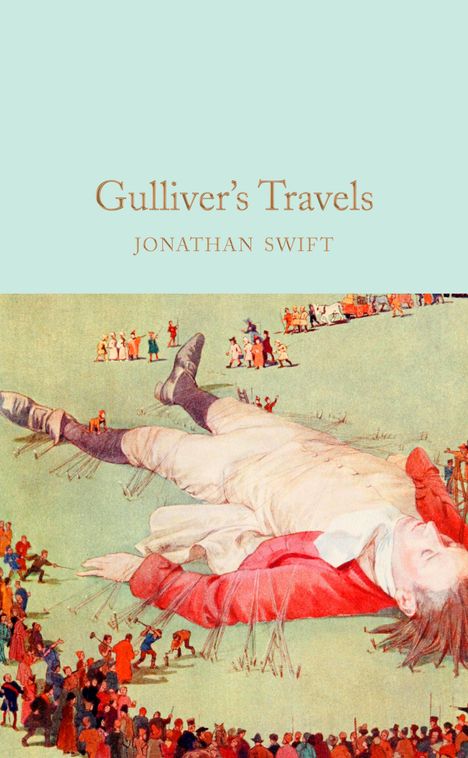
Jonathan Swift: Gulliver's Travels, Gebunden
Gulliver's Travels
(soweit verfügbar beim Lieferanten)
- Verlag:
- Pan Macmillan, 10/2017
- Einband:
- Gebunden
- Sprache:
- Englisch
- ISBN-13:
- 9781509843213
- Artikelnummer:
- 6799830
- Umfang:
- 408 Seiten
- Gewicht:
- 720 g
- Maße:
- 157 x 101 mm
- Stärke:
- 22 mm
- Erscheinungstermin:
- 19.10.2017
- Serie:
- Macmillan Collector's Library
- Hinweis
-
Achtung: Artikel ist nicht in deutscher Sprache!
Weitere Ausgaben von Gulliver's Travels |
Preis |
|---|---|
| Buch, Gebunden, Englisch | EUR 50,49* |
| Buch, Gebunden, Englisch | EUR 27,23* |
| Buch, Kartoniert / Broschiert, Englisch | EUR 33,59* |
| Buch, Kartoniert / Broschiert, ,, Englisch | EUR 6,38* |
| Buch, Leinen, Englisch | EUR 17,15* |
Klappentext
The misadventures of Lemuel Gulliver certainly are extraordinary. First he is shipwrecked in a strange land, and finds himself a prisoner of the tiny inhabitants of Lilliput. Then he washes up in Brobdingnag, where the people are giants of extraordinary proportions. Further exploits see him stranded with the scientists and philosophers of Laputa, and meeting a race of talking horses who rule over bestial humans.
One of the finest satires in the English language, Gulliver's Travels delights in the mockery of everything from government to religion and - despite the passing of nearly three centuries - remains just as funny and relevant today.
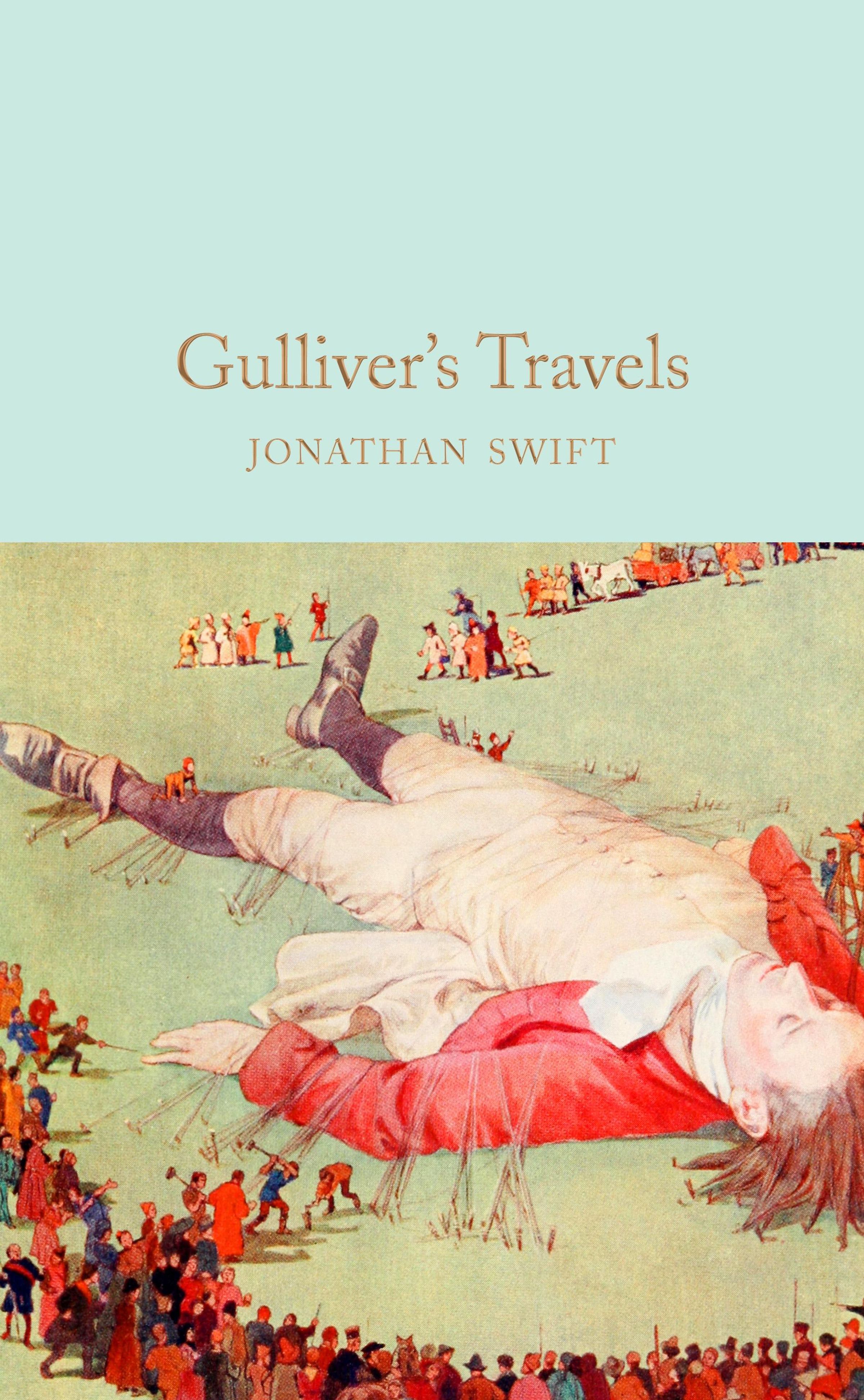
This gorgeous Macmillan Collector's Library edition of Jonathan Swift's Gulliver's Travels features the beautiful artwork of the celebrated English illustrator Arthur Rackham, and an afterword by author and critic, Henry Hitchings.
Designed to appeal to the booklover, the Macmillan Collector's Library is a series of beautiful gift editions of much loved classic titles. Macmillan Collector's Library are books to love and treasure.
Biografie
Jonathan Swift, geb. 1667 in Dublin, 1689-94 Sekretär des Schriftstellers Sir William Temple in England, dann anglikanischer Geistlicher und von 1713 an Dekan von St. Patrick's in Dublin. Mit seinen beißenden Satiren kämpfte er gegen kirchliche und gesellschaftliche Mißstände. Er starb 1745.Mehr von Jonathan Swift