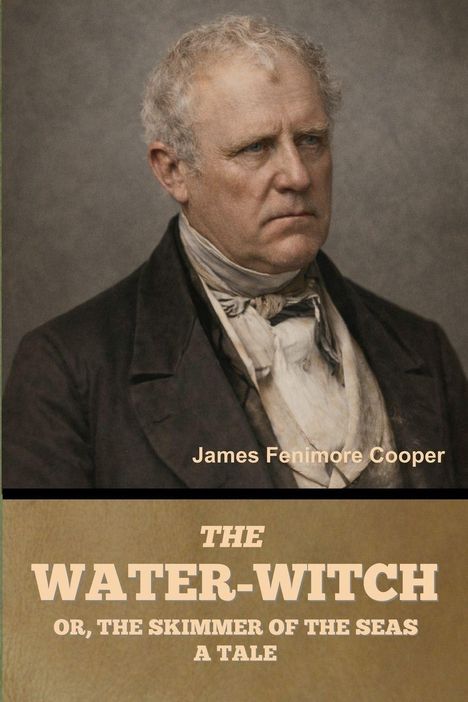
James Fenimore Cooper: The Water-Witch; Or, the Skimmer of the Seas, Kartoniert / Broschiert
The Water-Witch; Or, the Skimmer of the Seas
- A Tale
(soweit verfügbar beim Lieferanten)
- Verlag:
- IndoEuropeanPublishing.com, 05/2026
- Einband:
- Kartoniert / Broschiert
- Sprache:
- Englisch
- ISBN-13:
- 9798889426066
- Artikelnummer:
- 12754911
- Umfang:
- 292 Seiten
- Gewicht:
- 478 g
- Maße:
- 229 x 152 mm
- Stärke:
- 17 mm
- Erscheinungstermin:
- 19.5.2026
- Hinweis
-
Achtung: Artikel ist nicht in deutscher Sprache!
Klappentext
The Water-Witch; Or, the Skimmer of the Seas: A Tale by James Fenimore Cooper is an adventure novel set along the coast of colonial New York in the early eighteenth century. The story follows a mysterious and fast sailing vessel called the Water-Witch, which is rumored to be involved in smuggling goods past British authorities. The novel takes place mainly around New York Harbor and the surrounding coastal areas, where trade, politics, and secrecy shape daily life. Cooper uses the setting to create an exciting maritime atmosphere filled with suspense and intrigue.
The plot centers on the conflict between colonial officials who are trying to stop illegal trade and the clever sailors who operate the Water-Witch. The ship's captain, known as the Skimmer of the Seas, becomes a mysterious and daring figure who often escapes capture through skill and intelligence. Throughout the novel, Cooper mixes action with romance and mystery as several characters become involved in the chase for the elusive vessel. These encounters on land and sea highlight themes of freedom, authority, and the tension between law and independence in colonial society.
Overall, the novel shows Cooper's interest in American history and nautical adventure. Much like his more famous work, The Last of the Mohicans, this story blends historical events with imaginative storytelling. Cooper describes the sea, ships, and coastal landscapes in vivid detail, helping readers feel the excitement of maritime life. The Water-Witch remains an important example of early American adventure fiction and reflects the author's talent for combining history, action, and dramatic characters.
About the author James Fenimore Cooper was an American novelist best known as one of the earliest and most influential writers of historical fiction in the United States. He was born on September 15, 1789, in Burlington, New Jersey, and grew up in Cooperstown, New York, a frontier town founded by his father. This early exposure to wilderness life and encounters between settlers and Native Americans would later shape many of his most famous stories. Cooper lived during a period when the young nation was still defining its identity, and his work helped give American literature a distinct voice.
Before becoming a writer, Cooper pursued a varied education and career path. He briefly attended Yale College but was expelled due to disciplinary issues. Afterward, he joined the U. S. Navy, where he gained firsthand experience with maritime life. These naval experiences strongly influenced several of his novels, especially those focused on the sea. Cooper did not initially plan to be an author; legend has it that he began writing after claiming he could write a better novel than one he had just read.
Cooper achieved lasting fame with The Leatherstocking Tales, a series of five novels that includes The Last of the Mohicans, The Deerslayer, and The Pioneers. These books feature the iconic frontiersman Natty Bumppo and explore themes of nature, civilization, and cultural conflict. Cooper's portrayal of Native Americans was more sympathetic and complex than that of many writers of his time, though modern readers still debate aspects of his representation. His vivid descriptions of the American wilderness helped establish the frontier as a central myth in American culture.
Later in life, Cooper lived both in the United States and Europe, where he became involved in political and social debates. He often used his writing to criticize materialism, social inequality, and what he saw as the moral decline of society. Although his popularity declined toward the end of his life, his influence endured. James Fenimore Cooper died on September 14, 1851, but his novels remain important for their role in shaping American literary traditions and national identity.
Mehr von James Fenimore ...