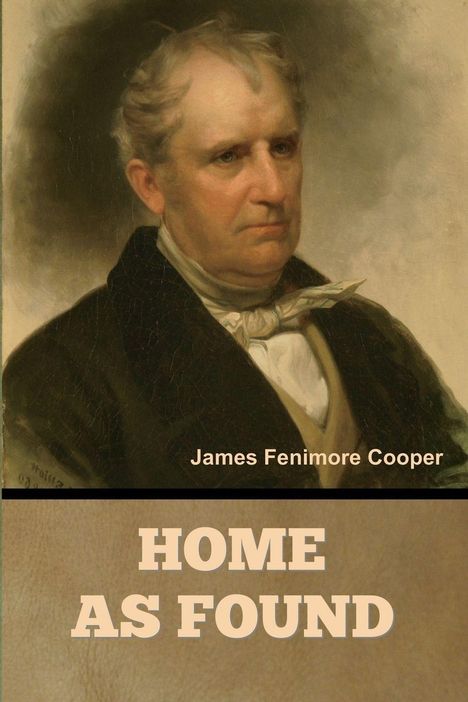
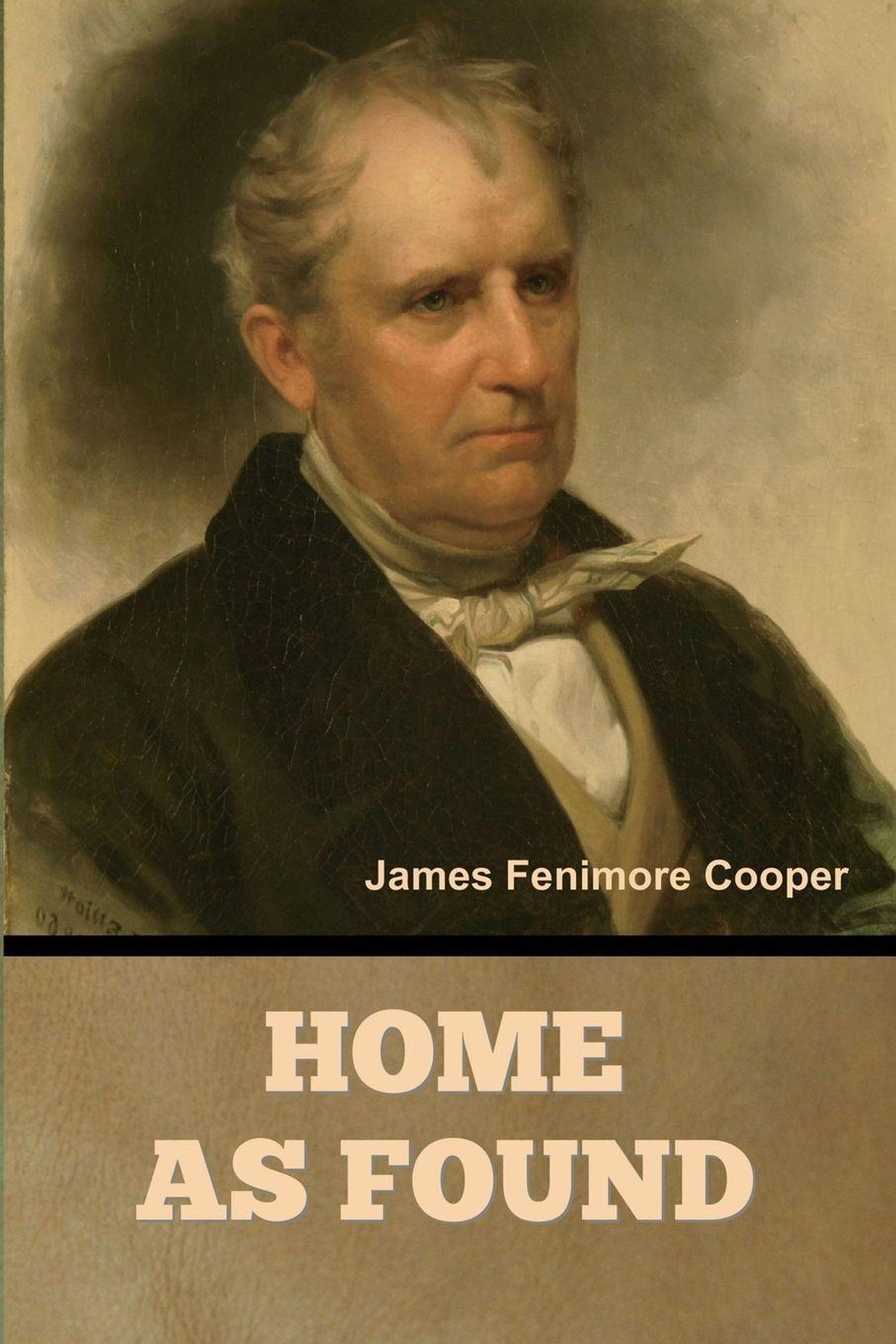
James Fenimore Cooper: Home as Found, Kartoniert / Broschiert
Home as Found
(soweit verfügbar beim Lieferanten)
- Verlag:
- IndoEuropeanPublishing.com, 02/2026
- Einband:
- Kartoniert / Broschiert
- Sprache:
- Englisch
- ISBN-13:
- 9798889425717
- Artikelnummer:
- 12624923
- Umfang:
- 296 Seiten
- Gewicht:
- 484 g
- Maße:
- 229 x 152 mm
- Stärke:
- 18 mm
- Erscheinungstermin:
- 12.2.2026
- Hinweis
-
Achtung: Artikel ist nicht in deutscher Sprache!
Weitere Ausgaben von Home as Found |
Preis |
|---|---|
| Buch, Gebunden, HC gerader Rücken kaschiert, Englisch | EUR 89,90* |
| Buch, Gebunden, Englisch | EUR 79,90* |
| Buch, Kartoniert / Broschiert, Englisch | EUR 59,90* |
| Buch, Kartoniert / Broschiert, Paperback, Englisch | EUR 69,90* |
Klappentext
Home as Found by James Fenimore Cooper is a novel that explores the tension between American ideals and social realities in the early nineteenth century. Published in 1838 as a sequel to Homeward Bound, the story follows members of the Effingham family as they attempt to settle back into life in the United States after years abroad. Cooper uses their experiences to examine what "home" truly means, suggesting that returning to one's native land does not guarantee comfort or belonging. Instead, the characters are often met with misunderstanding, jealousy, and rigid social expectations.
One of the central themes of Home as Found is Cooper's critique of American society, particularly its emphasis on materialism and social status. Through the Effingham family's struggles, Cooper highlights how wealth and property shape personal relationships and public opinion. The novel also reflects Cooper's own frustrations with American democracy, as he portrays public judgment as harsh and often uninformed. Characters who value refinement, integrity, and tradition frequently clash with a society more focused on appearances and self-interest.
Ultimately, Home as Found presents a complex and sometimes critical view of American identity. Cooper suggests that a true sense of home is rooted not in geography, but in shared values and mutual respect. While the novel was controversial at the time for its sharp social commentary, it remains significant for revealing Cooper's evolving views on nationalism, culture, and belonging. Through this work, Cooper challenges readers to reconsider what it means to feel "at home" in a rapidly changing society. About the author James Fenimore Cooper was an American novelist best known as one of the earliest and most influential writers of historical fiction in the United States. He was born on September 15, 1789, in Burlington, New Jersey, and grew up in Cooperstown, New York, a frontier town founded by his father. This early exposure to wilderness life and encounters between settlers and Native Americans would later shape many of his most famous stories. Cooper lived during a period when the young nation was still defining its identity, and his work helped give American literature a distinct voice.
Before becoming a writer, Cooper pursued a varied education and career path. He briefly attended Yale College but was expelled due to disciplinary issues. Afterward, he joined the U. S. Navy, where he gained firsthand experience with maritime life. These naval experiences strongly influenced several of his novels, especially those focused on the sea. Cooper did not initially plan to be an author; legend has it that he began writing after claiming he could write a better novel than one he had just read.
Cooper achieved lasting fame with The Leatherstocking Tales, a series of five novels that includes The Last of the Mohicans, The Deerslayer, and The Pioneers. These books feature the iconic frontiersman Natty Bumppo and explore themes of nature, civilization, and cultural conflict. Cooper's portrayal of Native Americans was more sympathetic and complex than that of many writers of his time, though modern readers still debate aspects of his representation. His vivid descriptions of the American wilderness helped establish the frontier as a central myth in American culture.
Later in life, Cooper lived both in the United States and Europe, where he became involved in political and social debates. He often used his writing to criticize materialism, social inequality, and what he saw as the moral decline of society. Although his popularity declined toward the end of his life, his influence endured. James Fenimore Cooper died on September 14, 1851, but his novels remain important for their role in shaping American literary traditions and national identity.
Biografie
James Fenimore Cooper, geb. 1789 in Burlington/New Jersey, verfaßte politische Schriften, Reisebücher, sozialkritische Romane, Satiren und Seeromane, mit denen er Wegbereiter für Herman Melville und Joseph Conrad war. Der Autor verstarb 1851 in Cooperstown/New York.Mehr von James Fenimore ...