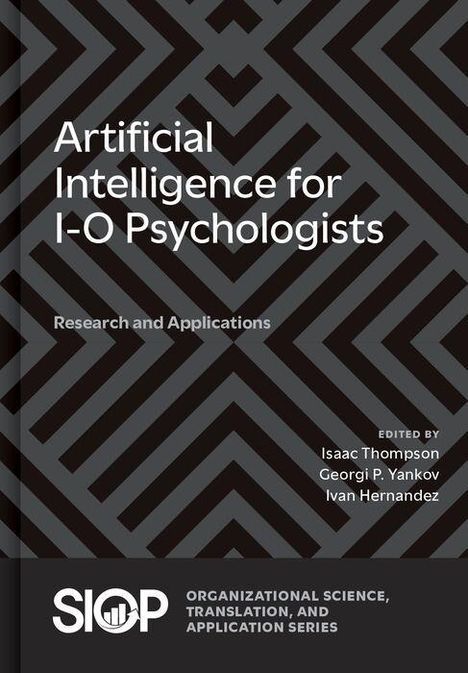
Artificial Intelligence for I-O Psychologists, Gebunden
Artificial Intelligence for I-O Psychologists
- Research and Applications
(soweit verfügbar beim Lieferanten)
- Herausgeber:
- Isaac Thompson, Georgi P Yankov, Ivan Hernandez
- Verlag:
- Oxford University Press, 06/2026
- Einband:
- Gebunden
- Sprache:
- Englisch
- ISBN-13:
- 9780197807279
- Artikelnummer:
- 12778686
- Umfang:
- 712 Seiten
- Gewicht:
- 1388 g
- Maße:
- 258 x 185 mm
- Stärke:
- 49 mm
- Erscheinungstermin:
- 24.6.2026
- Hinweis
-
Achtung: Artikel ist nicht in deutscher Sprache!
Klappentext
Artificial Intelligence for I-O Psychologists: Research and Applicationsis the first comprehensive handbook dedicated to helping industrial-organizational psychologists navigate, understand, and shape the rapidly evolving landscape of artificial intelligence in the world of work. Edited by Georgi P. Yankov, Isaac Thompson, and Ivan Hernandez, this volume brings together 31 chapters written by 81 leading scholars, practitioners, technologists, and policy experts. Its purpose is clear: to provide authoritative, scientifically grounded, and practice-oriented guidance on how AI is transforming assessment, organizational research, and talent management-and how I-O psychologists can lead this transformation responsibly.
The handbook is organized into five sections that mirror the major domains in which AI is reshaping I-O psychology. The opening section offers historical context, emerging trends, and theoretical foundations, explaining why AI represents a paradigm shift for the field. Subsequent sections explore how AI is revolutionizing assessment development and scoring, from automated interviews and simulations to generative item creation and novel data types. Additional chapters examine AI's influence on organizational psychology topics such as leadership development, coaching, DEI initiatives, teamwork with AI agents, workplace monitoring, stress, and access to work.
A major focus of the handbook is equipping I-O psychologists to collaborate effectively with data scientists and engineers. Chapters introduce readers to product development methods, MLOps, evaluation and audit frameworks, and AI-enabled approaches to research design. The final section addresses the ethical, legal, and regulatory implications of AI-based HR technologies, offering practical guidance for ensuring fairness, transparency, and compliance in high-stakes organizational contexts.
Throughout the volume, contributors balance innovation with scientific rigor, offering both critical commentary and practical tools. Readers will find roadmaps for adopting AI responsibly, frameworks for validating AI-based scores, and insights into future trends that will define the next decade of work psychology.