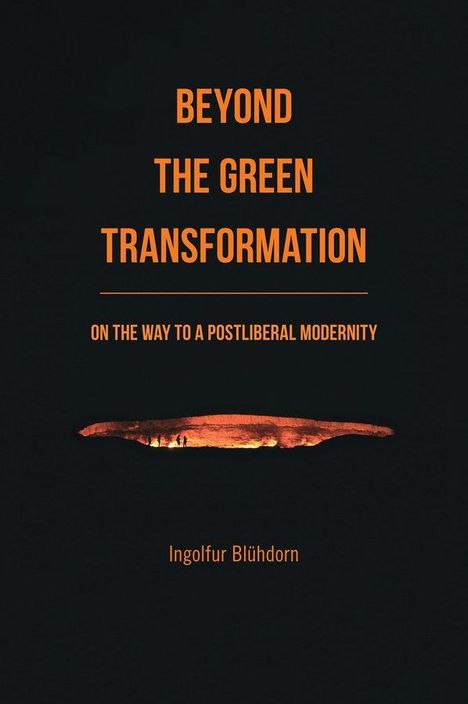
Ingolfur Bluhdorn: Beyond the Green Transformation, Kartoniert / Broschiert
Beyond the Green Transformation
- On the Way to a Postliberal Modernity
(soweit verfügbar beim Lieferanten)
- Verlag:
- Polity Press, 07/2026
- Einband:
- Kartoniert / Broschiert
- Sprache:
- Englisch
- ISBN-13:
- 9781509571048
- Artikelnummer:
- 12590058
- Umfang:
- 240 Seiten
- Gewicht:
- 348 g
- Maße:
- 229 x 192 mm
- Stärke:
- 19 mm
- Erscheinungstermin:
- 3.7.2026
- Hinweis
-
Achtung: Artikel ist nicht in deutscher Sprache!
Weitere Ausgaben von Beyond the Green Transformation |
Preis |
|---|---|
| Buch, Gebunden, Englisch | EUR 83,35* |
Klappentext
Until very recently, the climate crisis was considered the most serious and urgent challenge facing contemporary societies. There was widespread agreement that a comprehensive green transformation is necessary to address the planetary emergency, secure the survival of humanity and facilitate a good life for all. Yet, suddenly, ecological issues have slipped down the political agenda. Conservatives welcome 'the end of the green hegemony', the far-right rallies against eco-emancipatory policies, and an authoritarian turn that once again champions fossil fuels is gaining momentum across the world.
This book examines the causes of this dramatic change of course. It reminds us that in environmental politics, social norms and cultural values are as important as biophysical facts. Even if the scientific evidence on climate change and the collapse of biophysical systems is clear, the supposedly categorical imperatives presented by ecologists ultimately express a particular worldview.
Ingolfur Blühdorn argues that the emancipatory logic itself is a key driver of the current collapse of the green project. He shows how this counter-cultural project was fraught with inherent contradictions. Eco-emancipatory movements themselves contributed to mainstreaming values, lifestyles and notions of self-determination that ultimately blocked the green transformation and propelled a postliberal turn. To many, eco-political ideals today appear more like a threat than a promise. A renaissance of fossil fuels, autocratic leadership, and strict policies of exclusion seem to offer a better future, beyond eco-emancipatory values and the scenarios of ecological collapse.
But the transition to a postliberal modernity will benefit very few and make life brutish, nasty and short for many.