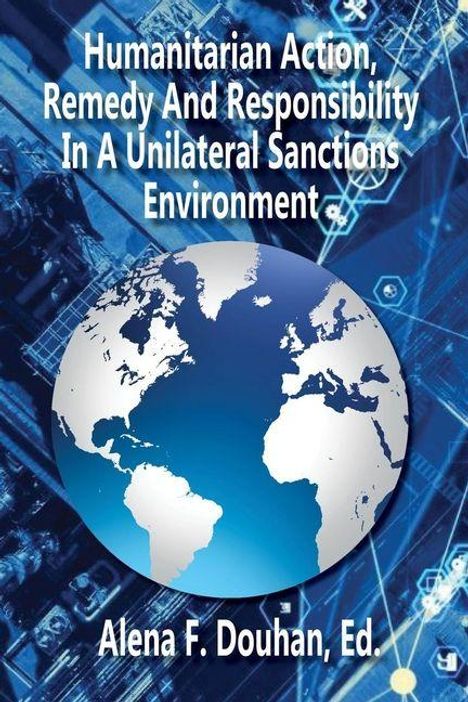
Humanitarian Action, Remedy and Responsibility in a Unilateral Sanctions Environment, Kartoniert / Broschiert
Humanitarian Action, Remedy and Responsibility in a Unilateral Sanctions Environment
Lassen Sie sich über unseren eCourier benachrichtigen, sobald das Produkt bestellt werden kann.
- Herausgeber:
- Alena F Douhan
- Verlag:
- Clarity Press, 06/2026
- Einband:
- Kartoniert / Broschiert
- Sprache:
- Englisch
- ISBN-13:
- 9781963892369
- Umfang:
- 500 Seiten
- Gewicht:
- 621 g
- Maße:
- 229 x 152 mm
- Stärke:
- 38 mm
- Erscheinungstermin:
- 1.6.2026
- Hinweis
-
Achtung: Artikel ist nicht in deutscher Sprache!
Ähnliche Artikel


Klappentext
Humanitarian Action, Remedy and Responsibility in a Unilateral Sanctions Environment brings together the outcomes of two high-level UN conferences held in Tehran (2025) and Geneva (2026), offering the first comprehensive examination of how unilateral sanctions, their enforcement mechanisms and over-compliance reshape humanitarian response, access to justice and the right to an effective remedy.
The volume explores a wide range of structural barriers created by unilateral coercive measures, including financial restrictions, travel bans, asset freezes, licensing delays, criminal and civil penalties for circumvention, and the expanding use of secondary sanctions. Contributors show how these measures, typically adopted outside any judicial scrutiny, undermine due process, shift the burden of proof onto targeted individuals and entities, and limit the ability to challenge designations or seek redress. The book provides concrete examples of how sanctions affect legal representation, access to evidence, transparency of procedures and recognition of judicial decisions.
A substantial part of the book focuses on the humanitarian consequences of sanctions. It documents the operational challenges faced by humanitarian actors, including impediments to fundraising, money transfers, insurance, transport and delivery of essential goods -- even under humanitarian exemptions of UN Security Council resolutions. Particular attention is given to the impact on critical infrastructure, basic services and populations in vulnerable situations.
Building on expert consultations and contributions from academics, governments, humanitarian organizations and legal practitioners, the volume proposes a structured reflection on effective remedy and accountability . It examines existing gaps in international law, the scarcity of mechanisms of adjudication and redress, and the responsibilities of sanctioning, enforcing, implementing and targeted states, as well as private actors and financial institutions.
The book also introduces emerging discussions on fiscal sovereignty, debt sustainability, economic coercion and the role of international financial institutions, arguing that meaningful accountability and effective remedy require not only legal pathways but also structural reforms of global financial governance.
By integrating legal analysis, humanitarian perspectives and policy recommendations, this book offers a timely contribution on humanitarian and human rights implications.