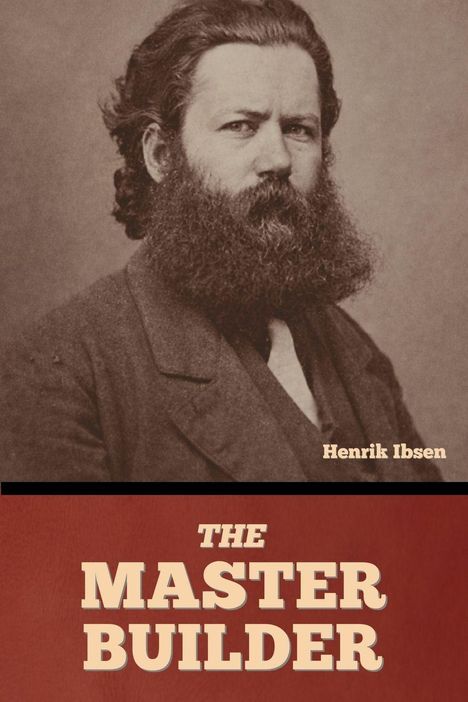
Henrik Ibsen: The Master Builder, Kartoniert / Broschiert
The Master Builder
(soweit verfügbar beim Lieferanten)
- Verlag:
- IndoEuropeanPublishing.com, 06/2026
- Einband:
- Kartoniert / Broschiert
- Sprache:
- Englisch
- ISBN-13:
- 9798889426196
- Artikelnummer:
- 12785071
- Umfang:
- 182 Seiten
- Gewicht:
- 305 g
- Maße:
- 229 x 152 mm
- Stärke:
- 11 mm
- Erscheinungstermin:
- 16.6.2026
- Hinweis
-
Achtung: Artikel ist nicht in deutscher Sprache!
Weitere Ausgaben von The Master Builder |
Preis |
|---|---|
| Buch, Kartoniert / Broschiert, Englisch | EUR 34,90* |
| Buch, Kartoniert / Broschiert, Englisch | EUR 29,90* |
| Buch, Gebunden, Englisch | EUR 49,90* |
| Buch, Gebunden, Englisch | EUR 59,90* |
Klappentext
Henrik Ibsen's The Master Builder explores the psychological struggles of ambition, guilt, and fear of decline through the character of Halvard Solness, a successful but deeply troubled architect. Solness has risen to prominence through a combination of talent and ruthless determination, yet he is haunted by a persistent fear that younger generations will replace him. This anxiety manifests in his controlling behavior toward his employees and his reluctance to mentor younger architects. Ibsen uses Solness to examine the cost of success, suggesting that ambition, when driven by insecurity, can lead to isolation and moral compromise.
The arrival of Hilda Wangel introduces a disruptive force that challenges Solness's carefully constructed world. Hilda represents youth, vitality, and an almost mystical belief in human potential. She encourages Solness to embrace his former daring spirit and pursue greatness without fear. However, her influence is ambiguous-she both inspires and manipulates him, pushing him toward a dangerous assertion of his own power. Through their interaction, Ibsen explores the tension between illusion and reality, as Hilda's idealized vision of Solness contrasts sharply with his fragile mental state and unresolved guilt over past actions.
Ultimately, The Master Builder is a ic exploration of the human desire for significance and the destructive consequences of living in fear. Solness's final act-climbing the tower despite his terror-symbolizes both a desperate attempt to reclaim his greatness and a surrender to the illusions that have consumed him. His fall underscores Ibsen's critique of unchecked ambition and the dangers of self-deception. The play leaves the audience questioning whether true fulfillment comes from external achievement or from confronting one's inner fears and accepting human limitations.
Biografie
Henrik Ibsen, geboren 1828 in Skien, ist wohl der wichtigste und berühmteste skandinavische Dramatiker. Nach einer Apothekerlehre und Dramaturgentätigkeit verschrieb er sich ab 1854 ganz dem Theater. Er starb 1906 in Oslo.