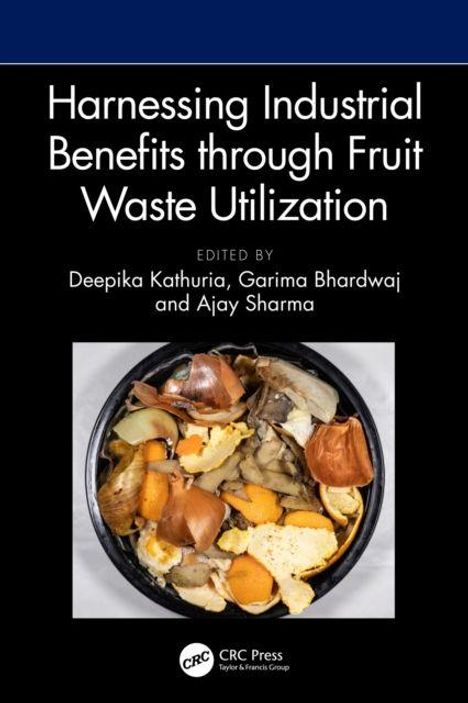
Harnessing Industrial Benefits through Fruit Waste Utilization, Gebunden
Harnessing Industrial Benefits through Fruit Waste Utilization
Sie können den Titel schon jetzt bestellen. Versand an Sie erfolgt gleich nach Verfügbarkeit.
- Herausgeber:
- Ajay Sharma, Deepika Kathuria, Garima Bhardwaj
- Verlag:
- Taylor & Francis Ltd, 12/2026
- Einband:
- Gebunden
- Sprache:
- Englisch
- ISBN-13:
- 9781041007784
- Artikelnummer:
- 12816332
- Umfang:
- 360 Seiten
- Erscheinungstermin:
- 8.12.2026
- Hinweis
-
Achtung: Artikel ist nicht in deutscher Sprache!
Klappentext
This book epitomizes the different chapters on the valorization of fruit waste for industrial applications. Fruit waste refers to the indigestible parts that are thrown away at different stages such as collection, handling, shipping, and processing. The fruit waste can also be produced at different steps from farm to consumer, involving both pre- and post-consumer stages of the food supply chain. As per the United Nations Food and Agriculture Organization (FAO) among all types of foods, the highest waste is generated by fruits and vegetables (around 60%). Owing to their high fermentability and biodegradability, these fruit wastes can cause a notable burden to the environment, which may lead to environmental pollution, global warming, and various human health issues. This fruit waste is a rich source of potentially valuable bioactive compounds, such as carotenoids, polyphenols, dietary fibers, vitamins, enzymes, and oils, among others. The implementation of circular economy to manage the fruit waste will prevent the environmental issues as well as the depletion of resources. The fruit waste byproducts possess many applications in industries such as food, paper, biodiesel, packaging, cosmetics, bio-sorbents, bakery products, and prebiotics. Therefore, the scientific community is working on the utilization of fruit waste for various industrial applications.
Features:
This book will
· Provide an up-to-date description of fruit waste with reference to its industrial applications.
· Discuss case studies on the utilization of fruit waste to reach circular economy goals.
· Highlight current challenges and gaps in the field and provide future directions for efficient valorization of fruit waste.
The book will offer a valuable contribution to knowledge and can serve as a reference book for undergraduate and postgraduate students, researchers and scientists in the field of natural products, botany, ethnobotany, herbal medicines, pharmacology, microbiology, food technology, biotechnology, nanotechnology, environmental sciences, home sciences, agricultural sciences, polymer chemistry, and chemistry.