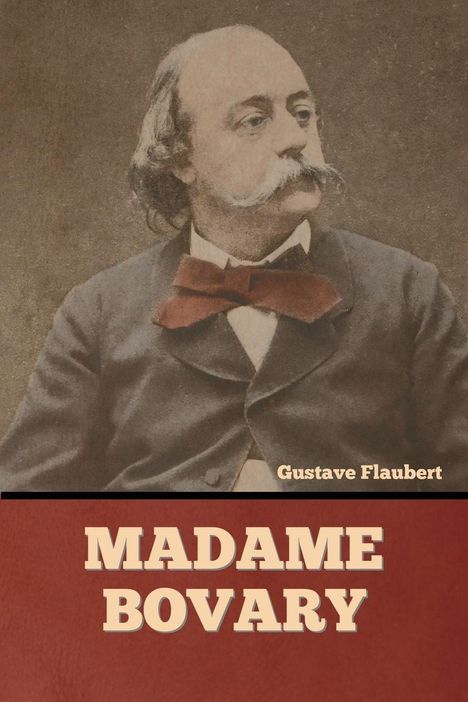
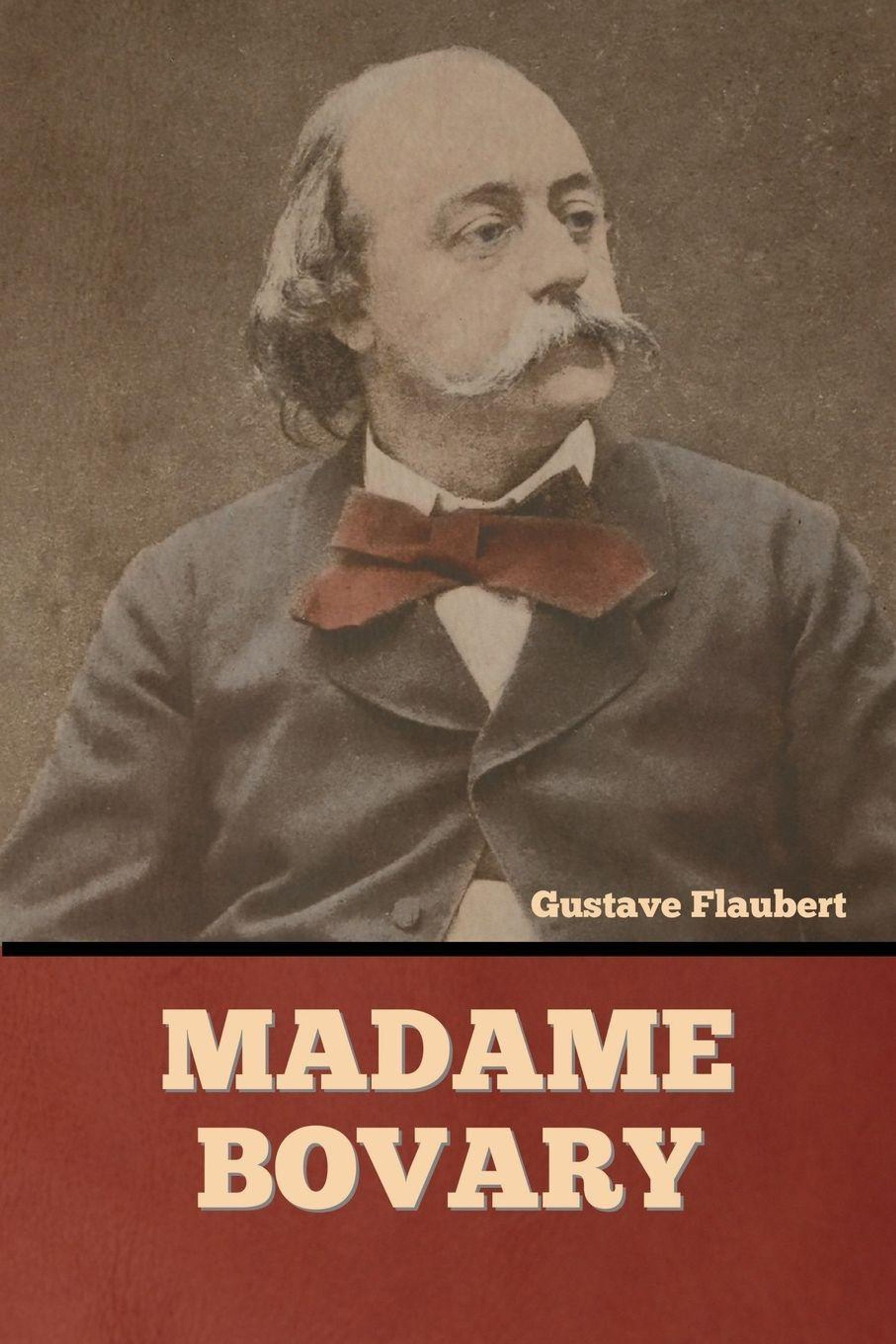
Gustave Flaubert: Madame Bovary, Kartoniert / Broschiert
Madame Bovary
(soweit verfügbar beim Lieferanten)
- Verlag:
- Bibliotech Press, 06/1925
- Einband:
- Kartoniert / Broschiert, Paperback
- Sprache:
- Englisch
- ISBN-13:
- 9781636374895
- Artikelnummer:
- 10498160
- Umfang:
- 276 Seiten
- Gewicht:
- 428 g
- Maße:
- 229 x 152 mm
- Stärke:
- 16 mm
- Erscheinungstermin:
- 1.6.1925
- Hinweis
-
Achtung: Artikel ist nicht in deutscher Sprache!
Weitere Ausgaben von Madame Bovary |
Preis |
|---|---|
| Buch, Gebunden | EUR 6,95* |
| Buch, Gebunden, Englisch | EUR 56,36* |
| Buch, Kartoniert / Broschiert, Englisch | EUR 37,64* |
| Buch, Gebunden, Mit Lesebändchen | EUR 44,00* |
| Buch, Kartoniert / Broschiert, , | EUR 18,00* |
| Buch, Kartoniert / Broschiert, Englisch | EUR 69,90* |
| Buch, Gebunden, Englisch | EUR 89,90* |
| Buch, Kartoniert / Broschiert, Englisch | EUR 12,96* |
Klappentext
Madame Bovary, originally published as Madame Bovary: Provincial Manners (French: Madame Bovary), is the debut novel of French writer Gustave Flaubert, published in 1856. The eponymous character lives beyond her means in order to escape the banalities and emptiness of provincial life.
When the novel was first serialized in Revue de Paris between 1 October 1856 and 15 December 1856, public prosecutors attacked the novel for obscenity. The resulting trial in January 1857 made the story notorious. After Flaubert's acquittal on 7 February 1857, Madame Bovary became a bestseller in April 1857 when it was published in two volumes. A seminal work of literary realism, the novel is now considered Flaubert's masterpiece, and one of the most influential literary works in history. The British critic James Wood writes: "Flaubert established, for good or ill, what most readers think of as modern realist narration, and his influence is almost too familiar to be visible."
Long established as one of the greatest novels, the book has been described as a "perfect" work of fiction. Henry James wrote: "Madame Bovary has a perfection that not only stamps it, but that makes it stand almost alone: it holds itself with such a supreme unapproachable assurance as both excites and defies judgment." Marcel Proust praised the "grammatical purity" of Flaubert's style, while Vladimir Nabokov said that "stylistically it is prose doing what poetry is supposed to do". Similarly, in his preface to his novel The Joke, Milan Kundera wrote, "not until the work of Flaubert did prose lose the stigma of aesthetic inferiority. Ever since Madame Bovary, the art of the novel has been considered equal to the art of poetry." Giorgio de Chirico said that in his opinion "from the narrative point of view, the most perfect book is Madame Bovary by Flaubert". Julian Barnes called it the best novel that's ever been written.
The novel exemplifies the tendency of realism, over the course of the nineteenth century, to become increasingly psychological, concerned with the accurate representation of thoughts and emotions rather than of external things. In this way it precedes the French novelist Marcel Proust and the twentieth-century apotheosis James Joyce. (wikipedia. org)
Biografie
Gustave Flaubert, geb. 1821 in Rouen als Sohn eines Chirurgen, besuchte zuerst die Schulen in seiner (durch 'Madame Bovary' berühmt gewordenen) Vaterstadt, studierte eher lust- und erfolglos die Rechte in Paris und musste sich dann aufgrund eines rätselhaften Nervenleidens aus jeder Berufstätigkeit zurückziehen. Er lebte in strenger schriftstellerischer Askese in Rouen, unternahm immer wieder Reisen in Europa, nach Nordafrika und dem Nahen Osten und starb 1880 im Alter von 59 Jahren. Flaubert war unerbittliche Präzision in der Kunst wichtiger als überhitzte Inspiration und das Suchen nach bisher unbeschriebenen Aspekten der Wirklichkeit wesentlicher als romantische Gefühlsdarstellung. Diese strenge Forderung setzte er in 'Madame Bovary' in revolutionärer Weise um, doch vorher hatte es in seinem Leben eine Epoche gegeben, die in ihrer anarchischen Heftigkeit ihresgleichen sucht.§Flaubert verspottete seine Zeitgenossen und setzte ihnen mit unübertroffener sprachlicher Schärfe zu. Bereits sein erstes gedrucktes Werk, Madame Bovary, rief ebensoviel Hass wie Bewunderung hervor und sicherte ihm einen Ehrenplatz in der ewigen Bibliothek der Weltliteratur. Flaubert forderte zeitlebens die Lesegewohnheiten seines Publikums heraus und lehrte es, sich von der Vorliebe für das Gewöhnliche frei zu machen. Diese Art der literarischen Umerziehung begeistert auch heutige Leser durch ihre kompromisslose Originalität.