
Guljakhon Zafarovna Amanova: The Impact of the UN Human Rights Committee's State Reporting Procedure on Human..., Gebunden
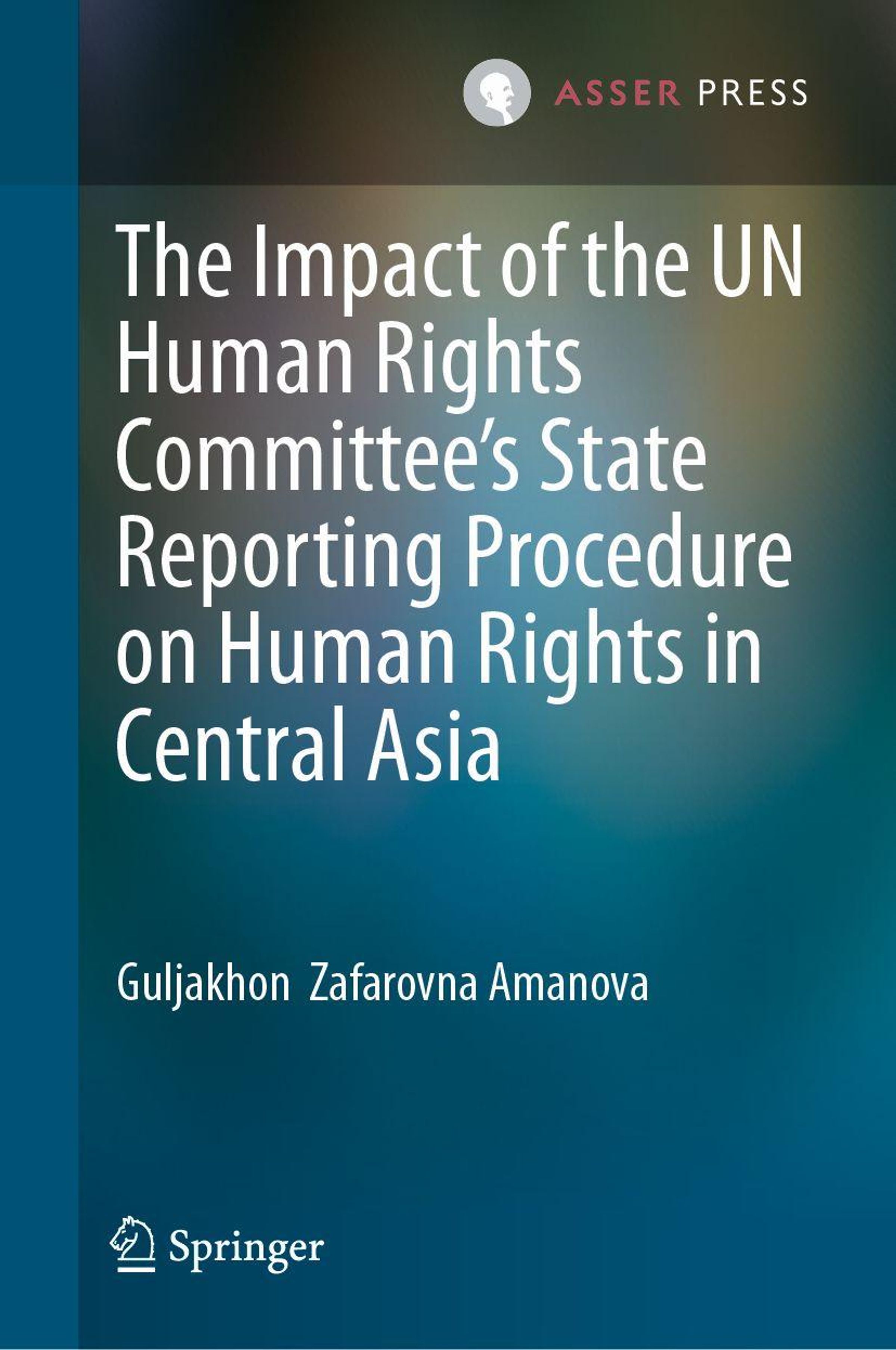
The Impact of the UN Human Rights Committee's State Reporting Procedure on Human Rights in Central Asia
(soweit verfügbar beim Lieferanten)
- Verlag:
- T.M.C. Asser Press, 06/2026
- Einband:
- Gebunden
- Sprache:
- Englisch
- ISBN-13:
- 9789462657700
- Artikelnummer:
- 12593215
- Umfang:
- 356 Seiten
- Gewicht:
- 678 g
- Maße:
- 234 x 156 mm
- Stärke:
- 21 mm
- Erscheinungstermin:
- 30.6.2026
- Hinweis
-
Achtung: Artikel ist nicht in deutscher Sprache!
Klappentext
This book examines how a mandatory UN oversight mechanism can influence State behaviour and legal reform in one of the world's least studied regions. It reveals that the Human Rights Committee's (hereafter: HRCtee) State reporting procedure is far more than a formal obligation: it operates as a sustained process of dialogue, persuasion, and normative pressure.
By following the reporting cycles from the late Soviet era through the post-independence submissions of Kazakhstan, Kyrgyzstan, Tajikistan, Turkmenistan, and Uzbekistan over nearly five decades, the monograph uncovers how the process has shaped domestic debate, made room for civil society engagement, and contributed to legislative and institutional change. Drawing on a combination of field research, documentary evidence, interviews with government officials, civil society activists and experts, as well as direct observation of HRCtee sessions, the book highlights both the visible --- such as references to the Committee's interpretation in legal acts --- and more subtle forms of influence, including gradual shifts in discourse, expectations, and administrative practice.
What distinguishes this book is its exclusive focus on the reporting mechanism itself, rather than the more frequently analysed individual complaints procedure. It shows how structured dialogue, interpretative guidance, and reputational incentives can lead to the gradual internalisation of norms, even in contexts marked by political sensitivity, limited transparency, and post-Soviet bureaucratic legacies. Spanning the USSR's ratification of the ICCPR in 1973 to the contemporary engagement of the Central Asian states with the UN treaty body system, the volume traces a narrative of resistance, adaptation, and institutional learning.
The book is intended for scholars, experts, practitioners, and policy actors interested in how international oversight influences domestic change, and offers practical insights for those seeking to engage with treaty bodies, strengthen domestic reforms, or assess the real-world effects of international human rights monitoring.
Guljakhon Zafarovna Amanova holds a PhD in legal studies from the University of Cambridge, and is an independent human rights legal researcher focusing on Uzbekistan and Central Asia, based in Tashkent, Uzbekistan.