Götz Hoeppe: How Data Need People, Gebunden
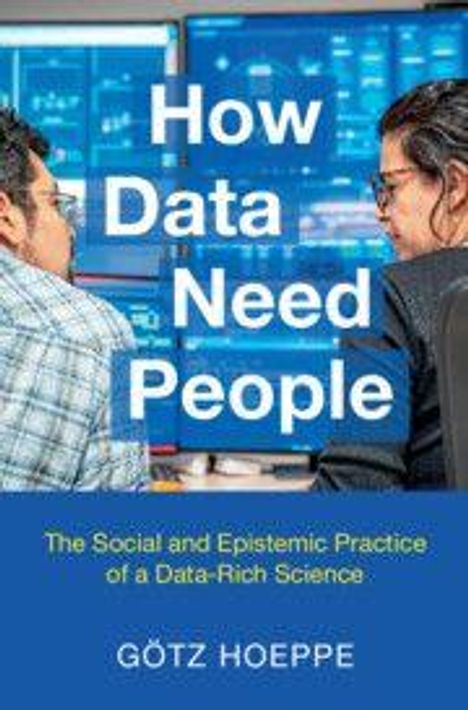
How Data Need People
- The Social and Epistemic Practice of a Data-Rich Science
(soweit verfügbar beim Lieferanten)
- Verlag:
- Cambridge University Press, 06/2026
- Einband:
- Gebunden
- Sprache:
- Englisch
- ISBN-13:
- 9781009686723
- Artikelnummer:
- 12625639
- Umfang:
- 300 Seiten
- Gewicht:
- 500 g
- Maße:
- 229 x 152 mm
- Stärke:
- 18 mm
- Erscheinungstermin:
- 18.6.2026
- Hinweis
-
Achtung: Artikel ist nicht in deutscher Sprache!
Weitere Ausgaben von How Data Need People |
Preis |
|---|---|
| Buch, Kartoniert / Broschiert, Englisch | EUR 46,09* |
Klappentext
From genome sequencing to large sky surveys, digital technologies produce massive datasets that promise unprecedented scientific insights. But data, for being good to use and reuse, need people - scientists, technicians, and administrators - as embodied, evaluative, social humans. In this book, anthropologist Götz Hoeppe draws on an ethnography of astronomical research to examine the media and practices that scientists and technicians use to instruct graduate students, make diagrams for data calibration and discovery, organize collaborative work, negotiate the ethics of open access, encode their knowledge in datasets - and undertake social inquiries along the way. This book offers a reflection on the sociality of data-rich research that will benefit attempts to integrate human and machine learning. It will be of interest for students and scholars in data science and science and technology studies, as well as in anthropology, sociology, history, and the philosophy of science. This book is also available Open Access on Cambridge Core.