Frida Kahlo: Kahlo-isms, Gebunden
Kahlo-isms
Buch
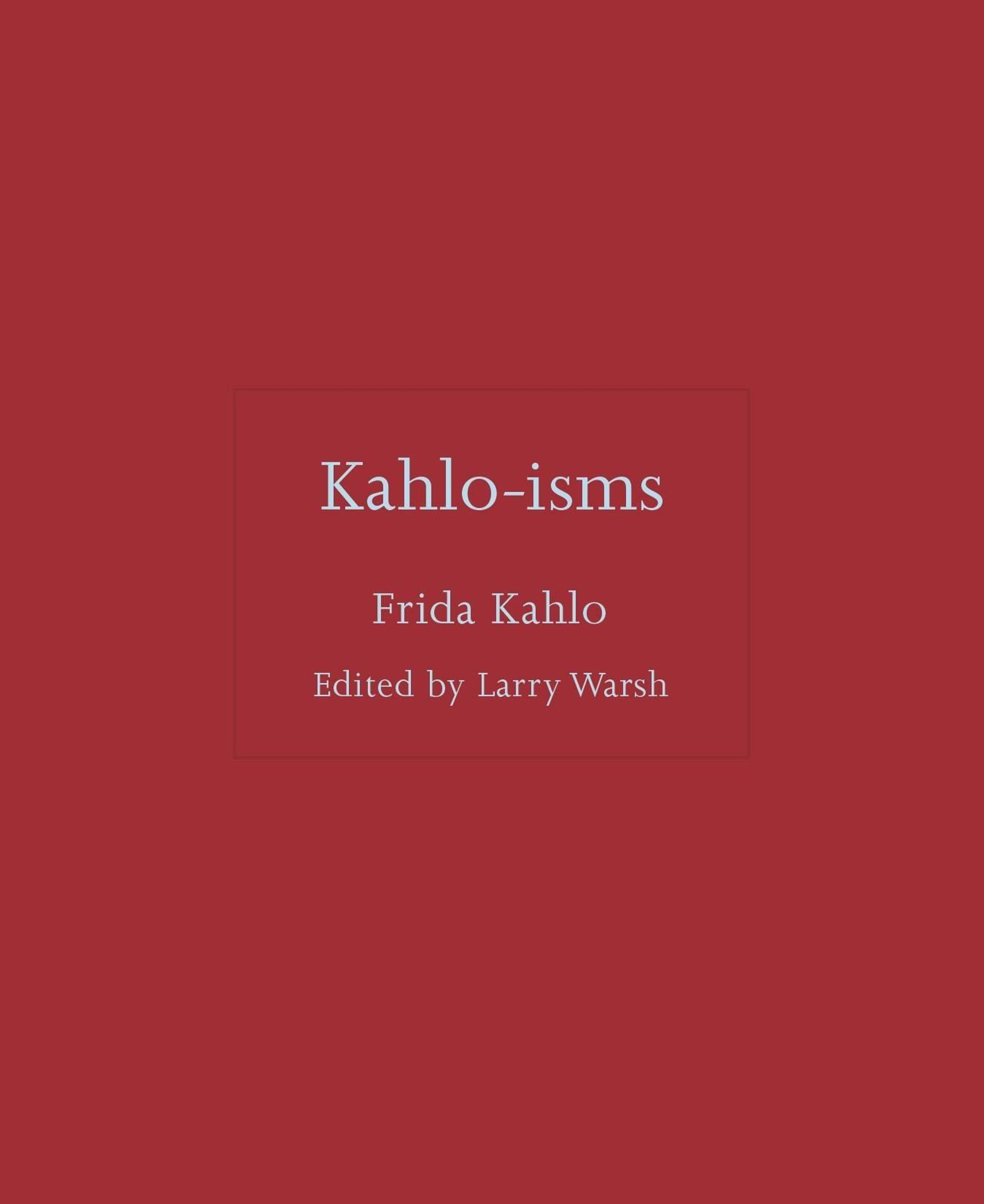
Artikel noch nicht erschienen, voraussichtlicher Liefertermin ist der 24.11.2026.
Sie können den Titel schon jetzt bestellen. Versand an Sie erfolgt gleich nach Verfügbarkeit.
Sie können den Titel schon jetzt bestellen. Versand an Sie erfolgt gleich nach Verfügbarkeit.
Aktueller Preis: EUR 17,55
Versandkosten
(United States of America): EUR 19,90
- Herausgeber:
- Larry Warsh
- Verlag:
- Princeton University Press, 11/2026
- Einband:
- Gebunden
- Sprache:
- Englisch
- ISBN-13:
- 9780691291956
- Artikelnummer:
- 12673392
- Umfang:
- 144 Seiten
- Erscheinungstermin:
- 24.11.2026
- Serie:
- ISMs
- Hinweis
-
Achtung: Artikel ist nicht in deutscher Sprache!
Klappentext
A collection of compelling quotations from iconic painter Frida Kahlo
Frida Kahlo (1907--1954) has achieved a legendary status in the visual world. A master of the self-portrait, she celebrated Mexican culture and heritage in her work while also intimately and poignantly exploring identity, gender, sexuality, disability, race, and the body. Drawn from Kahlo's diaries, letters, interviews, and other sources, Kahlo-ismsis a powerful, revealing, and memorable collection of quotations from throughout her life. Fierce, individual, and introspective, Kahlo's words offer a vivid, immediate window into the life, mind, and spirit of one of the most influential artists of the twentieth century.
- "I drank to drown my pain, but the damned pain learned how to swim."
- "There have been two great accidents in my life. One was the trolley, and the other was Diego. Diego was by far the worst."
- "Feet, what do I need you for when I have wings to fly?"
- "I paint self-portraits because I am so often alone, because I am the person I know best."
- "Nothing is worth more than laughter. It is strength to laugh and to abandon oneself, to be light."

Frida Kahlo
Kahlo-isms
Aktueller Preis: EUR 17,55