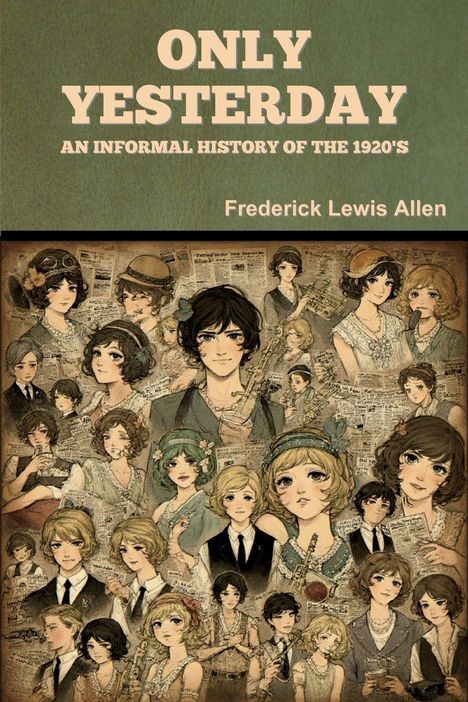
Frederick Lewis Allen: Only Yesterday, Kartoniert / Broschiert
Only Yesterday
- An Informal History of the 1920's
(soweit verfügbar beim Lieferanten)
- Verlag:
- Bibliotech Press, 06/2026
- Einband:
- Kartoniert / Broschiert
- Sprache:
- Englisch
- ISBN-13:
- 9798897733576
- Artikelnummer:
- 12778532
- Umfang:
- 278 Seiten
- Gewicht:
- 456 g
- Maße:
- 229 x 152 mm
- Stärke:
- 16 mm
- Erscheinungstermin:
- 10.6.2026
- Hinweis
-
Achtung: Artikel ist nicht in deutscher Sprache!
Weitere Ausgaben von Only Yesterday |
Preis |
|---|
Klappentext
Only Yesterday: An Informal History of the 1920s by Frederick Lewis Allen is a lively, accessible look at American life during the decade between World War I and the Great Depression. Rather than focusing primarily on political leaders or formal historical analysis, Allen writes in a narrative style that feels almost journalistic, capturing what ordinary people saw, felt, and experienced as the 1920s unfolded. He opens with the national mood following the First World War, describing a society both relieved and disoriented, eager to turn away from sacrifice and toward pleasure, novelty, and rapid change.
Across the book, Allen traces the cultural revolutions that defined the era: the explosion of consumerism, the rise of advertising, and the profound effects of new technologies like the automobile and radio. He also explores the social transformations that unsettled the older generation-flappers, jazz, prohibition-era nightlife, and the loosening of traditional moral strictures. Allen discusses these shifts not abstractly but through anecdotes, popular trends, and the everyday behaviors that made the decade feel thrilling, reckless, and at times bewildering. His portraits of figures such as the bootlegger, the speculative investor, and the modern young woman help illuminate how Americans reinvented themselves in a time of rapid modernization.
The book concludes with the dramatic halt of the decade's seemingly unstoppable momentum. Allen details how optimism and speculative fervor crescendoed into the stock market crash of 1929, revealing the fragility behind the era's prosperity. By ending the narrative just as the Great Depression begins, he allows readers to see the 1920s not merely as a time of glamour and excess but as a period filled with contradictions-confidence layered over instability, and freedom shadowed by uncertainty. The result is a vivid, engaging social history that remains one of the most readable accounts of the Roaring Twenties.
Mehr von Frederick Lewis...