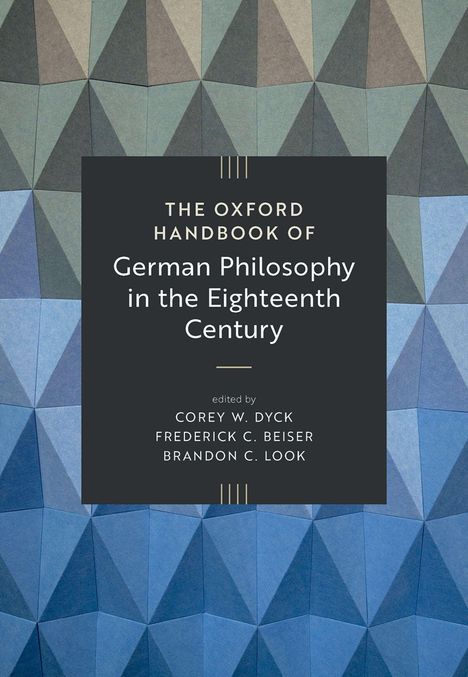
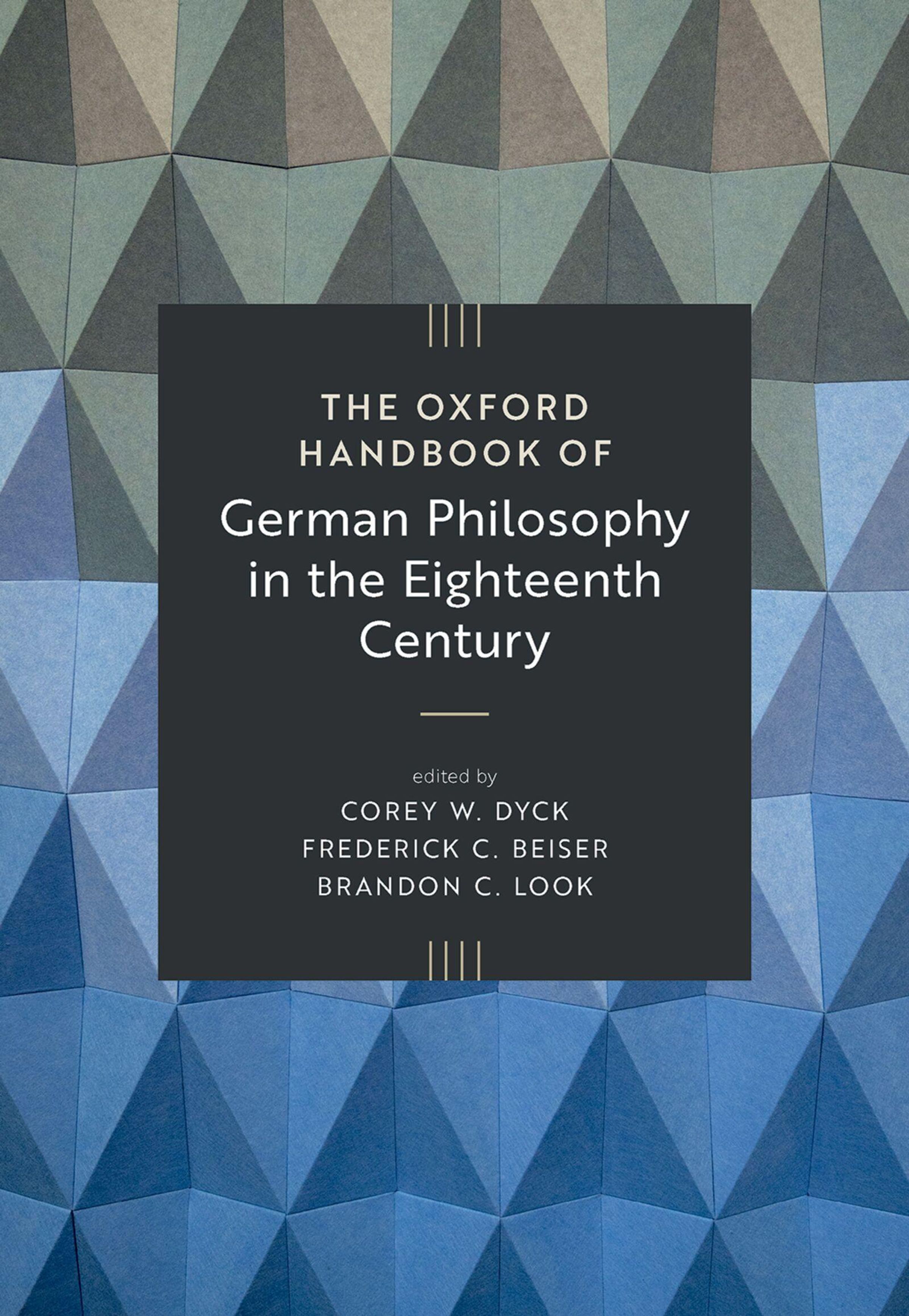
The Oxford Handbook of German Philosophy in the Eighteenth Century, Gebunden
The Oxford Handbook of German Philosophy in the Eighteenth Century
(soweit verfügbar beim Lieferanten)
- Herausgeber:
- Corey W Dyck, Frederick C Beiser, Brandon C Look
- Verlag:
- Oxford University Press, 09/2026
- Einband:
- Gebunden
- Sprache:
- Englisch
- ISBN-13:
- 9780198744061
- Artikelnummer:
- 12674232
- Umfang:
- 848 Seiten
- Erscheinungstermin:
- 25.9.2026
- Hinweis
-
Achtung: Artikel ist nicht in deutscher Sprache!
Klappentext
The contributions to this Handbook serve as a collective rebuttal of the widespread sentiment that there is little of interest in 18th-century German philosophy between Leibniz and Kant. In its chapters, the reader will naturally find new insights into the Kantian philosophy and its context, particularly on the topics of philosophical method, metaphysics, the philosophy of mind and the philosophy of mathematics. More than this, however, the reader will be introduced to aspects of eighteenth-century German philosophy that do not cohere to, and even challenge, the Kantian historical narrative. A number of chapters, for instance, reveal the profound inadequacy of the division of thinkers in this period into camps of "rationalists" and "empiricists" by documenting the innovative methodologies, the variations within each philosophical tradition and school, and the enduring appeal of philosophical eclecticism. Other chapters take issue with the notion that there was but a single Enlightenment, with Kant as its figurehead, contending in addition for a religious Enlightenment (particularly through the Pietist movement) and tracing the distinctive intellectual contours of the Jewish Enlightenment. Still other chapters document the important contributions of women in the period, particularly to aesthetics and to the philosophy of education, in addition to accounting for their continued absence from the influential histories of philosophy produced in Germany in the latter half of the century. There is, accordingly, a great deal to interest us in German philosophy in the eighteenth century after Leibniz and apart from Kant.