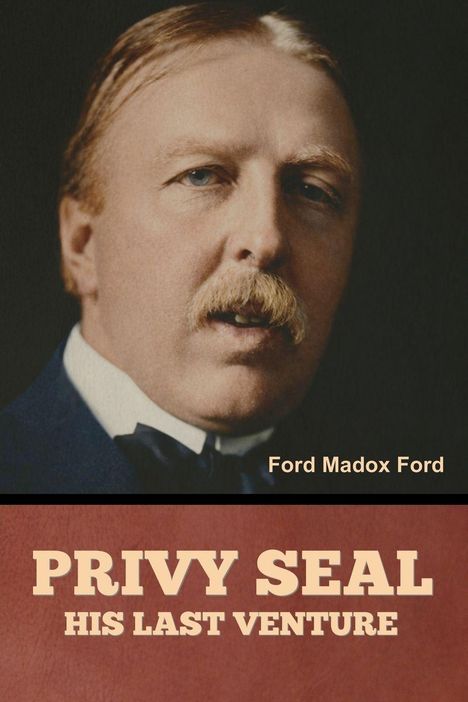
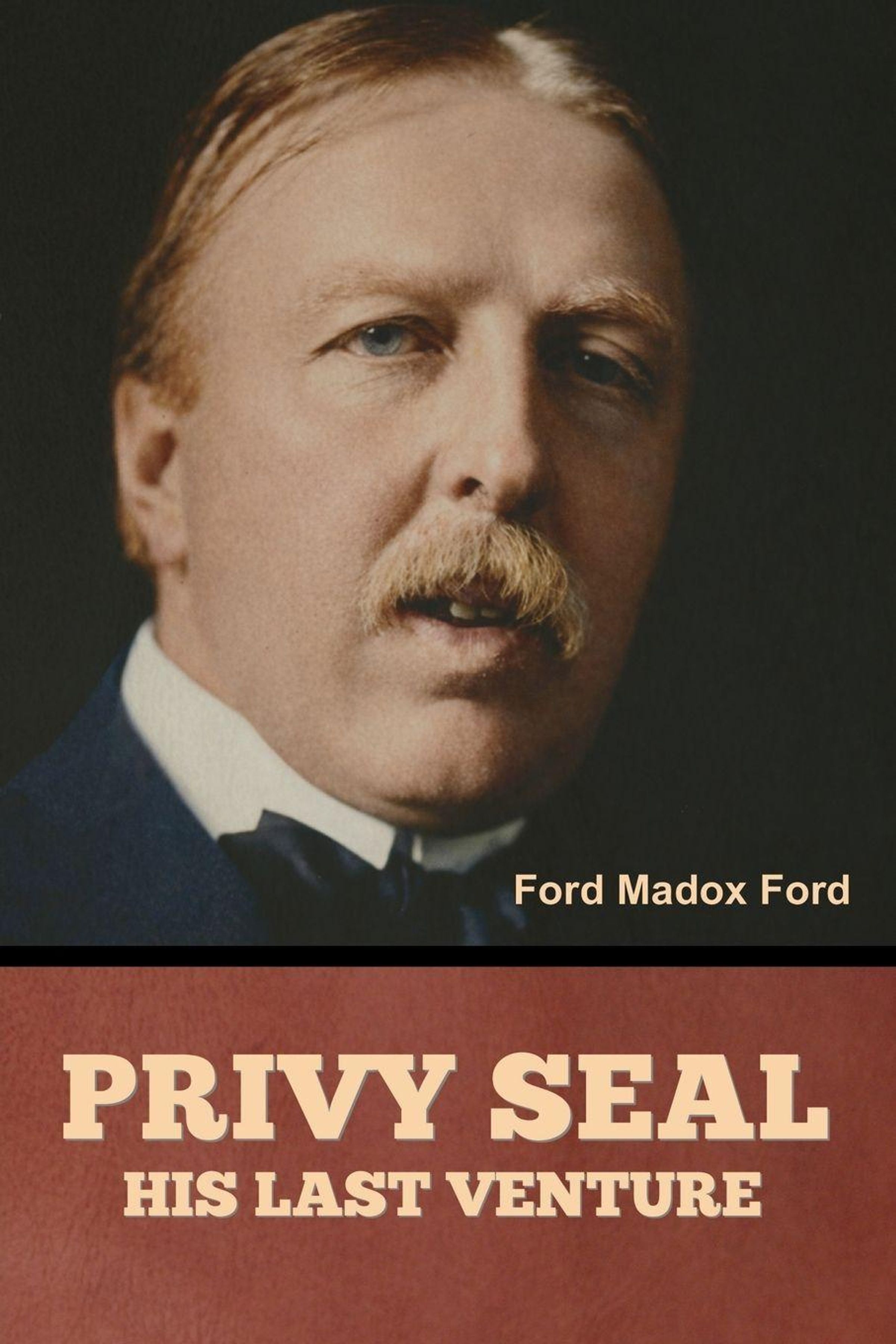
Ford Madox Ford: Privy Seal, Kartoniert / Broschiert
Privy Seal
- His Last Venture
(soweit verfügbar beim Lieferanten)
- Verlag:
- Bibliotech Press, 06/2026
- Einband:
- Kartoniert / Broschiert
- Sprache:
- Englisch
- ISBN-13:
- 9798897734085
- Artikelnummer:
- 12778524
- Umfang:
- 136 Seiten
- Gewicht:
- 233 g
- Maße:
- 229 x 152 mm
- Stärke:
- 8 mm
- Erscheinungstermin:
- 9.6.2026
- Hinweis
-
Achtung: Artikel ist nicht in deutscher Sprache!
Weitere Ausgaben von Privy Seal |
Preis |
|---|
Klappentext
Ford Madox Ford's Privy Seal: His Last Venture presents a deeply human portrait of Thomas Cromwell, reimagining him not as a ruthless political operator but as a weary, reflective man approaching the end of his life. Written in the form of a first-person memoir, the novel allows Cromwell to look back on his service to Henry VIII with a mixture of pride, regret, and moral uncertainty. Ford uses this intimate narrative voice to shift the focus of Tudor history away from spectacle and power and toward the psychological cost of political survival. By framing the story as Cromwell's "last venture," Ford emphasizes the inevitability of downfall in a world governed by shifting loyalties.
A central concern of the novel is the conflict between conscience and duty. Cromwell is portrayed as a man who understands the necessity of compromise in governance, yet remains troubled by the ethical consequences of his actions. Ford avoids simple moral judgments, instead presenting politics as a realm where clear choices rarely exist. Through Cromwell's reflections, the novel explores how intelligence and pragmatism can coexist with guilt and self-doubt. This nuanced portrayal aligns with Ford's modernist interest in interiority, showing how historical events are shaped as much by private thoughts as by public actions.
Ultimately, Privy Seal: His Last Venture reflects Ford Madox Ford's broader modernist project: to reinterpret history through subjective experience. The novel suggests that historical truth is not fixed but constructed through memory, perception, and narrative voice. By allowing Cromwell to tell his own story, Ford challenges traditional heroic or villainous depictions of historical figures. The result is a work that blends historical fiction with psychological realism, offering readers a meditation on power, responsibility, and the fragility of human ambition.
About the Author
Ford Madox Ford (1873-1939) was an English novelist, poet, critic, and editor best known for his modernist experimentation and his influence on 20th-century literature. Born Joseph Leopold Ford Hermann Madox Hueffer in Surrey, England, he later adopted the name Ford Madox Ford, reflecting both his family's artistic lineage-his grandfather was the Pre-Raphaelite painter Ford Madox Brown-and his own literary identity.
Ford was a central figure in the modernist movement, admired for his psychological depth, innovative narrative techniques, and subtle handling of memory and perception. His most celebrated work is The Good Soldier (1915), often hailed as one of the greatest English novels of the 20th century, notable for its unreliable narrator and non-linear structure. He also wrote the four-novel sequence Parade's End (1924-1928), a profound exploration of English society before, during, and after World War I.
Beyond his own writing, Ford played a major role as a literary editor and mentor. He edited influential journals such as The English Review, where he championed writers like Joseph Conrad (with whom he co-authored several novels), D. H. Lawrence, Ezra Pound, and W. B. Yeats. His advocacy helped shape the careers of many key modernist figures.
Ford's life was marked by personal turbulence-financial instability, complicated relationships, and frequent moves between England, France, and the United States-but his literary impact was enduring. He died in 1939 in Deauville, France, leaving behind a body of work that remains central to discussions of narrative innovation and modernist prose.