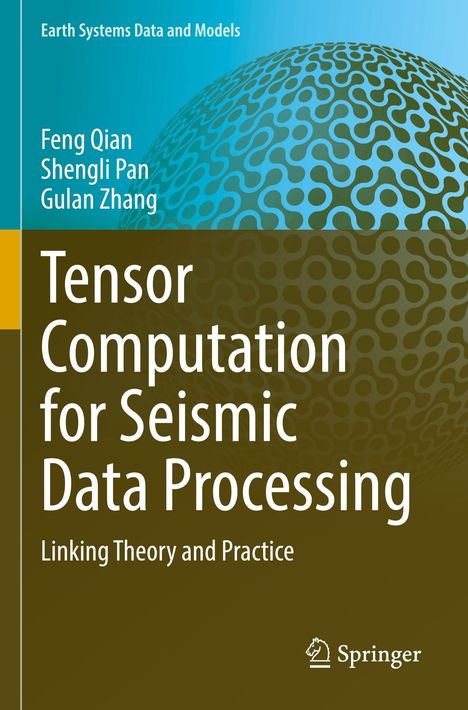
Feng Qian: Tensor Computation for Seismic Data Processing, Kartoniert / Broschiert
Tensor Computation for Seismic Data Processing
- Linking Theory and Practice
(soweit verfügbar beim Lieferanten)
- Verlag:
- Springer, 04/2026
- Einband:
- Kartoniert / Broschiert
- Sprache:
- Englisch
- ISBN-13:
- 9783031789021
- Artikelnummer:
- 12787243
- Umfang:
- 256 Seiten
- Gewicht:
- 440 g
- Maße:
- 235 x 155 mm
- Stärke:
- 14 mm
- Erscheinungstermin:
- 28.4.2026
- Serie:
- Earth Systems Data and Models - Band 6
- Hinweis
-
Achtung: Artikel ist nicht in deutscher Sprache!
Klappentext
This book aims to provide a comprehensive understanding of tensor computation and its applications in seismic data analysis, exclusively catering to seasoned researchers, graduate students, and industrial engineers alike. Tensor emerges as a natural representation of multi-dimensional modern seismic data, and tensor computation can help prevent possible harm to the multi-dimensional geological structure of the subsurface that occurred in classical seismic data analysis.
It delivers a wealth of theoretical, computational, technical, and experimental details, presenting an engineer's perspective on tensor computation and an extensive investigation of tensor-based seismic data analysis techniques. Embark on a transformative exploration of seismic data processing-unlock the potential of tensor computation and reshape your approach to high-dimensional geological structures.
The discussion begins with foundational chapters, providing a solid background in both seismic data processing and tensor computation. The heart of the book lies in its seven chapters on tensor-based seismic data analysis methods. From structured low-tubal-rank tensor completion to cutting-edge techniques like tensor deep learning and tensor convolutional neural networks, each method is meticulously detailed. The superiority of tensor-based data analysis methods over traditional matrix-based data analysis approaches is substantiated through synthetic and real field examples, showcasing their prowess in handling high-dimensional modern seismic data. Notable chapters delve into seismic noise suppression, seismic data interpolation, and seismic data super-resolution using advanced tensor models. The final chapter provides a cohesive summary of the conclusion and future research directions, ensuring readers facilitate a thorough understanding of tensor computation applications in seismic data processing. The appendix includes a hatful of information on existing tensor computation software, enhancing the book's practical utility.