
End-User Development, Kartoniert / Broschiert
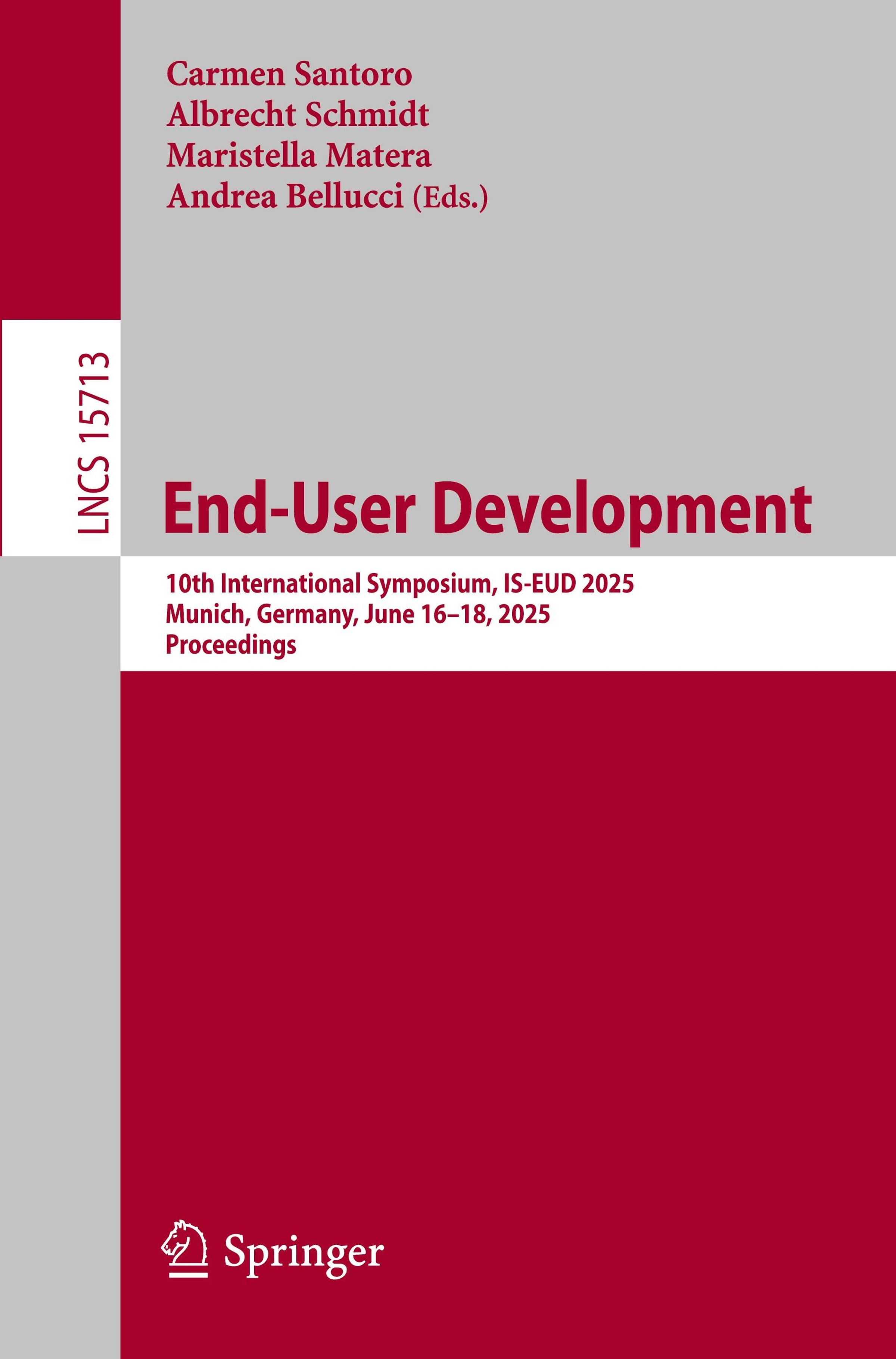
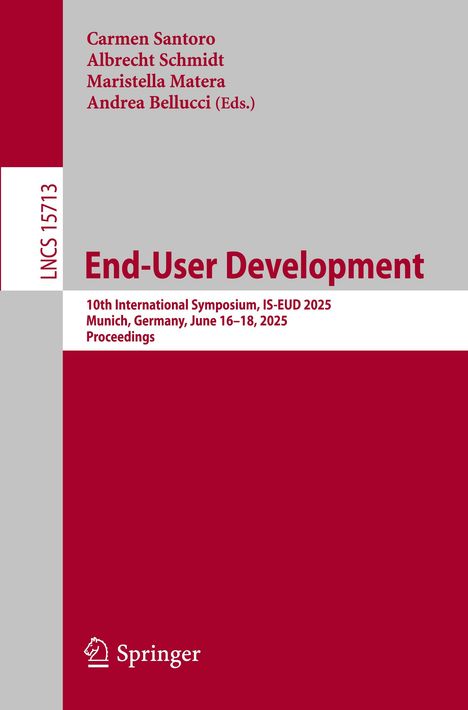
End-User Development
Buch
- 10th International Symposium, IS-EUD 2025, Munich, Germany, June 16-18, 2025, Proceedings
lieferbar innerhalb 2-3 Wochen
(soweit verfügbar beim Lieferanten)
(soweit verfügbar beim Lieferanten)
Aktueller Preis: EUR 142,37
Versandkosten
(United States of America): EUR 19,90
- Herausgeber:
- Carmen Santoro, Albrecht Schmidt, Maristella Matera, Andrea Bellucci
- Verlag:
- Springer, 06/2025
- Einband:
- Kartoniert / Broschiert
- Sprache:
- Englisch
- ISBN-13:
- 9783031954511
- Artikelnummer:
- 12323961
- Umfang:
- 368 Seiten
- Gewicht:
- 557 g
- Maße:
- 235 x 155 mm
- Stärke:
- 20 mm
- Erscheinungstermin:
- 13.6.2025
- Serie:
- Lecture Notes in Computer Science - Band 15713
- Hinweis
-
Achtung: Artikel ist nicht in deutscher Sprache!
Klappentext
This book constitutes the refereed proceedings of the 10th International Symposium on End-User Development, IS-EUD 2025, held in Munich, Germany, during June 16--18, 2025.
The 13 full papers and 8 short papers included in this book were carefully reviewed and selected from 25 submissions. These papers have been organized under the following topical sections: Automation, Sustainability, and Smart Environments; Democratizing AI and Programming; AI for End-User Empowerment: Personalization andWellbeing; and EUD Principles, Methodologies, and Participatory Cultures.
End-User Development
Aktueller Preis: EUR 142,37