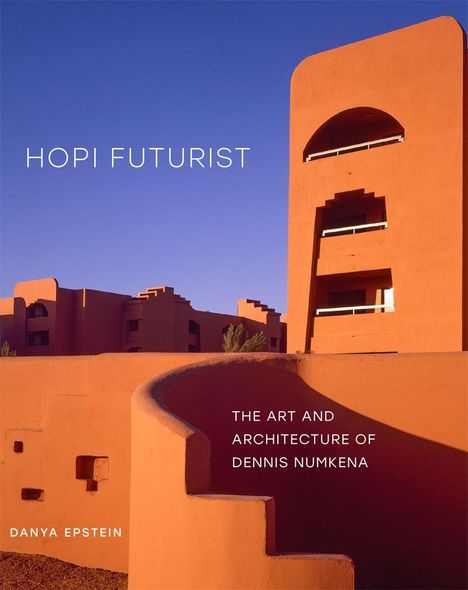
Danya Epstein: Hopi Futurist Volume 41, Gebunden
Hopi Futurist Volume 41
- The Art and Architecture of Dennis Numkena
Sie können den Titel schon jetzt bestellen. Versand an Sie erfolgt gleich nach Verfügbarkeit.
- Verlag:
- University of Oklahoma Press, 11/2026
- Einband:
- Gebunden
- Sprache:
- Englisch
- ISBN-13:
- 9780806197401
- Artikelnummer:
- 12674996
- Umfang:
- 272 Seiten
- Erscheinungstermin:
- 3.11.2026
- Serie:
- The Charles M. Russell Center Series on Art and Photography of the American West
- Hinweis
-
Achtung: Artikel ist nicht in deutscher Sprache!
Klappentext
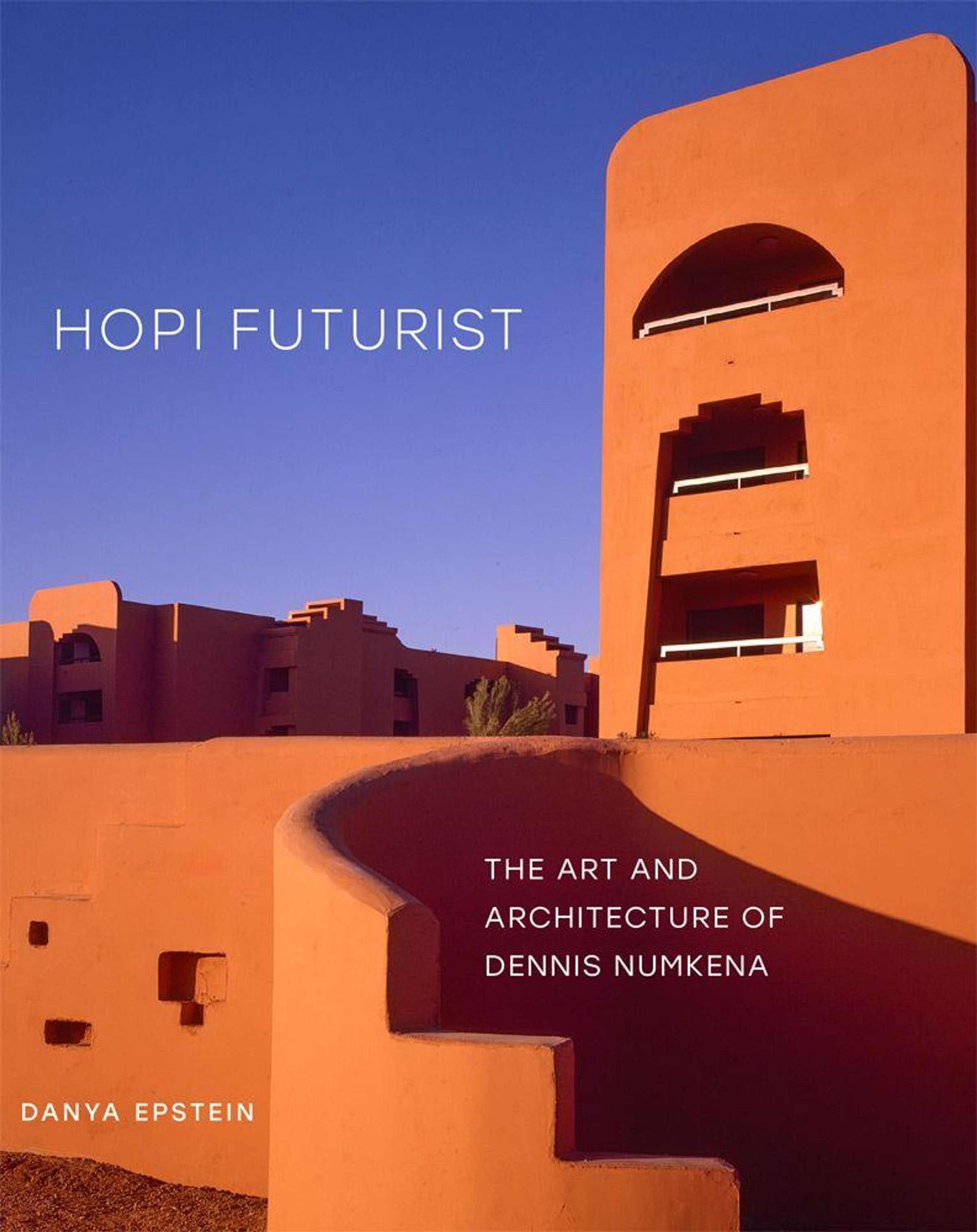
Next to a golf course, in a busy Phoenix neighborhood, a terracotta-colored condo complex of unusual organic shapes and shaded balconies surges into view, its forms recalling Ancestral Puebloan cliff dwellings across the Southwest. This striking structure is Anasazi Village Condominiums (1983), one of the major contributions that Hopi artist and architect Dennis Numkena (1941--2010) made to Indigenous American art. Numkena was the first registered Hopi architect and the first Native American architect to helm his own firm. In Hopi Futurist, the first book focused on Numkena, art historian Danya Epstein tells the story of this groundbreaking artist and his long-overlooked legacy.
Born on Hopi, Numkena left the reservation at twelve to attend Phoenix Indian School. As a young man, he was inspired to study architecture after a visit to Frank Lloyd Wright's Guggenheim Museum. The first Indigenous architect hired by the Bureau of Indian Affairs, Numkena sought to reconceptualize Indigenous and tribal architecture as a living and dynamic practice. Though he initially focused his attention on Indian Country commissions, Numkena's architectural practice expanded to encompass a variety of urban and non-tribal projects.
Beyond architecture, Numkena worked in multiple media, including painting and sculpture. He also dabbled in performance, most notably with his artistic direction of the papal audience with Native Americans in Phoenix in 1987 and his costume and set design work on a Hopi version of Mozart's Magic Flute that aired on national television in 1982. Through these and other artistic interventions, Numkena inserted Hopi cosmology and aesthetics into Western culture on a national and international stage. Moreover, Numkena's practice foregrounds the overlooked spatial and artistic politics of the Southwest's largest city, Phoenix.
Hopi Futurist argues that Numkena's polymorphic practice and pan-temporal philosophy---what he termed "Neo-Anasazi" art and architecture---anticipated the concerns and aesthetics of the contemporary movement of Indigenous Futurisms. As one of the only scholarly monographs exclusively focused on a Native American architect, Hopi Futurist tells the story of a visionary artist whose powerful work resonates in our time.