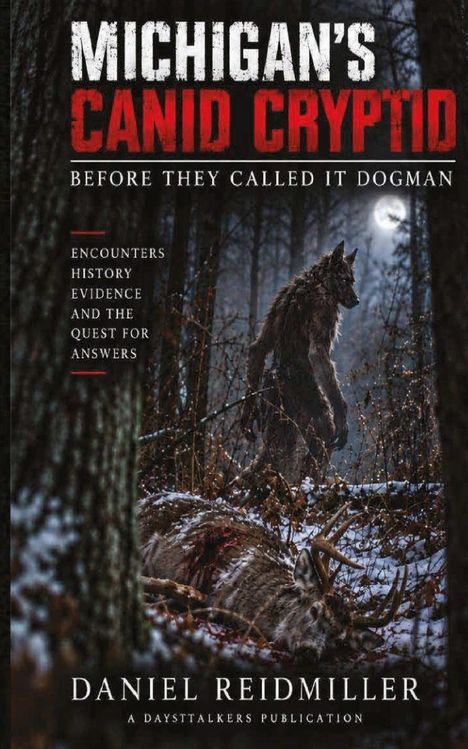
Daniel Reidmiller: Michigan's Canid Cryptid, Kartoniert / Broschiert
Michigan's Canid Cryptid
- Before They Called It Dogman
(soweit verfügbar beim Lieferanten)
- Verlag:
- DayStalkers Press, 10/2026
- Einband:
- Kartoniert / Broschiert
- Sprache:
- Englisch
- ISBN-13:
- 9798182769143
- Artikelnummer:
- 12953295
- Umfang:
- 140 Seiten
- Gewicht:
- 145 g
- Maße:
- 203 x 127 mm
- Stärke:
- 8 mm
- Erscheinungstermin:
- 12.10.2026
- Hinweis
-
Achtung: Artikel ist nicht in deutscher Sprache!
Klappentext
In 1987, a northern Michigan radio personality invented the Michigan Dogman. The problem is, some people said they'd already seen it.
Steve Cook's "The Legend" began as an April Fool's joke. It gave Michigan a monster, a history and a name. Then people began contacting Cook with stories of their own. Some described encounters they said had happened years, even decades, before anyone had heard the word Dogman.
In Michigan's Canid Cryptid: Before They Called It Dogman, Daniel Reidmiller goes looking for the animal behind the legend. Rather than treating every frightening story as evidence, he follows the sources backward, separating encounters from later retellings, folklore from documented history, and known Michigan wildlife from the things that aren't so easily explained.
The investigation ranges from the famous 1887 lumberjack story created for Cook's song to Robert Fortney's much older recollection, the strange events near Luther, modern eyewitness reports, photographic and video evidence, wolves, coyotes, hybrids, and the biological problems any undiscovered large canid would have to overcome.
Dogman is approached here as a reported flesh-and-blood animal, not a ghost, demon, shapeshifter or supernatural creature. That doesn't mean assuming it exists. It means asking the questions we would ask about any animal: What does it look like? How does it move? What does it eat? Where would it live? Could it reproduce without being detected? And, sooner or later, shouldn't it leave something behind?
Reidmiller doesn't ask the reader to believe in Dogman. He doesn't ask the reader to dismiss it, either.
The question is simpler: once we strip away everything we know was invented, what is left?