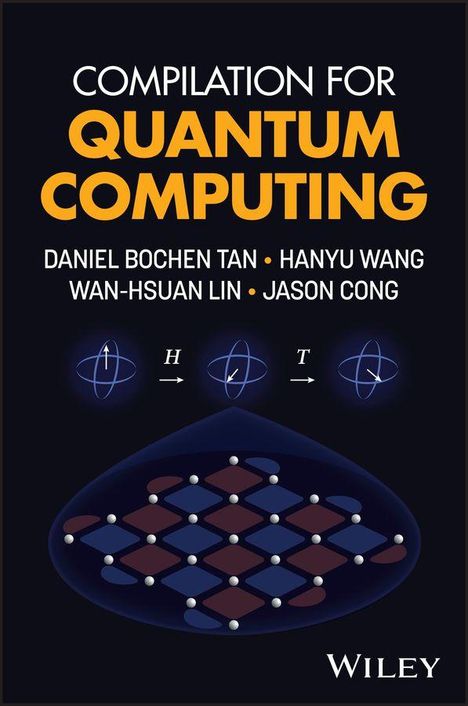
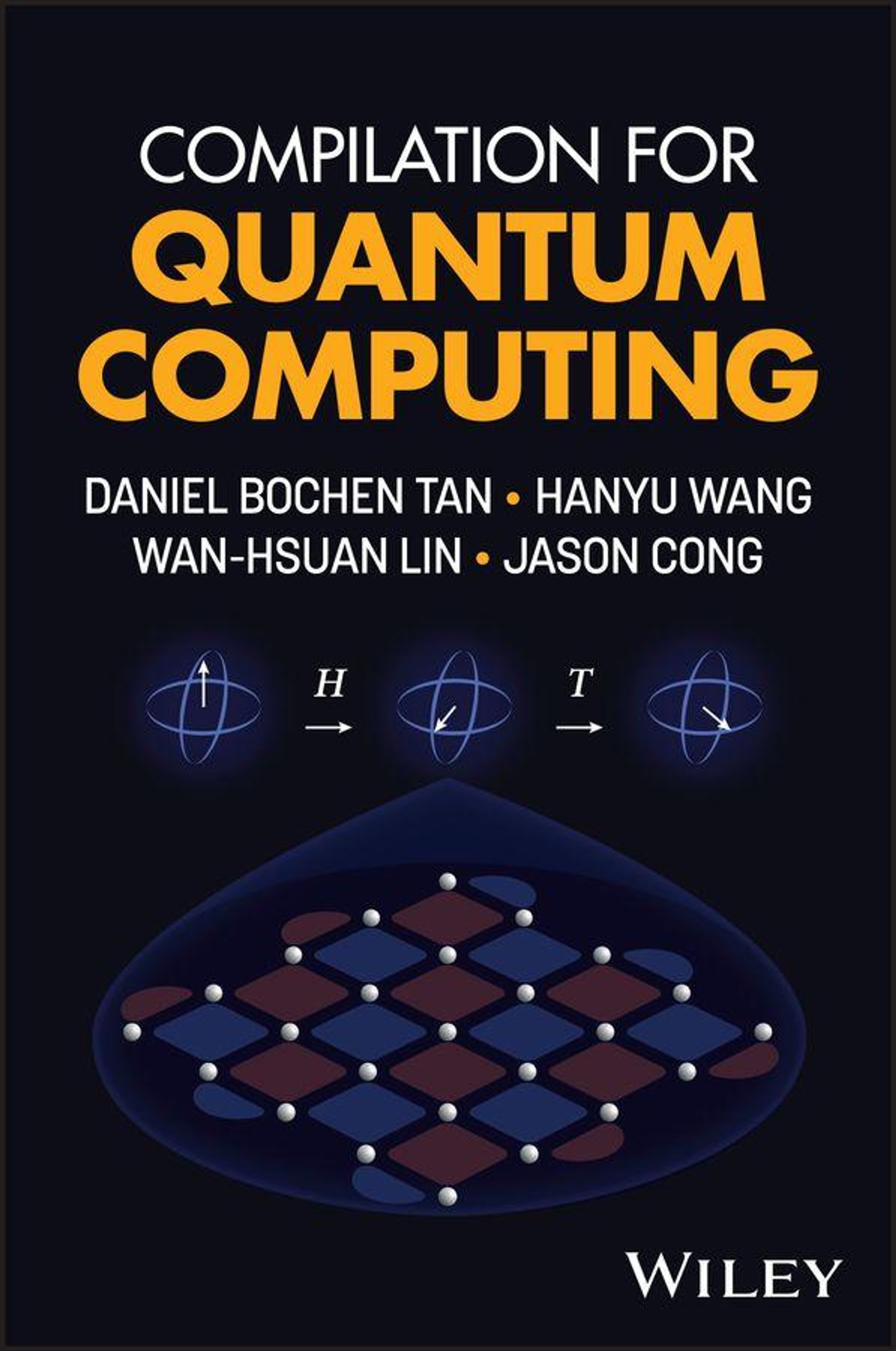
Daniel Bochen Tan: Compilation for Quantum Computing, Gebunden
Compilation for Quantum Computing
Sie können den Titel schon jetzt bestellen. Versand an Sie erfolgt gleich nach Verfügbarkeit.
- Verlag:
- John Wiley & Sons Inc, 03/2027
- Einband:
- Gebunden
- Sprache:
- Englisch
- ISBN-13:
- 9781394363643
- Artikelnummer:
- 12831138
- Umfang:
- 400 Seiten
- Erscheinungstermin:
- 10.3.2027
- Hinweis
-
Achtung: Artikel ist nicht in deutscher Sprache!
Klappentext
Compilation for quantum computing is rapidly rising in importance as maturing quantum hardware allows for larger, more complex algorithms to be run. As we approach commercially useful quantum computers, the software stack must keep pace with hardware advances, and efficient compilation will be a key component of that stack. This book provides a foundational resource for researchers, practitioners, and students seeking to understand the state-of-the-art in quantum compilation.
-Hartmut Neven, Founder and Lead of Google Quantum AI
As a quantum physicist who worked extensively on trapped-ion quantum computing, Rydberg tweezer arrays, and quantum network architectures, I found the book very valuable, as it begins roughly where my own expertise ends: it explains how one proceeds from hardware constraints and elementary operations to layout synthesis, circuit synthesis, quantum error correction, and fault-tolerant computation. I would like to recommend to other theorists and practitioners in quantum computing.
-Peter Zoller, Professor Emeritus at the University of Innsbruck
Systematic treatment of quantum compilation from circuit synthesis to layout
Translating high-level quantum algorithms into executable gate sequences on physical hardware remains a central challenge in quantum computing engineering. Compilation for Quantum Computing delivers a systematic, thirteen-chapter analysis of this compilation pipeline, covering quantum circuit synthesis methods and layout synthesis techniques adapted to the connectivity constraints of superconducting circuits and reconfigurable neutral-atom arrays.
The text details algebraic, Boolean, and ZX-calculus approaches to circuit synthesis, then examines layout synthesis through solver-based, graph algorithm, and multi-level methods with optimality benchmarks. Self-contained introductions to quantum error correction paves the way to understanding the compilation for fault-tolerant quantum computing.
This book serves researchers, graduate students, and practitioners in quantum computing, electronic design automation, and novel computer architectures. Its depth, coherence and hands-on approach makes it particularly suited for those building or optimizing quantum compilation toolchains.