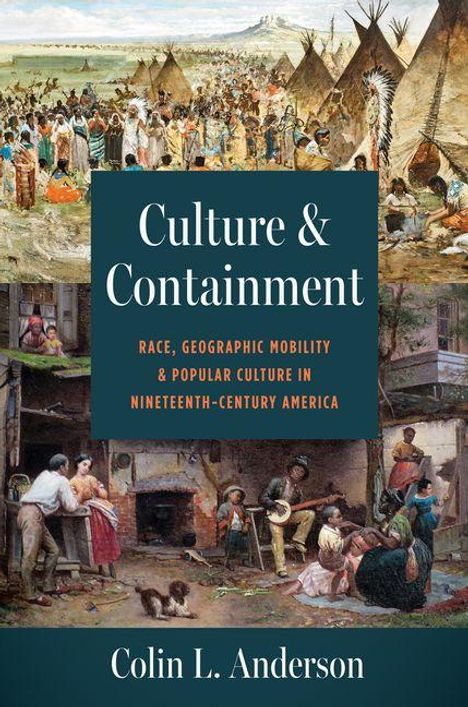
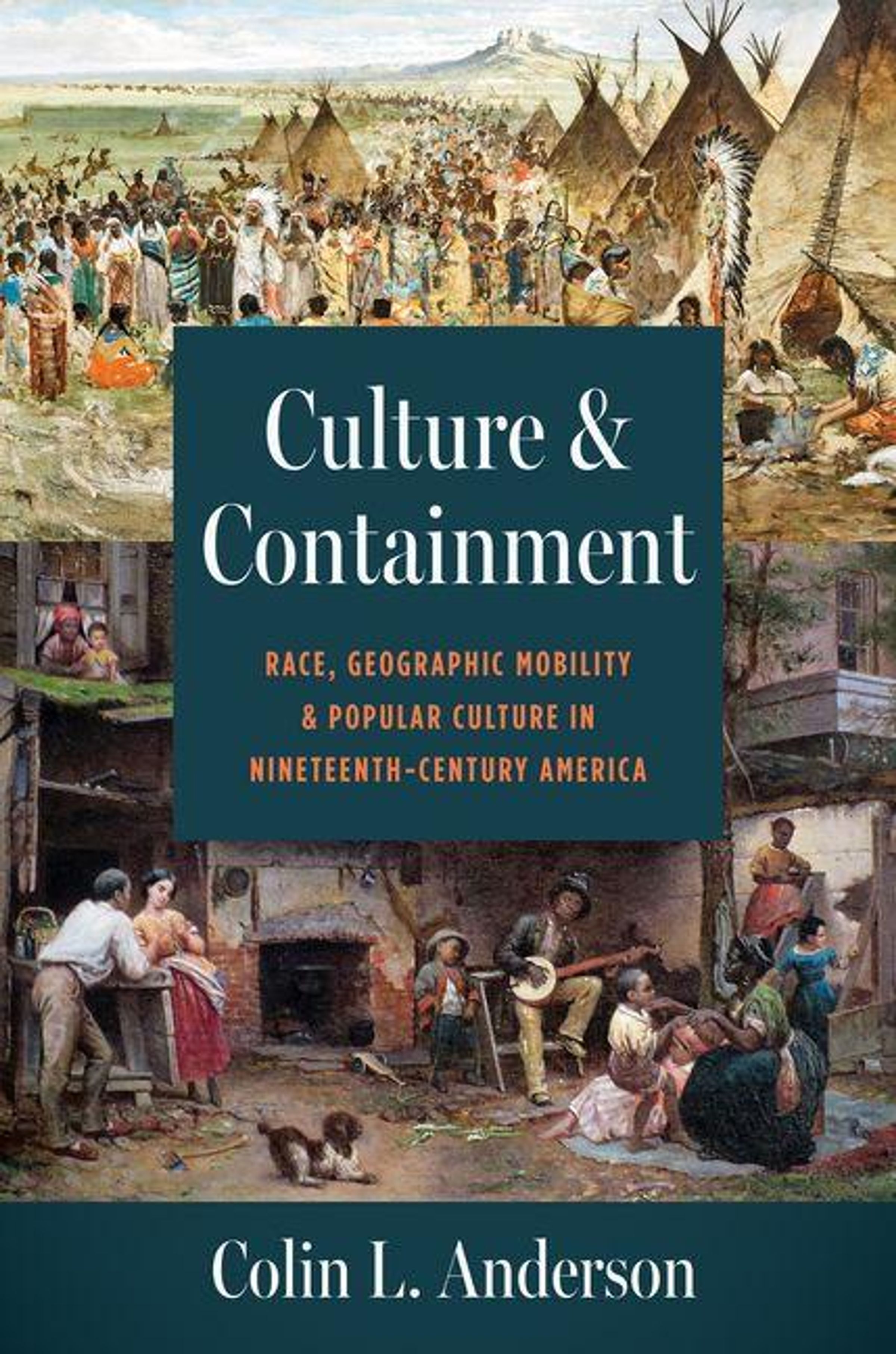
Colin Anderson: Culture and Containment, Kartoniert / Broschiert
Culture and Containment
- Race, Geographic Mobility, and Popular Culture in Nineteenth-Century America
Sie können den Titel schon jetzt bestellen. Versand an Sie erfolgt gleich nach Verfügbarkeit.
- Verlag:
- The University of North Carolina Press, 10/2026
- Einband:
- Kartoniert / Broschiert
- Sprache:
- Englisch
- ISBN-13:
- 9781469698120
- Artikelnummer:
- 12683438
- Umfang:
- 296 Seiten
- Maße:
- 235 x 155 mm
- Stärke:
- 25 mm
- Erscheinungstermin:
- 27.10.2026
- Hinweis
-
Achtung: Artikel ist nicht in deutscher Sprache!
Klappentext
Movement---who moves, where they move, and how they move---has long been perceived as a racial threat in the United States. To better understand why, Colin Anderson examines how popular culture played a central role in shaping these perceptions during the transformative period of Greater Reconstruction (1845--1900). From sheet music and lithographs to plantation reenactments and Wild West shows, white cultural producers depicted Black and Native mobility as destabilizing. These depictions normalized fears of movement and justified the rise of systems designed to confine these communities, such as Jim Crow segregation and Native American reservations. Using a trans-regional framework spanning the North, South, and West, Anderson places these histories side by side, revealing the shared logic of racial spatial control and reframing nineteenth-century US history as a story of nation-building intertwined with segregation and capitalism.
Yet popular culture was a contested space. Black and Native performers, writers, and activists used the same platforms as white creators to assert agency, resist confinement, and challenge dominant narratives of mobility. By illuminating these dynamics, Culture and Containment reshapes our understanding of nineteenth-century race relations while offering vital insight into enduring legacies---from residential segregation to mass incarceration---that continues to define the racial landscape through the twenty-first century.