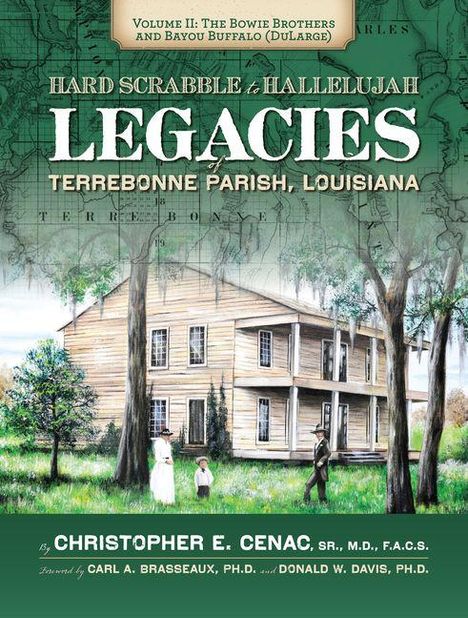
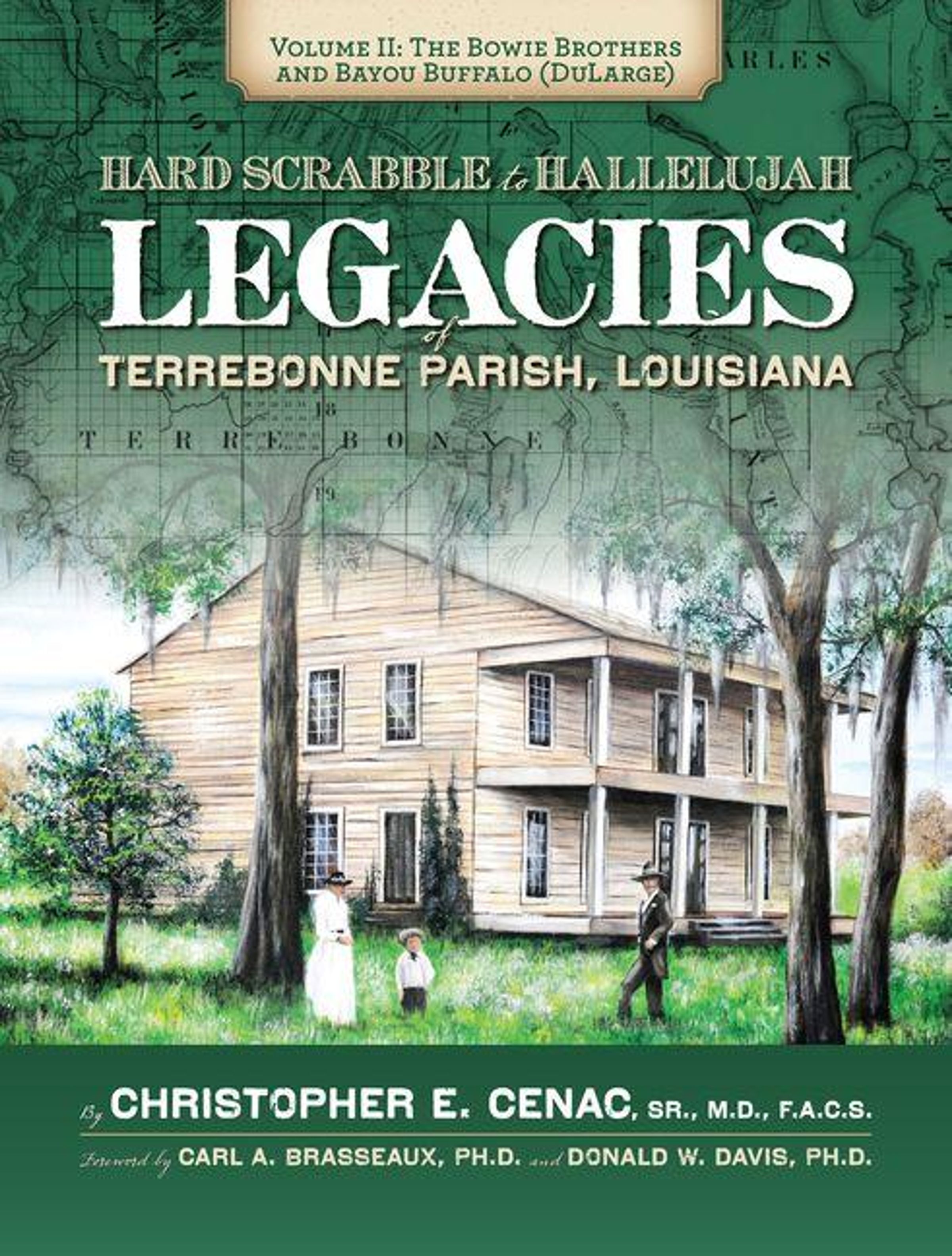
Christopher Everette Cenac: Hard Scrabble to Hallelujah, Volume 2: The Bowie Brothers and Bayou Buffalo, Dularge, Gebunden
Hard Scrabble to Hallelujah, Volume 2: The Bowie Brothers and Bayou Buffalo, Dularge
- Legacies of Terrebonne Parish, Louisiana
(soweit verfügbar beim Lieferanten)
- Verlag:
- University Press of Mississippi, 03/2026
- Einband:
- Gebunden
- Sprache:
- Englisch
- ISBN-13:
- 9780989759427
- Artikelnummer:
- 12590370
- Umfang:
- 504 Seiten
- Erscheinungstermin:
- 10.3.2026
- Hinweis
-
Achtung: Artikel ist nicht in deutscher Sprache!
Klappentext
This second installment in a planned four-volume series chronicles the saga of one of the most rural and rustic regions of coastal Louisiana---Bayou DuLarge. In a story that has its origin centuries ago, Hard Scrabble to Hallelujah, Volume 2 , with its thousands of photos, maps, and images, traces a legacy of perseverance and faith by the notable people who carved out an existence along the winding path of a waterway shown on maps as early as 1804 as Bayou Buffalo. These pioneers, who tamed a wilderness of swamp and prairie, reaped a great bounty from the very environment they often had to battle. The book documents the Bowies' entrepreneurial entrance into the State of Louisiana and the parishes of Terrebonne and Lafourche. These notorious brothers were farmers, politicians, and soldiers, as well as contemporaries of the infamous pirate Jean Laffite. Amongst their numerous and controversial pursuits, they made a fortune in the illicit slave trade.
From the early Spanish Land Grants followed by the influx of frontiersmen and land speculators, the book addresses Bayou DuLarge's rich history, unique cultures, and diverse populations of Native Americans, Protestants, Foreign-French (les français étrangers ), Acadians, Europeans, and African Americans (some who were the descendants of former slaves), all of whom contributed to the distinct and vibrant communities located throughout the bayou's thirty-seven-mile length. This book delves into the enterprises that helped create Terrebonne Parish: sugar plantations; cypress and syrup mills; rice farms; shrimp-drying platforms; fur trapping; boat building; soft-shell crab, shrimp, oyster, and turtle harvesting; raising livestock; and the burgeoning oilfield and marine transportation industries.
This volume expounds upon the changes over time to the professions that shaped the region and ends with the effects of coastal erosion, rising sea levels, and the threat of tropical weather on the vulnerable lower reaches of Louisiana, and most significantly, the impact these forces have had on the generations of families who have called this unique area home. This work heralds the citizens of Terrebonne Parish who, when faced with the harsh realities of subsistence so very near the Gulf of Mexico, have invested in infrastructure to mitigate and control the wrath of Mother Nature. Both informative and entertaining, this book is an invaluable resource, capturing a heritage that is, regrettably, quickly disappearing.