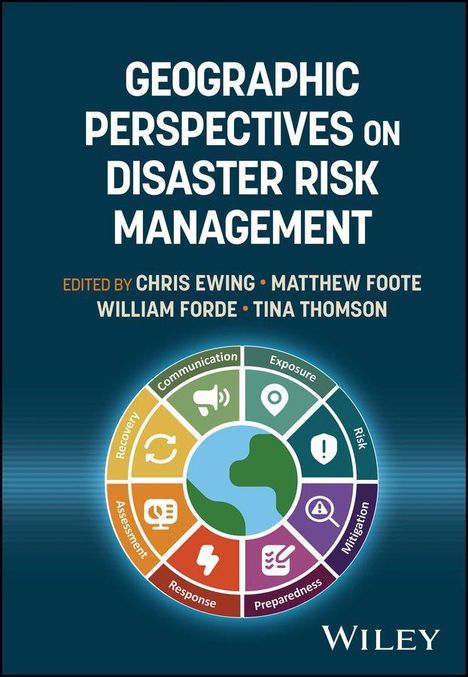
Geographic Perspectives on Disaster Risk Management, Gebunden
Geographic Perspectives on Disaster Risk Management
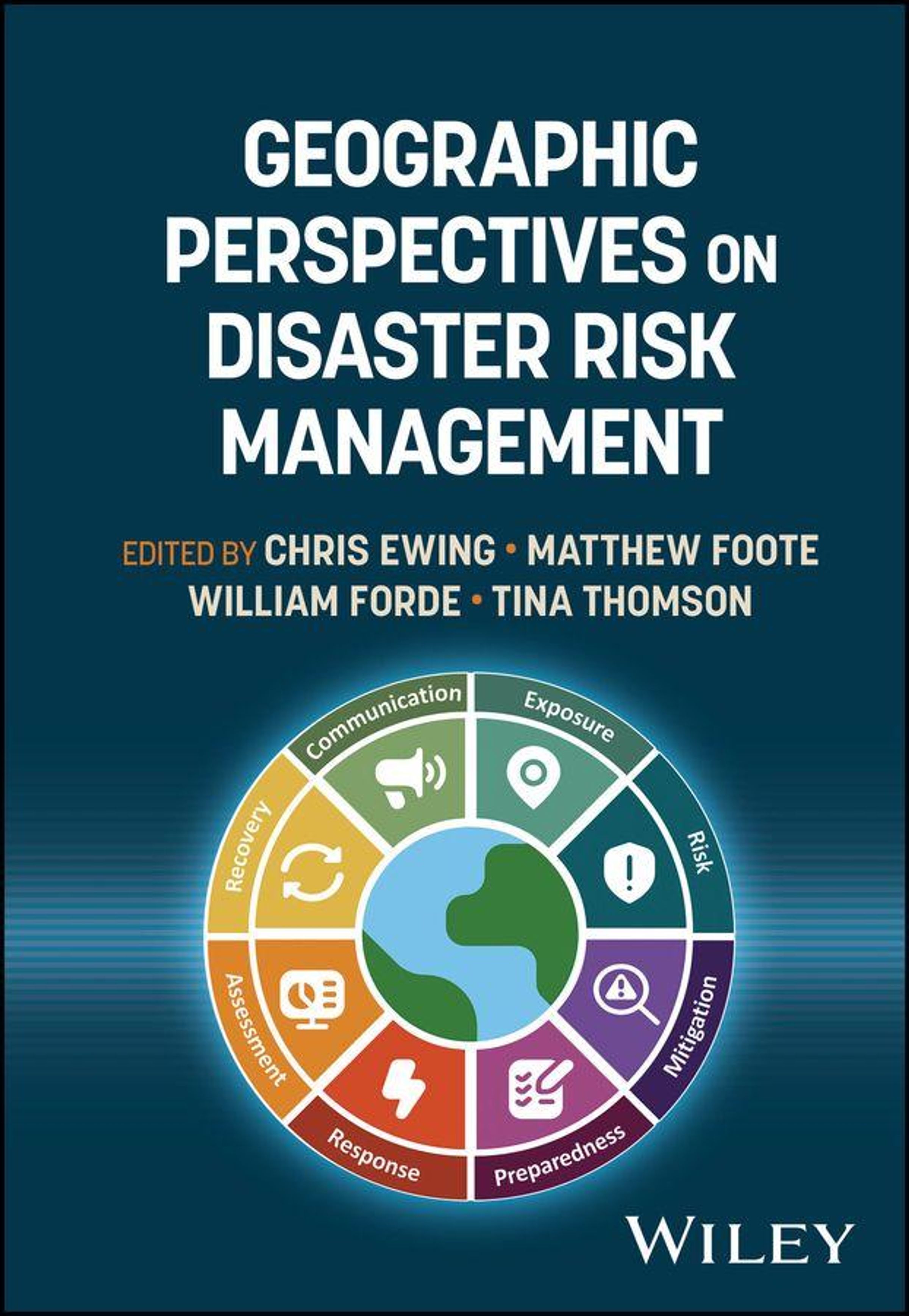
(soweit verfügbar beim Lieferanten)
- Herausgeber:
- Chris Ewing, Matthew Foote, William Forde, Tina Thomson
- Verlag:
- Wiley, 08/2026
- Einband:
- Gebunden
- Sprache:
- Englisch
- ISBN-13:
- 9781119751441
- Artikelnummer:
- 12456947
- Umfang:
- 464 Seiten
- Gewicht:
- 998 g
- Maße:
- 246 x 170 mm
- Stärke:
- 28 mm
- Erscheinungstermin:
- 24.8.2026
- Hinweis
-
Achtung: Artikel ist nicht in deutscher Sprache!
Klappentext
A holistic view of geospatial data and analysis across the risk management lifecycle
Geospatial data and analytical tools are widely used for disaster management, insurance, humanitarian response, and defence-yet methodologies remain siloed. Geographic Perspectives on Disaster Risk Management, written by a team of experienced practitioners in catastrophe risk analytics and geospatial studies, connects these sectors by comparing approaches, identifying common challenges, and distilling cross-sector best practices for preparation, response, recovery, and mitigation.
Structured around the disaster risk cycle, the book addresses exposure and vulnerability mapping, risk preparedness and mitigation strategies, event monitoring, damage assessment, resilience building, and risk communication. It draws on data sources ranging from local traffic cameras to geostationary satellites and includes case studies illustrating real-world applications alongside outcome-based evaluations of current practices and future developments in disaster risk assessment.
Readers will also find:
- Cross-sector comparison of methodologies from international development, emergency response, insurance, defence, and commercial geospatial analytics
- Practical case studies demonstrating real-world challenges and solutions in disaster preparation, monitoring, damage assessment, and recovery operations
- Outcome-based evaluation of common approaches to emergency risk management, identifying strengths and limitations of current practice
- Coverage of future developments in data availability, analytical techniques, and climate risk assessment relevant to evolving environmental uncertainty
- Guidance on risk communication and decision-making frameworks that translate geospatial analysis into actionable operational and financial strategies
Designed for professionals in disaster management, emergency response, and the insurance industry, as well as researchers and advanced students in the geosciences, this book provides a structured, practice-oriented resource for applying geographic perspectives to quantify, communicate, and reduce disaster risk across sectors.