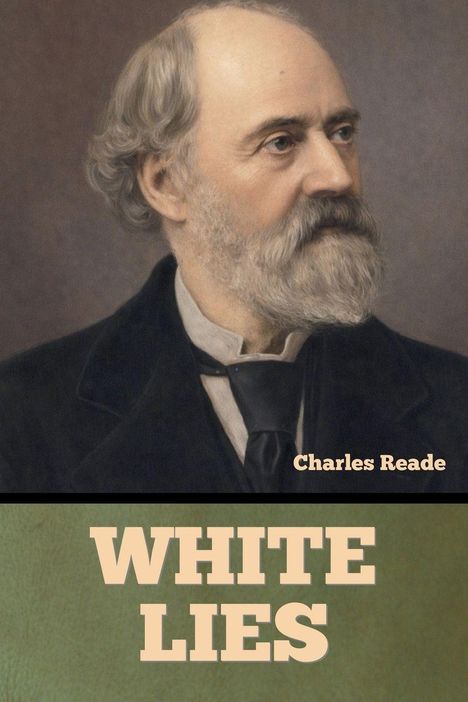
Charles Reade: White Lies, Kartoniert / Broschiert
White Lies

(soweit verfügbar beim Lieferanten)
- Verlag:
- IndoEuropeanPublishing.com, 02/2026
- Einband:
- Kartoniert / Broschiert
- Sprache:
- Englisch
- ISBN-13:
- 9798889425694
- Artikelnummer:
- 12625285
- Umfang:
- 256 Seiten
- Gewicht:
- 421 g
- Maße:
- 229 x 152 mm
- Stärke:
- 15 mm
- Erscheinungstermin:
- 12.2.2026
- Hinweis
-
Achtung: Artikel ist nicht in deutscher Sprache!
Weitere Ausgaben von White Lies |
Preis |
|---|
Klappentext
Charles Reade's White Lies explores the moral complexity of deception by challenging the idea that all lies are equally harmful. Rather than presenting lying as purely immoral, Reade focuses on situations in which deception is used to protect others or prevent greater suffering. Through his characters, he shows that "white lies" often arise from compassion, fear, or social pressure, revealing how truth and morality do not always align neatly. This nuanced approach encourages readers to question rigid moral rules and consider intention as well as consequence.
A central theme of the work is the tension between honesty and kindness. Reade suggests that absolute truthfulness can sometimes cause unnecessary pain, while small, well-intentioned lies may preserve harmony or protect vulnerable individuals. However, he does not idealize deception. As the narrative develops, white lies tend to multiply and grow more complicated, demonstrating how even harmless untruths can lead to misunderstanding and loss of trust. In this way, Reade shows that lies, no matter how small, carry risks that cannot be ignored.
Ultimately, White Lies serves as a moral examination rather than a simple judgment. Reade invites readers to weigh the ethical costs and benefits of deception, emphasizing personal responsibility and self-awareness. The story suggests that while white lies may sometimes be motivated by good intentions, they should be used cautiously, as truth has a way of resurfacing. By presenting both the usefulness and danger of white lies, Reade leaves readers with a deeper understanding of human behavior and moral choice.
About The Author
Charles Reade (1814-1884) was a prominent English novelist and dramatist of the Victorian era, best known for his energetic storytelling and strong sense of social justice. Born in Ipsden, Oxfordshire, Reade was educated at Magdalen College, Oxford, where he later became a fellow. Although trained in law, he struggled to find satisfaction in the profession and gradually turned his attention toward writing, a field in which he could combine creativity with moral advocacy.
Reade began his literary career writing plays, often in collaboration with others, and several of his early dramas achieved success on the London stage. His experience in theater deeply influenced his prose style, which is marked by vivid scenes, sharp dialogue, and a strong sense of dramatic tension. As he transitioned more fully into novel writing, he brought with him a flair for plot construction and emotional intensity that appealed to a wide Victorian readership.
He is best remembered for novels such as The Cloister and the Hearth (1861), Hard Cash (1863), and It Is Never Too Late to Mend (1856). These works are notable for their meticulous research and their focus on exposing social injustices, including prison conditions, mental asylums, and abuses of power. Reade believed fiction should be grounded in fact, famously declaring that his novels were built from "a mountain of facts," a philosophy that sometimes led to public disputes with critics who questioned his methods.
Despite controversies over his aggressive defense of realism and his sometimes combative personality, Reade left a lasting mark on Victorian literature. His commitment to reform, combined with his narrative drive, helped pave the way for later socially conscious writers. Today, Charles Reade is remembered as a passionate, if occasionally polarizing, figure whose work reflects both the moral urgency and dramatic spirit of his age.