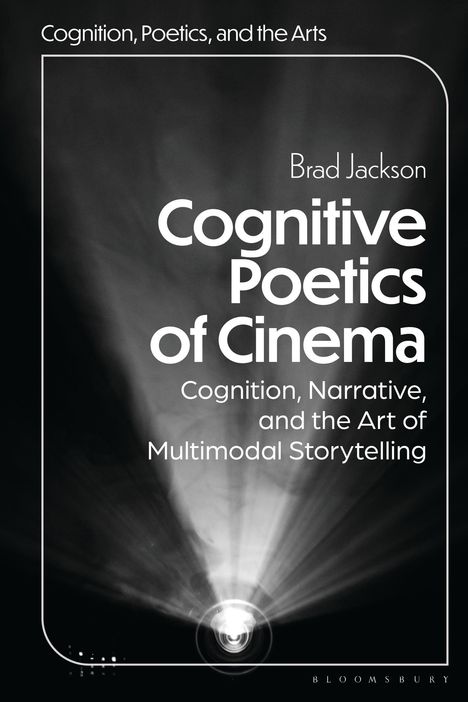
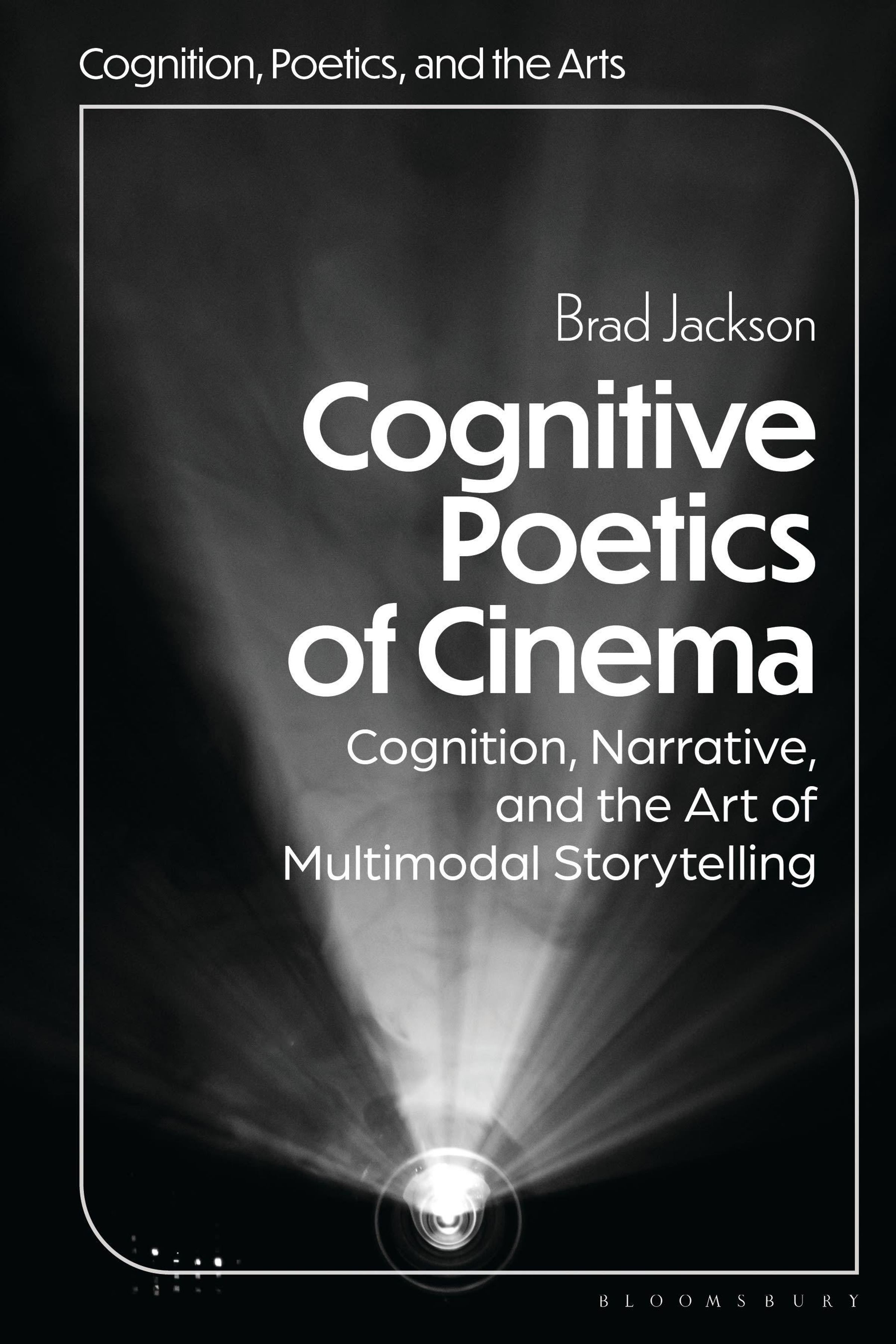
Brad Jackson: Cognitive Poetics of Cinema, Gebunden
Cognitive Poetics of Cinema
- Cognition, Narrative, and the Art of Multimodal Storytelling
Lassen Sie sich über unseren eCourier benachrichtigen, sobald das Produkt bestellt werden kann.
- Herausgeber:
- Alexander Bergs, Margaret H Freeman, Peter Schneck
- Verlag:
- Bloomsbury Academic, 05/2027
- Einband:
- Gebunden
- Sprache:
- Englisch
- ISBN-13:
- 9798216396703
- Umfang:
- 272 Seiten
- Gewicht:
- 454 g
- Maße:
- 229 x 152 mm
- Stärke:
- 25 mm
- Erscheinungstermin:
- 13.5.2027
- Hinweis
-
Achtung: Artikel ist nicht in deutscher Sprache!
Ähnliche Artikel


Klappentext
How does a film tell a story? How are sounds used to help viewers understand what they see? And how do we know what characters feel? Cognitive poetics and cognitive linguistics address these questions, showing how filmmakers craft meaning through creative and conventional forms.
Cognitive Poetics of Cinema examines how films construct meaning, shape narrative understanding, and evoke affective experiences through the lens of cognitive poetics. Bridging cognitive film theory, multimodal communication, and narrative analysis, this book develops a dynamic framework for interpreting how viewers make sense of cinema.
At its core, the book introduces three interrelated frameworks - cinematic viewpoint networks, cinematic anchors, and embodied affective cues - to explain how films guide conceptual integration across time, space, and modality. The book first offers a theoretical foundation for understanding how meaning emerges in film through the intersection of visual, auditory, and textual modes. Then it applies this framework to in-depth analyses of films including Get Out and Enter the Void to show how subjective experience and complex temporal structures are constructed through multimodal anchoring and conceptual blending.
By combining conceptual, narrative, and affective perspectives, Cognitive Poetics of Cinemaprovides an original methodology for analyzing film as a cognitive and communicative artifact. It shows how meaning is not simply represented, but actively constructed through multimodal patterns that orient, guide, and reshape viewer interpretation. For scholars of cognitive humanities, film theory, and multimodal discourse, this book offers essential tools for understanding how we think, feel, and make meaning through film.