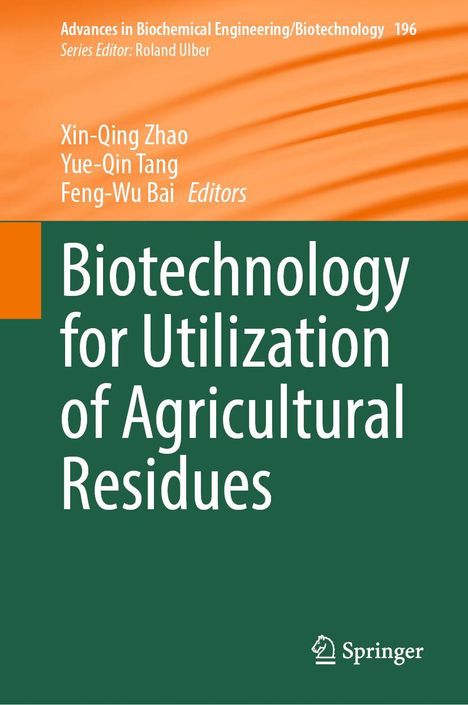
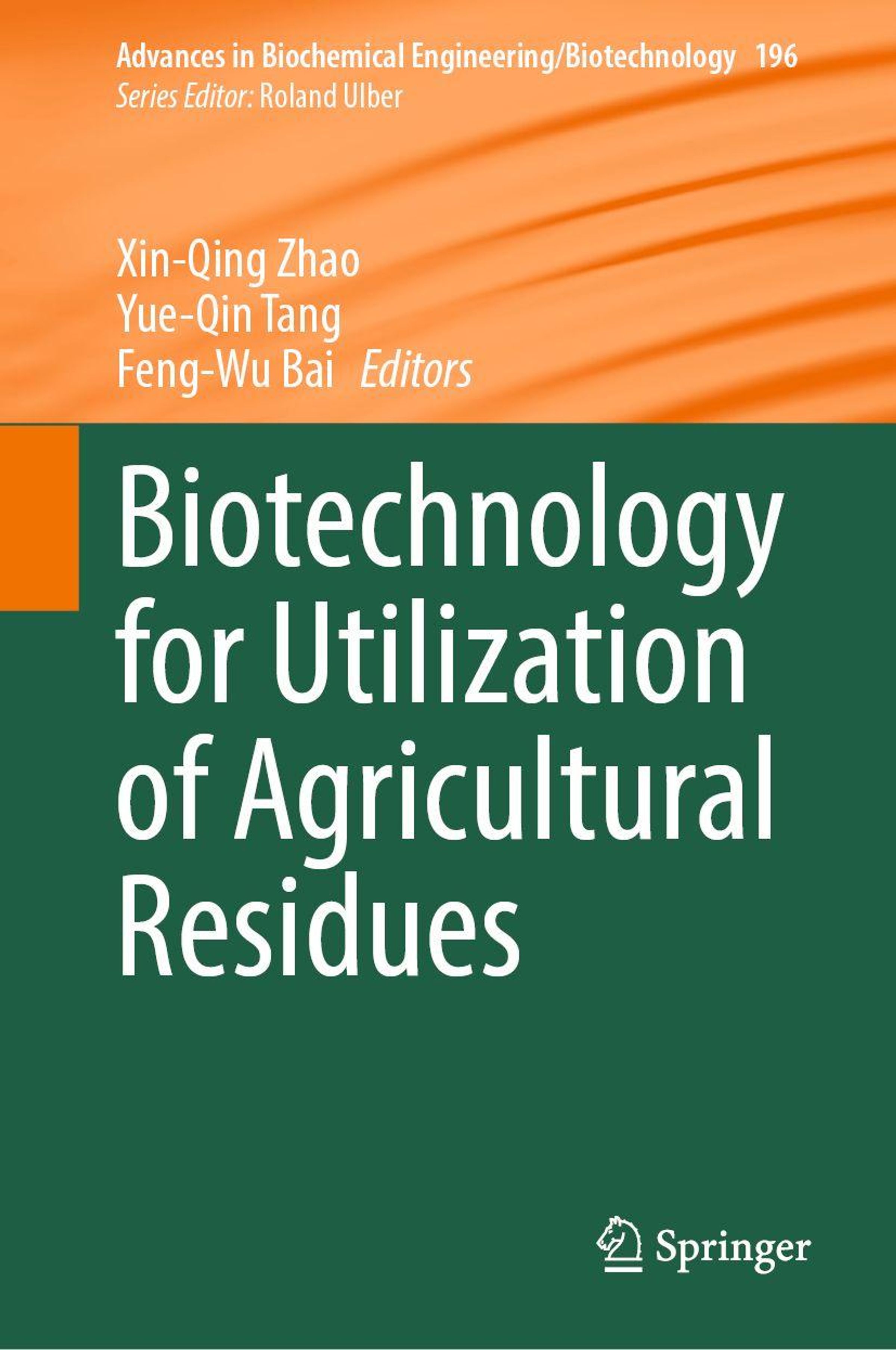
Biotechnology for Utilization of Agricultural Residues, Gebunden
Biotechnology for Utilization of Agricultural Residues
Sie können den Titel schon jetzt bestellen. Versand an Sie erfolgt gleich nach Verfügbarkeit.
- Herausgeber:
- Feng-Wu Bai, Xin-Qing Zhao, Yue-Qin Tang
- Verlag:
- Springer Nature Switzerland AG, 01/2027
- Einband:
- Gebunden
- Sprache:
- Englisch
- ISBN-13:
- 9783032382771
- Artikelnummer:
- 12907440
- Umfang:
- 385 Seiten
- Erscheinungstermin:
- 21.1.2027
- Serie:
- Advances in Biochemical Engineering/Biotechnology
- Hinweis
-
Achtung: Artikel ist nicht in deutscher Sprache!
Klappentext
This book provides an in-depth review of lignocellulosic biomass resources, with a focus on agricultural residues as renewable and environmentally friendly sources for biofuels and bio-based chemicals. It addresses the complexities of biomass composition and the innovative processes required for efficient conversion, offering a roadmap for sustainable socioeconomic development.
The chapters cover a range of key topics, including biomass utilization processes, pretreatment of lignin-carbohydrate complexes, and enzymatic hydrolysis of cellulose and hemicellulose. Readers will discover the importance of engineered microbial strains for efficient sugar utilization and the production of bulk commodities from agricultural residues. The book also reviews the challenges of toxic by-products generated during pretreatment and explores strategies for overcoming them. This book outlines innovative approaches to composting agricultural residues for soil stabilization and nutrient enrichment in animal farming, along with anaerobic digestion for biogas and biohydrogen production. The final chapter covers the life cycle analysis of agricultural residues and related products, inviting readers to consider the broader environmental implications of these technologies.
This volume is essential for researchers, scholars, and practitioners in bioengineering, environmental science, and sustainable agriculture. It is an invaluable resource for academics across these disciplines, as well as policymakers and industry professionals seeking to leverage lignocellulosic biomass for sustainable solutions.